
Replace a pad when the vinyl has cracked through to the foam, when the foam has lost roughly a fifth of its original thickness, or when the cover has separated from the backing board. A scuff, a shiny seat where everyone sits, a seam that has started to grin, or a cover that has faded two shades: those are cosmetic and can wait for the next maintenance window.
Gym equipment upholstery is the most neglected wear item on a commercial floor. It also fails on a fairly predictable schedule, and it is the cheapest thing on the machine to replace, which is exactly why so many facilities let it run two years past the point where it should have been swapped.
The rest of this guide is about specifying pads properly: what the materials are, which numbers on a spec sheet matter, how a local reupholstery quote compares with factory pads, and the one measurement that turns a simple order into a three-week mess.
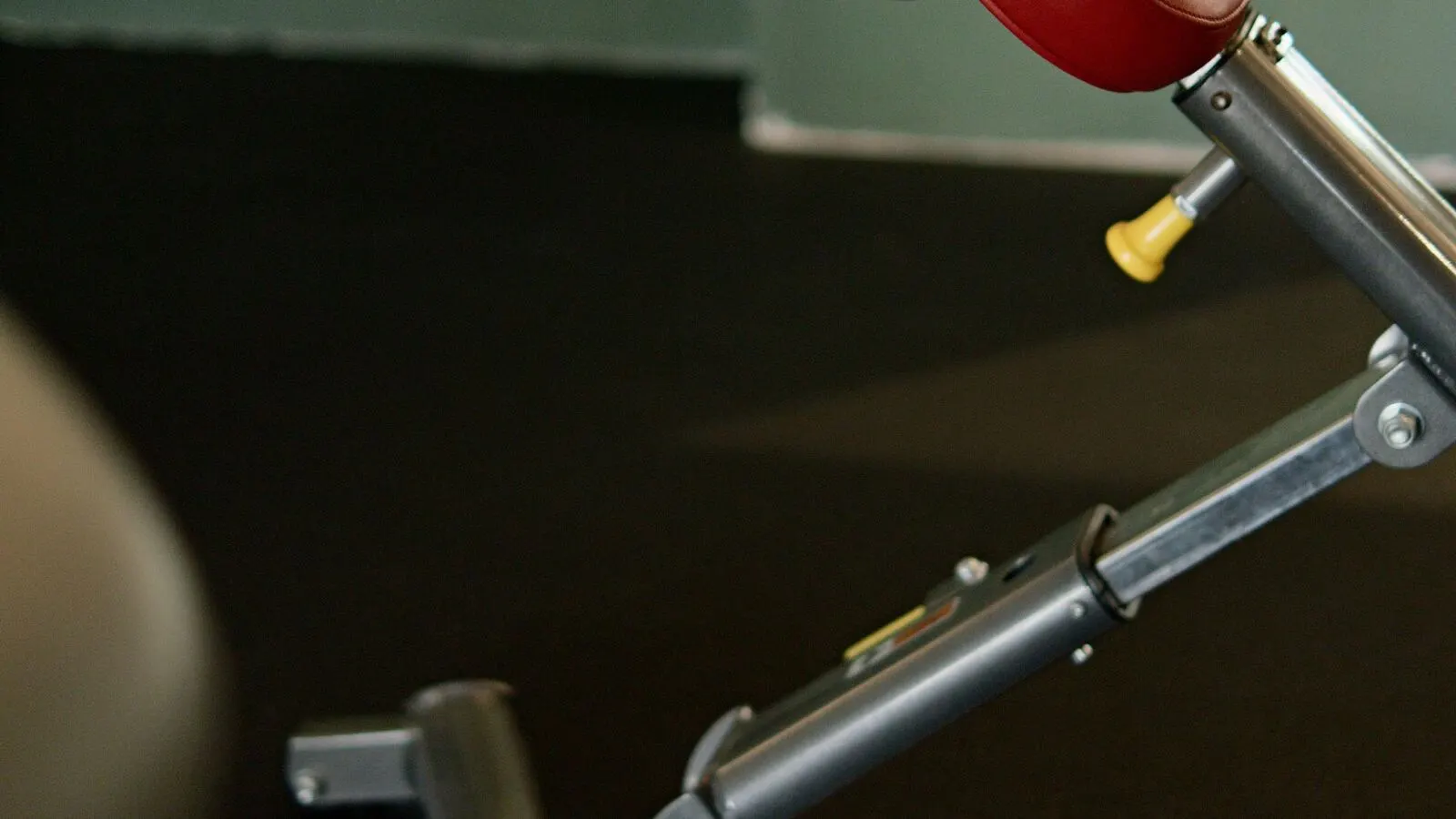
The failure modes, in the order they actually happen
Pads do not fail from being sat on. They fail from sweat, friction and time, and the sequence is consistent across brands and price points.
- Surface shine and colour shift. The topcoat wears through where contact is heaviest. This is the first year or two and is purely visual.
- Seam grin. Stitching separates at the highest-stress seam, usually the front edge of a seat pad or the top corners of a back pad. Water gets in at this point and the failure accelerates.
- Vinyl crack at the edge. The cover splits where it wraps the board, typically at a corner or where the pad meets a metal frame. Once the crack reaches the foam, the pad is done.
- Foam collapse. The open-cell foam compresses and stops recovering. The member feels the board through the pad and starts sitting forward, which changes the movement pattern the machine was designed around.
- Cover separation from the backing. Staples pull through, or the adhesive-backed foam lets go, and the cover slides.
| Condition | What it means | Action |
|---|---|---|
| Shine, minor colour fade | Topcoat wear, cover intact | Clean and protect, no replacement |
| Loose seam, no split | Stitch failure, cover still sealing | Repair within 30 days before water gets in |
| Crack to the foam, under 25 mm | Foam exposed and absorbing sweat | Replace at next maintenance window |
| Crack over 25 mm or multiple cracks | Foam is a bacteria reservoir | Replace now, take the machine off the floor |
| Foam compressed, cover intact | Padding past service life | Replace, member comfort is already compromised |
| Cover sliding on the board | Fastener failure | Replace, it will tear within weeks |
The hygiene point gets underestimated. A split cover turns an open-cell foam pad into a sponge holding perspiration and skin cells. Surface cleaner never reaches it. In a facility that gets inspected, that is a finding, not a cosmetic issue.
Three materials decide how long a pad lasts
Every pad is three components: cover, foam, backing. Price differences between a cheap pad and a good one live almost entirely in these three, and none of them are visible from the outside.
The cover: weight and abrasion, not colour
Commercial vinyl is specified two ways, and both numbers should appear on the factory’s spec sheet.
Weight in ounces per square yard, or grams per square metre. Entry-level covers sit around 18 to 20 oz. Genuine contract-grade gym vinyl runs 30 to 36 oz, which works out to roughly 0.9 to 1.1 mm of coating. Below about 25 oz you are buying furniture vinyl and it will crack at the wrap edge inside three years on a busy floor.
Abrasion resistance, expressed as Martindale cycles or Wyzenbeek double rubs. These are different tests and the numbers do not convert, so compare like with like. The Association for Contract Textiles treats 30,000 double rubs (Wyzenbeek) or 40,000 Martindale cycles as heavy duty. For a leisure centre or school gym, UK upholstery specialists recommend a minimum of 100,000 Martindale cycles because members wear pads with textured shorts, velcro and rings. That is the number worth asking for.
Two more line items worth checking:
- Cold crack. The temperature at which the vinyl splits when flexed. Good contract vinyl is rated around -20°F (-29°C). Facilities with unheated spaces or cold-loading docks care about this; tropical facilities do not.
- Fire rating. California TB 117-2013 for US buyers, BS 5852 crib 5 or the equivalent for UK and EU, FMVSS 302 for anything that might see a vehicle. Ask for the test report, not a claim on a website.
Antimicrobial and anti-mildew treatments are usually a topcoat additive rather than the vinyl itself. They help with surface growth. They do nothing once the cover is split, which is why the crack matters more than the chemistry.
The foam: density and firmness are not the same thing
Two numbers, and buyers routinely confuse them.
Density (lb/ft³ or kg/m³) is how much material is in the foam. It governs how long the pad holds up. Commercial gym pads typically run 1.8 to 2.5 lb/ft³ (29 to 40 kg/m³). Below 1.5 lb/ft³ the foam will collapse under daily traffic in two to three years regardless of how firm it feels on day one.
ILD or compression hardness is how firm the foam feels. Seat pads usually sit in the 45 to 65 ILD range, back pads a little softer at 35 to 55. A heavy leg press seat wants the top of that range; a chest pad on a selectorized machine wants the middle.
For extreme load points — the seat of a leg press, the pad under a hip thrust machine, the top of a preacher curl bench — some factories use rebond foam at 4 to 6 lb/ft³. It is heavier, uglier to cut and much harder to kill. It is also the right call on any pad that takes bodyweight through a small area.
Closed-cell polyethylene foam is a different animal again: nearly waterproof, does not absorb sweat, and used for rollers and small contact pads where hygiene matters more than comfort.
The backing: plywood thickness and T-nuts
Most pads are built on 12 to 15 mm plywood with T-nuts pressed in from the back so the mounting bolts pull into metal rather than into timber. That detail is worth thirty seconds of a buyer’s attention because it is where replacement pads go wrong.
Thin board flexes. Once it flexes, the T-nuts work loose, the pad rocks, and the bolts chew the holes oval. A pad that arrives with 9 mm board on a machine that shipped with 15 mm will not sit flat, and no amount of re-torquing fixes it.
The spec sheet worth demanding before you order
Send this list with the enquiry. Any factory that cannot answer all ten is either reselling or has never replaced a pad in the field.
- Cover weight in oz/yd² or g/m², and the exact colour reference (Pantone or a physical swatch)
- Martindale cycles or Wyzenbeek double rubs, with the test report
- Cold crack temperature
- Fire rating standard and certificate number
- Foam density and ILD for each pad position (seat, back, roller, arm)
- Foam type: open-cell polyurethane, rebond, or closed-cell PE
- Backing board thickness and material
- T-nut size, thread and quantity per pad
- Pad outline drawing with bolt hole centres marked to the millimetre
- Whether the pad is stitched, heat-sealed, or stapled, and where the seam sits
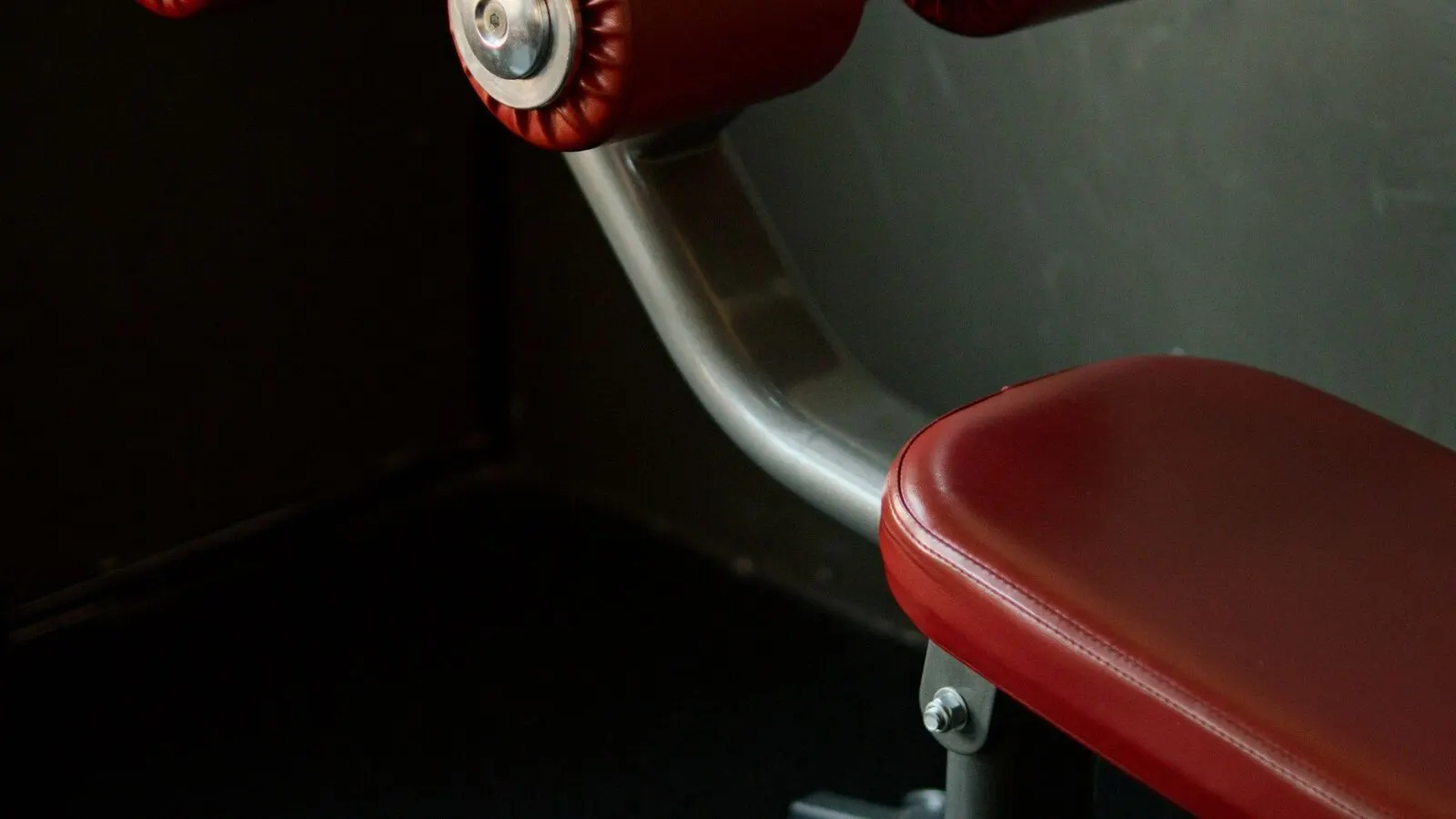
Reupholster locally, or order pads from the factory?
Both are legitimate. The right answer depends on how many pads, how fast you need them, and whether the machine is still in production.
| Local reupholstery | Factory replacement pads | |
|---|---|---|
| Typical cost per pad | Roughly $40–120 depending on size and material | Roughly $15–60 FOB per pad, plus freight |
| Minimum order | Often one pad | Usually a set, sometimes a full machine’s worth |
| Lead time | 3–10 days, on site or drop off | 30–45 days production plus sea freight |
| Colour match | Matched by eye to an existing pad | Exact to the original colour code, if the machine is current |
| Foam spec | Whatever the shop stocks | Specified to density and ILD |
| Backing and hole pattern | Reuses the original board, which may be swollen or oval | New board, new T-nuts, correct centres |
| Best for | One or two pads, quick turnaround, obsolete machines | Fleet-wide refresh, new builds, machines still in production |
Two rules of thumb from the factory side.
Past about fifteen pads, the freight maths usually favours ordering from the manufacturer. Pads are light and bulky, so they ride almost free inside a container you were already paying for.
If the machine is eight to ten years old and the brand has moved on, local reupholstery is often the only option. Insist they reuse your original board, replace the T-nuts, and check the board is flat before stapling. A reupholstered pad on a warped board looks worse than the torn one it replaced.
The number nobody asks for: bolt hole centres
This is where replacement pad orders fail, and it has nothing to do with foam.
A pad is located by its bolt holes. Get the centres wrong by 3 mm and the bolts will not start. Force them and you crack the board or strip the T-nut. The pad is scrap and you are re-ordering, which costs six weeks you did not plan for.
Three ways to get it right, in order of reliability:
- Machine model and serial number. The factory holds the drawing. This works if the machine is still in production or recently discontinued.
- A dimensioned drawing from the buyer. Outline, overall thickness, and every hole centre marked from a single datum corner. Photograph the pad next to a steel rule; it is crude but it resolves most ambiguity.
- Ship the original pad. Slow and expensive by air, cheap and certain. Worth it for a one-off on a machine you cannot identify.
While you are at it, confirm four things that are not on most drawings: bolt diameter and thread pitch, whether the bolt passes through the frame into a T-nut or threads into the pad from below, whether there is a spacer or washer stack between pad and frame, and whether the pad is handed (left and right differ on some machines, particularly pec decks and lateral raise stations).
The handed question catches people roughly once a month. A symmetrical-looking back pad that only fits one way is a frustrating way to lose three weeks.
Which pads go first
Ranked by how often we replace them, across a mixed commercial floor:
- Bench press and FID bench pads. Highest contact hours, highest load, and cheap enough that facilities skip them until they split.
- Leg press seat and back pad. Bodyweight plus sled load through a small contact patch. Rebond foam territory.
- Preacher curl and arm pads. Elbow and forearm friction, thin pads, and members lean on the top edge where the seam is weakest.
- Hip thrust and glute drive pads. Small pad area, heavy load, and the pad takes the whole hip.
- Seat pads on selectorized machines. Uniform wear from constant traffic; usually the first thing that looks tired on an otherwise fine machine.
- Roller pads on leg extension and leg curl. Small, cheap, and the ones members complain about first.
- Back pads on cardio machines. Long life, low load, but the console-adjacent top edge takes hand oils and perishes.
A 24-hour unmanned gym compresses all of that by roughly a third, because the equipment never gets a quiet period.
Cleaning that actually extends life
Most pad damage is caused by cleaning, not by members.
- Neutral pH cleaner diluted per the vinyl maker’s instructions, wiped dry. Not left wet.
- No bleach, acetone, or alcohol sanitiser as a daily habit. They strip the topcoat, and a stripped topcoat is where cracks start.
- No abrasive pads. A green scouring pad takes the grain off in one pass.
- Fix splits early. A two-part vinyl repair kit on a 10 mm split buys a year. The same split at 40 mm means a new pad.
- Keep the frame bolts tight. A pad that moves under load wears at the bolt holes and the wrap edge at the same time.
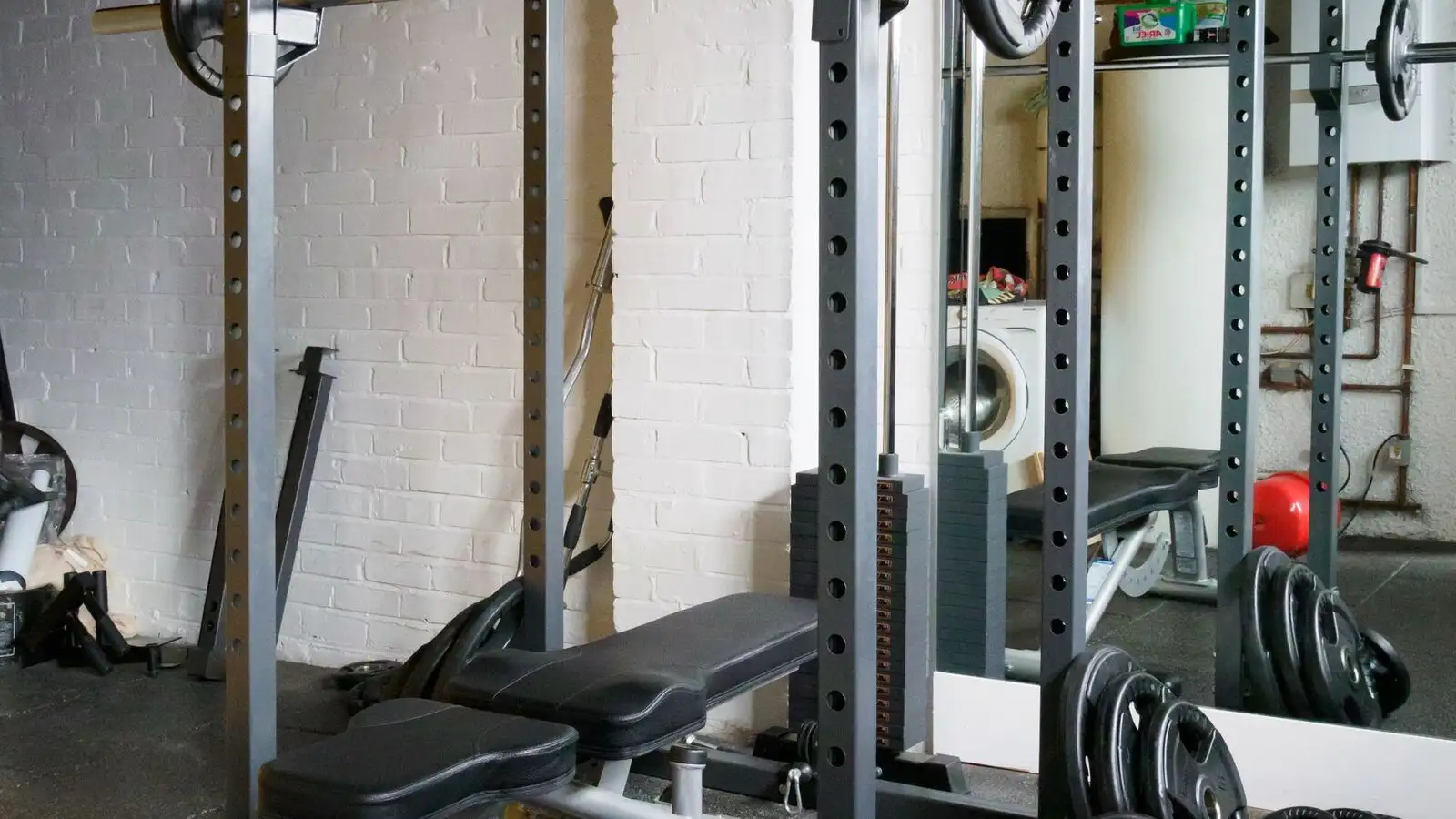
Buying pads with a container order
If you are already shipping machines, pads are close to free freight. A full set for a selectorized machine might weigh 8 to 12 kg and occupy 0.05 to 0.1 CBM. Inside a 40HQ you will not notice it.
That makes a spare set worth ordering at the same time, and it is the single best-value line item in a new gym order. Two practical rules:
- Order one spare set per 10 to 15 machines, prioritising bench pads, leg press seats and preacher pads.
- Order the spare set in the same colour as the machines so a replacement in year three still matches.
The alternative, ordering pads in year three as a standalone air freight shipment, is how a $40 pad becomes a $300 pad.
FAQ
How long should commercial gym upholstery last? Three to six years for high-contact pads like bench and leg press seats, six to ten for low-load back pads, in a facility open 16 hours a day. A 24-hour operation should expect about a third less.
Is a torn pad a safety issue, or just cosmetic? Both. Once the cover splits, the foam holds perspiration and becomes a bacteria reservoir that cannot be cleaned, which is an inspection finding in most jurisdictions. The foam also compresses unevenly and changes how the member sits on the machine.
Can I just wrap tape over a split? Gaffer tape holds for a week and leaves adhesive that destroys the surrounding vinyl when it comes off. A two-part vinyl repair kit is the only temporary fix worth doing.
Do manufacturers warranty upholstery? Usually 90 days to a year, and tears are almost always classified as wear and tear rather than a defect. Budget pads at 2 to 4 percent of equipment value a year, the same way you budget for cables and belts.
Can I get pads in my own colour and logo? Yes, and it is one of the cheapest branding options on the whole machine. Custom colour usually carries a minimum per colour and adds one to two weeks to production. Embroidered or debossed logos need a die, so they make sense on a fleet order rather than a single machine.
What if my machine is discontinued? Local reupholstery on the original board, with new T-nuts and a flatness check. If the board is swollen or the holes are oval, a fabrication shop can cut a new one from the drawing.
Getting pads specified correctly the first time
If you are refreshing a floor, send us the machine list with model numbers and a photo of each worn pad against a tape measure. We will come back with a pad schedule, hole centres drawn against your models, and a colour card.
If you are ordering machines, ask for a spare pad set to ride in the same container. It costs a fraction of a later air shipment and it keeps a $3,000 machine earning while a $40 pad is in transit.
Start with the strength machine range, the benches and racks, or the gym equipment accessories we supply as spare parts. For a pad schedule against your existing floor, send us the machine list and we will quote it line by line.