
Plate-loaded machines should make up roughly a quarter to a third of your strength stations, not half. For a 2,000-member club that works out to 4 to 6 pieces on a floor of 18 to 26 strength stations. The number is not driven by how many members you have. It is driven by which movements a weight stack physically cannot load, and by how much plate tonnage you are willing to own and store.
Most buying guides answer “plate loaded or selectorized” and stop there. That question matters less than the count, because a plate-loaded zone that is one machine short turns into a queue at the leg press every Monday, and a zone that is three machines long sits empty with a plate tree nobody walks to.
Quick answer by facility type
| Facility | Total strength stations | Plate-loaded pieces | Plate tonnage on hand |
|---|---|---|---|
| Home gym | 3-5 | 1-2 | 300-500 lb |
| Boutique PT studio | 6-10 | 2-3 | 600-900 lb |
| Club, 1,000-2,000 members | 18-26 | 4-6 | 1,500-2,500 lb |
| Strength club, 3,000+ members | 28-40 | 8-12 | 4,000-7,000 lb |
| Hotel or apartment gym | 4-8 | 0-2 | 300-600 lb |
| School weight room | 12-20 | 4-6 | 1,500-2,500 lb |
The tonnage column is the one buyers forget. It is also the column that decides whether the zone works, because a plate-loaded machine with no plates on it is a very expensive coat rack.
Why this is a mix question, not a count question
Plate-loaded equipment is not a cheaper version of selectorized equipment. It is a different tool with a different load ceiling, a different setup time and a different footprint.
| Selectorized | Plate-loaded | |
|---|---|---|
| Load ceiling | 150 to 300 lb stack, occasional 400 lb | 500 to 1,200 lb on sled or lever machines |
| Setup time | 5 seconds, move the pin | 30 to 90 seconds, load and unload plates |
| Throughput per hour | Higher, better for circuits and beginners | Lower, better for working sets |
| Footprint with clearance | 32 to 43 sq ft per station | 40 to 80 sq ft per station, plus plate storage |
| Maintenance | Cables, pulleys, guide rods, bushings | Pivots, bearings, pads, almost nothing else |
| Failure mode | Frayed cable takes the station offline | Weld or pivot wear, slower to appear |
| Best buyer | General population, hotels, apartments, seniors | Strength members, athletes, bodybuilding floors |
Run the two side by side and the logic becomes clear. A selectorized chest press moves a member through a set in 40 seconds and serves 8 to 10 people an hour. A plate-loaded leg press serves 3 to 4, because loading and unloading is part of the exercise. You buy plate-loaded for the ceiling, not for the throughput.
Step one: fix the total strength station count
You cannot split a number you have not calculated. Start with peak headcount, the share of those members who train strength, and turnover per station. Our strength station planning guide walks through that arithmetic.
For reference, a mid-size commercial club typically lands at 12 to 16 selectorized stations, 4 to 6 plate-loaded pieces, and 6 to 10 benches and racks. That is a 60/30/10 split of the strength floor, and it is the split most facilities converge on whether they plan it or drift into it.
Step two: decide which movements deserve plates
This is where the mix gets decided, and it should be decided movement by movement rather than by catalog page.
| Movement | Typical selectorized ceiling | Does the stack limit the machine? | Verdict |
|---|---|---|---|
| Leg press | 300-400 lb | Yes, badly. Strong members max out in month two | Plate-loaded, no debate |
| Hack squat | Rarely made selectorized | Sled only | Plate-loaded |
| Belt squat, pendulum squat | Not available | Sled only | Plate-loaded |
| Hip thrust | 200-250 lb stack | Often, for glute-focused members | Plate-loaded preferred |
| Iso-lateral chest press | 200-250 lb stack | Sometimes, for advanced members | Plate-loaded if the club skews strong |
| Iso-lateral row | 250 lb stack | Sometimes | Plate-loaded for strength floors |
| Shoulder press | 200-250 lb stack | Rarely | Selectorized is fine |
| Seated calf raise | 200-400 lb | Rarely | Selectorized is fine |
| Leg extension, leg curl | 200-250 lb | Rarely | Selectorized is fine |
The pattern holds across categories: buy plate-loaded where a stack hits a ceiling that real members reach, and where independent arms add something a fixed handle cannot. Everything else belongs in the selectorized run, where it will serve more people per hour and need less attention.
A club that puts plate-loaded machines on shoulder press and leg extension has spent floor space and capital on machines that would have worked better with a stack.
Step three: count plate-loaded minutes
Once you know which movements are plate-loaded, count the traffic the same way you would for any other station.
- Peak concurrent members, 8 to 12 percent of membership on a normal weeknight.
- Share of those members in the strength zone, 35 to 50 percent in a general club.
- Share of strength users who choose a plate-loaded piece rather than a stack, rack or bench. In a general club this runs 15 to 20 percent. In a strength-leaning club it runs 25 to 35 percent.
- Divide by turnover. Plate-loaded stations serve 3 to 3.5 users per hour at a 18 to 20 minute average dwell, because loading takes time.
Worked example, 2,000 members on a general commercial floor:
- Peak concurrent: 200
- In the strength zone: 200 × 42 percent = 84
- Choosing plate-loaded: 84 × 20 percent = 17 users per peak hour
- Users per piece per hour: 3.2
- Pieces needed: 17 ÷ 3.2 = 5.3
Round to 5 or 6 pieces, and put the sixth at leg press or hack squat, because those two carry more traffic than everything else combined.
Step four: the plate tonnage is the real constraint
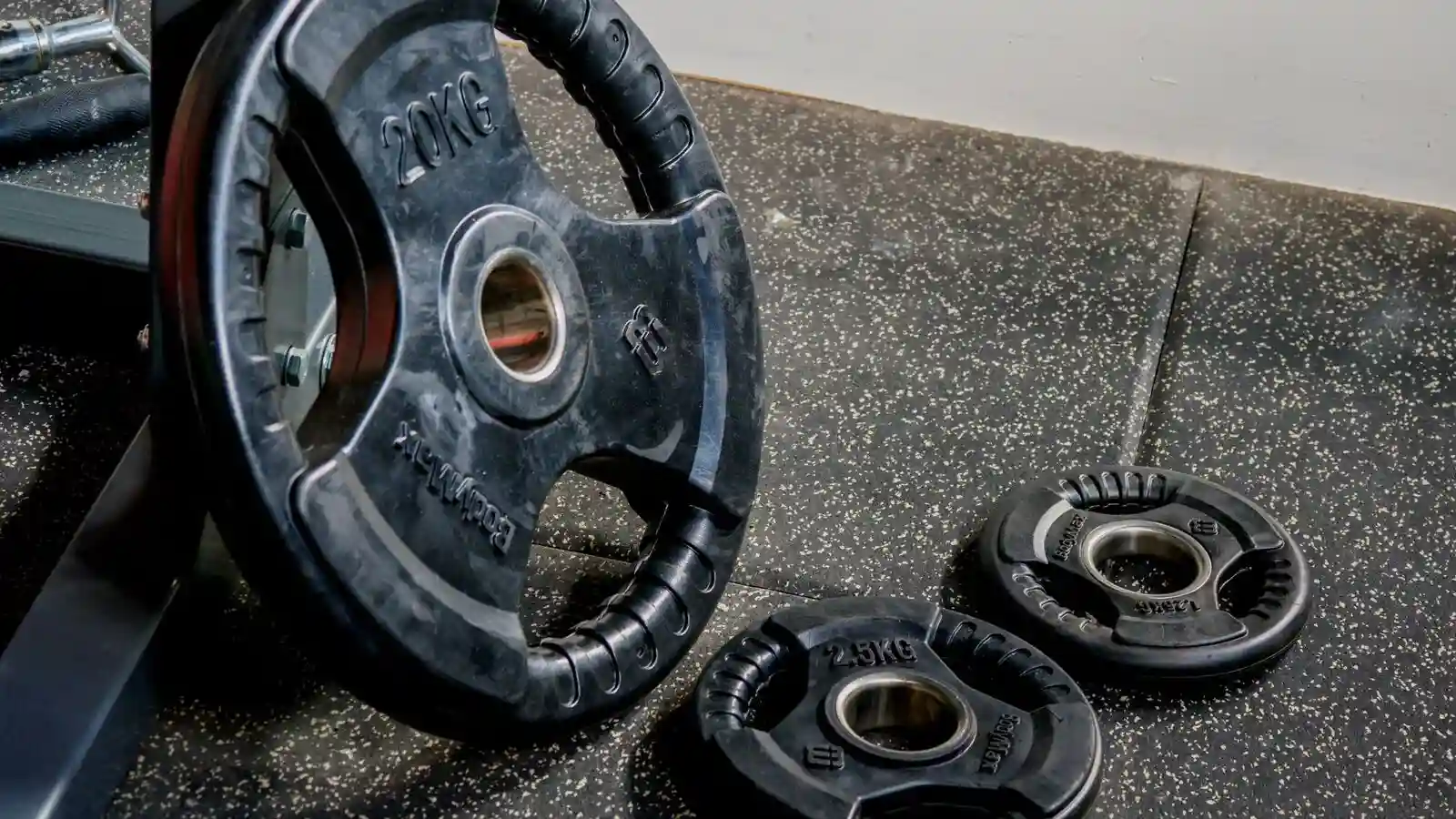
Here is the part that blows up budgets and container plans. Plate-loaded machines do not include their own resistance.
| Machine | Working load a strong member reaches | Plates needed on the machine |
|---|---|---|
| 45-degree leg press | 400-700 lb | 9-16 × 45 lb plates |
| Hack squat | 300-500 lb | 7-12 × 45 lb plates |
| Iso-lateral chest press | 200-300 lb | 5-7 × 45 lb per side |
| Iso-lateral row | 250-350 lb | 6-8 × 45 lb per side |
| Hip thrust | 300-500 lb | 7-12 × 45 lb |
| Seated calf raise | 300-400 lb | 7-10 × 45 lb |
Add it up honestly. Six plate-loaded machines, each with enough plates to be useful, is 2,500 to 3,000 lb of iron. That is more than a tonne, and it changes what your container weighs and what your floor carries.
Two rules keep this manageable:
- One plate tree per 2 to 3 plate-loaded stations, and never more than 10 ft from the machine it serves. Beyond that, members take plates off one machine and leave them on the floor.
- Standardise on 45s. Change plates matter for progression, but 45 lb plates are the working currency of a plate-loaded zone. A zone with six machines and twenty 45s is a zone where members wait for plates, not machines.
If you are ordering machines and plates in the same container, tell the factory the plate tonnage up front. Heavy goods load low and over the axles, and a container that cubes out before it weighs out is a very different loading plan from one that hits its payload limit.
Step five: budget the floor, not the footprint
Plate-loaded station footprints look modest on a spec sheet and grow once clearance is added.
| Machine | Machine footprint | With working clearance | Plus plate storage |
|---|---|---|---|
| 45-degree leg press | 55 × 65 in | 60-75 sq ft | Add 15 sq ft |
| Hack squat | 55 × 85 in | 60-80 sq ft | Add 15 sq ft |
| Iso-lateral chest press | 45 × 55 in | 40-50 sq ft | Shared tree |
| Iso-lateral row | 45 × 60 in | 40-50 sq ft | Shared tree |
| Hip thrust | 48 × 60 in | 45-60 sq ft | Shared tree |
| Seated calf raise | 36 × 48 in | 30-40 sq ft | Shared tree |
A six-piece plate-loaded zone with two plate trees needs 350 to 450 sq ft including the walkways between machines. Compare that with six selectorized stations at 32 to 43 sq ft each, which fit in 200 to 260 sq ft. Plate-loaded equipment costs roughly 1.6 times the floor per station, and that is before the loading side clearance that lets a member walk around the leg press with two plates in each hand.
Buy order
If the budget lands in phases, buy in this sequence:
- 45-degree leg press. Highest traffic, lowest setup friction, works for beginners and strong members alike.
- Hack squat or leg press-hack combo. Covers the squat pattern without a rack, and a combo saves 30 to 40 sq ft.
- Iso-lateral chest press or row. Where independent arms actually change the training.
- Hip thrust. Glute demand keeps climbing and a stack version runs out of load quickly.
- Seated calf raise. Cheap, popular, low maintenance. Good filler for a container.
- Belt squat or pendulum squat. Excellent machines, but specialist. Buy them when the membership justifies it, not because a competitor has one.
Specs that separate a ten-year machine from a five-year one
| Spec | What to ask for | Why |
|---|---|---|
| Frame | 11 gauge, 2×3 or 3×3 tube, full-perimeter welds | Plate-loaded frames carry torque, not just compression |
| Weight horns | 2 in chrome or hard-chrome sleeves, 10-12 in usable length | Short horns limit how much plate a member can hang safely |
| Horn mounting | Welded to frame through a gusset | Horns welded to sheet metal tear out under load |
| Bearings | Sealed bearings at pivots, bronze bushings on sleds | Nylon bushings develop play and rattle within a year |
| Sled travel | Linear bearings on guide rods, 50 mm class | Smooth travel is the difference between a machine people trust and one they avoid |
| Safety stops | Adjustable, rubber cushioned | Non-adjustable stops force members into a range they cannot control |
| Pads | 1.8 to 2.5 lb per cubic ft foam, 30 oz vinyl, replaceable | Cheap foam compresses in 18 months |
| Finish | Two to four stage powder coat, 60 to 80 micron | Single-coat frames rust at weld seams in humid gyms |
| Plate compatibility | Confirm 2 in centre hole | Imported 1 in plates will not fit, and this happens more than it should |
Five mistakes that cost real money
- Buying plate-loaded to save capital, then discovering the plate bill. Six machines need 2,500 to 3,000 lb of plates. That is not a rounding error.
- One plate tree for six machines. Members strip plates off the leg press and leave them by the hack squat. The zone looks busy and half the machines are unusable.
- Putting a loaded leg press on an upper floor without checking slab capacity. A 700 lb sled load plus a 250 lb member plus the machine is a point load worth a structural engineer’s signature.
- Choosing iso-lateral machines for a beginner-heavy member base. Independent arms need coaching. General population clubs do better with a fixed-path plate-loaded press and one iso-lateral piece.
- Mixing plate sizes across an import. Confirm 2 in sleeves on every machine in the order, including the ones you add two years later.
FAQ
Is plate-loaded cheaper than selectorized? Per machine, usually yes, often by 15 to 30 percent. Per usable station, the gap closes once you buy the plates, and it disappears if you also need extra floor space and a plate tree. The real reason to buy plate-loaded is the load ceiling, not the price.
How many plates should a club own for plate-loaded machines? Plan 400 to 500 lb of working plates per station, shared across a zone of 2 to 3 machines per tree. A six-machine zone typically needs 2,500 to 3,000 lb total, weighted toward 45s.
Can members bring their own plates? They will not, and you should not allow it. Mixed plate thicknesses damage sleeves and horn welds, and mismatched diameters are a safety issue on a sled that travels on rails.
Do plate-loaded machines need less maintenance? Fewer wear items, but not zero. Pivot bearings, sled guides, horn welds and pad covers all need checking. What you save is cable and pulley work. What you gain is that a failure is usually visible before it is dangerous.
How many plate-loaded machines does a small studio need? Two, usually a leg press and a hack squat or combo. A PT studio’s members respond to loaded leg work, and a stack leg press runs out of resistance for anyone who has trained for a year.
Building the zone instead of buying the catalog
The count is a floor plan decision, and the floor plan is easier to get right before the container is booked. Send us your member count, ceiling height and a sketch of the strength area, and we will come back with a station list, a plate tonnage figure and a loading plan that keeps the order in one shipment. We manufacture plate-loaded strength machines and selectorized stations at our own factory in Taishan, and we will tell you which pieces you do not need. Send your floor plan and we will run the numbers.