
How Many Strength Machines Does a Gym Need? A Planning Guide for Facility Owners
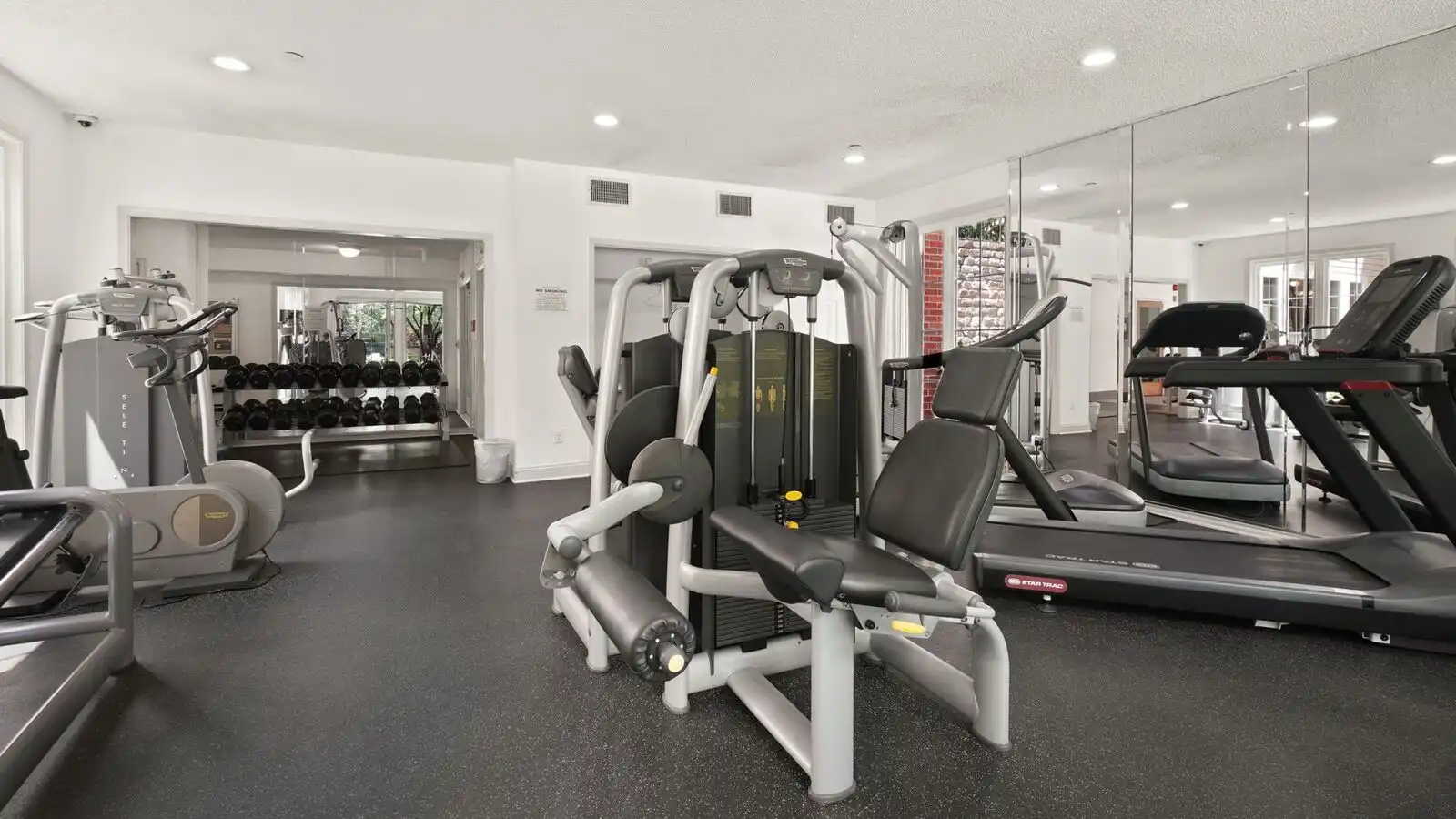
Most commercial clubs land between 12 and 16 selectorized stations, 4 to 6 plate-loaded pieces, and 6 to 10 benches and racks for a strength floor of 3,000 to 5,000 sq ft. That is the working answer for a 1,500 to 3,000 member club. It is not a formula pulled from a ratio chart.
How many strength machines does a gym need beyond that depends on three numbers: how many people are standing on the floor at 6:30 pm on a Monday, how long each of them occupies a station, and how much floor is left after you account for circulation.
Get those three numbers right and the equipment list mostly writes itself. Get them wrong and you end up with three chest stations nobody queues for and no rear delt machine, which is a very common way to spend $40,000 badly.
How many strength machines does a gym need? Start with bodies, not contracts
Member count is a billing figure. Peak concurrency is an operations figure, and it is the one that decides your station count.
Across commercial clubs, peak-hour occupancy typically runs 8 to 15 percent of the membership on a normal weekday evening. January and the first three weeks of September push higher, sometimes 18 to 20 percent. A 2,000 member club that feels comfortable in July will have a queue in January with the same equipment.
Then split that peak crowd by zone. In a general fitness club, roughly 35 to 50 percent of peak users are in the strength area at any moment. The rest are on cardio, in class, in the stretching area, or in the locker room.
The last input is dwell time, meaning how long one person holds a station:
| Station type | Typical dwell time | Users per hour |
|---|---|---|
| Selectorized isolation (leg extension, curl, lateral raise) | 4 to 7 min | 8 to 14 |
| Selectorized compound (chest press, shoulder press, lat pulldown) | 6 to 10 min | 6 to 10 |
| Cable station or functional trainer | 8 to 15 min | 4 to 7 |
| Plate-loaded leg press, hack squat | 10 to 15 min | 4 to 6 |
| Power rack or bench press station | 20 to 35 min | 2 to 3 |
That table explains a pattern most owners notice but rarely quantify. Free-weight stations cost the least per unit and serve the fewest people per hour. Selectorized machines cost more per unit and turn over twice as fast. Neither is wrong. You just need to know which one you are buying.
The three-step calculation
Run this once with your own numbers. It takes ten minutes and it will settle most arguments about what to order.
Step 1: Peak users in the strength zone Members × peak rate × strength share. Example: 2,000 × 0.11 × 0.42 = 92 people in the strength area at peak.
Step 2: Station demand Not everyone in the strength zone is on a machine. Some are on benches, some are stretching, some are waiting or spotting. Machine occupancy usually runs 50 to 65 percent of the people in the zone. Then apply a utilization factor of 0.65 to 0.80, because a station sitting empty for two minutes between users is normal, not a failure. 92 × 0.58 × 0.72 = 38 station users at any given moment.
Step 3: Check against floor area Selectorized stations need roughly 32 to 43 sq ft each once working clearance is included. Free-weight stations need 54 to 65 sq ft because of bar path and spotting room. A 4,000 sq ft strength floor with 18 percent circulation gives you about 3,280 usable sq ft, which supports 38 selectorized stations or 26 free-weight stations. Same room, very different capacity.
That 38 number is the total machine count for the example club. A sensible split is 27 selectorized, 8 plate loaded, and 3 cable or functional stations, plus 7 benches and 3 racks. Write that down and compare it to what your dealer is proposing. The gap is usually interesting.
Coverage matters more than the count
Two gyms can both own 20 strength machines and serve completely different crowds. The difference is whether every major movement pattern has a station.
| Movement pattern | Typical machine | Priority |
|---|---|---|
| Horizontal push | Chest press | Tier 1 |
| Horizontal pull | Seated row | Tier 1 |
| Vertical pull | Lat pulldown | Tier 1 |
| Vertical push | Shoulder press | Tier 1 |
| Squat / leg press | Leg press | Tier 1 |
| Knee extension | Leg extension | Tier 1 |
| Knee flexion | Leg curl | Tier 1 |
| Hip hinge and extension | Back extension or hip thrust | Tier 2 |
| Chest fly and rear delt | Pec deck, reverse pec deck | Tier 2 |
| Arm isolation | Preacher curl, tricep station | Tier 2 |
| Hip abduction and adduction | Abductor/adductor combo | Tier 2 |
| Calves | Standing or seated calf raise | Tier 3 |
| Trunk | Ab crunch, rotary torso | Tier 3 |
| Glute isolation | Glute kickback | Tier 3 |
The rule we give buyers: one station per pattern for the first 12 to 14 machines. Only add a second station to a pattern when members are actually queuing for it, and check whether the queue is a distribution problem instead. If your chest press is busy and your pec deck sits idle, you do not need another press. You need to move the pec deck or teach staff to route beginners through it.
Tier 3 machines are the ones that make a floor look complete in a brochure and gather dust in February. Buy them last, and buy them because your member survey asked for them, not because a competitor has one.
Selectorized or plate loaded: how the mix changes the total
The mix changes the count because the footprints and throughput are different. It also changes who feels welcome on your floor.
| Type | Footprint per station | Users per hour | Typical user | Relative cost |
|---|---|---|---|---|
| Selectorized | 32 to 43 sq ft | 8 to 12 | Beginners, older members, circuit training | Moderate |
| Plate loaded | 45 to 65 sq ft | 4 to 8 | Experienced lifters, strength-focused members | Higher |
| Cable / functional | 40 to 50 sq ft | 4 to 7 | All levels, rehab, athletic training | Moderate to high |
| Free weight rack or bench | 54 to 65 sq ft | 2 to 3 | Experienced lifters | Low per unit |
For a general fitness club, a mix around 60 to 70 percent selectorized, 20 to 25 percent plate loaded, and the rest cable serves the broadest membership with the fewest stations. A strength-focused facility, a powerlifting or bodybuilding gym, flips closer to 40/40 with a bigger free-weight allocation.
The most common mistake in export orders is a 90 percent plate-loaded floor built for a gym that mainly sells monthly memberships to people who have never lifted. It looks impressive on Instagram and it terrifies the people paying the bills.
Three worked examples
1. Suburban commercial club, 2,000 members, 19,000 sq ft total, 4,000 sq ft strength floor 27 selectorized stations across 14 patterns, 8 plate-loaded pieces including leg press, hack squat and a squat-pattern machine, 3 cable stations, 8 benches, 3 power racks, dumbbells to 100 lb. Total strength stations: 49 including benches.
2. Personal training studio, 250 active clients, 2,800 sq ft 5 selectorized stations (chest press, lat pulldown, seated row, leg press, leg extension/curl combo), 2 plate-loaded pieces, 1 dual adjustable pulley, 1 rack, 3 benches, dumbbells to 60 lb. Station count stays low because sessions are scheduled, not walk-in. Throughput per station is high but predictable.
3. Hotel or residential gym, 90 sq m, 300 to 500 daily users 1 four-station multi-gym or a dual-stack multi-function series, 1 treadmill, 1 bike, 1 elliptical, dumbbells 5 to 50 lb, 1 adjustable bench. Four to six strength stations total. Anything more becomes a maintenance liability in a room with no staff.
The buy order when the budget does not cover the list
Almost nobody buys the full list on day one. This sequence keeps the floor usable at every stage:
- Leg press. Highest demand per dollar of any strength machine.
- Chest press and lat pulldown. The two stations beginners gravitate to first.
- Seated row and shoulder press. Completes the four basic upper-body patterns.
- Leg extension and leg curl, ideally as a combo to save floor space.
- Benches and one power rack. Cheap capacity, high credibility with experienced members.
- Cable station or functional trainer. Most exercises per square foot of any single unit.
- Plate-loaded squat pattern: hack squat, pendulum, or belt squat depending on your crowd.
- Isolation extras in Tier 2 and Tier 3, driven by member requests.
Notice that racks and benches come fifth, not first. New owners usually buy racks first because that is what they personally train on. It is not what a 2,000 member general club needs first.
Layout rules that decide whether the count survives contact with members
A station count that works on paper fails on the floor for boring reasons.
- 30 to 36 inches of clear working space on the loading side of every plate-loaded machine. Without it, members drag plates through someone else’s set.
- 36 to 48 inches for main aisles. Tighter and two people cannot pass with a water bottle and a towel.
- 18 to 20 percent of the strength floor kept as circulation. Converting that space into one more machine usually lowers peak capacity, not raises it.
- Do not line up six chest and shoulder machines in one row. Visual density reads as crowding even when half the row is idle.
- Group by movement, not by brand. Push stations together, pull stations together, legs together. Members circuit-train by pattern.
- Keep the leg press and hack squat away from the mirror wall. Plate loading needs aisle space behind the sled.
Where gyms overbuy and underbuy
Overbought, in most first orders we see: single-purpose chest machines, ab crunchers, glute kickback units, and any machine whose only selling point is a novel handle shape. These get used heavily for eight weeks and then become the most expensive coat racks in the building.
Underbought: cable stations, adjustable benches, dumbbells above 50 lb, and a plate-loaded squat pattern. Every one of those serves multiple patterns and every one of them is usually undersized in a first order.
The pattern behind both mistakes is the same. Buyers count machines by muscle group brochure instead of counting stations by movement pattern and peak demand.
What to put on the purchase order
The station count is only half the decision. The other half is whether the machines will still be serviceable in year six.
- Frame: 11 gauge (about 3 mm) main tube, 2×3 inch or 3×3 inch, welded joints, multi-stage powder coat
- Weight stack: 200 to 250 lb on compound stations, 10 lb increments with a 5 lb adder plate
- Guide rods: chrome plated, 25 to 30 mm, with sealed bearings or self-lubricating bushings
- Cable system: 6 mm rated cable, swaged end fittings, pulleys on sealed bearings, spare cable and pulley kit available
- Upholstery: high-density foam with replaceable pads, commercial-grade vinyl
- Certification: EN 957 or ISO 20957 documentation and a load test report for the frame
- Duty rating: full commercial, not light commercial, if the floor runs more than 80 hours a week
- Warranty: frame 10 years, parts 2 to 3 years, labor 1 year is a normal commercial structure
- Spare parts: written availability of 7 to 10 years, with a priced parts list at the time of order
That last item decides your real cost of ownership. A machine with no cable available in year four is scrap with good paint.
Browse the current selectorized strength range and plate-loaded range to see how these specs map onto real models, or check the factory capability page for frame and welding details.
FAQ
How many strength machines does a 500 member gym need? For a 500 member club with 1,500 to 2,000 sq ft of strength floor, plan on 6 to 8 selectorized stations covering push, pull, leg press, leg extension and leg curl, plus 2 plate-loaded pieces, 3 benches and 1 rack. That is about 12 to 14 stations total, and it will feel full at 6 pm.
Is one multi-station machine enough for a small gym? For a hotel, apartment or office gym under 400 daily users, a four-station multi-gym plus dumbbells and one adjustable bench covers most of what people actually do. It is not enough for a membership club where members expect separate stations and no waiting.
How many chest press machines should a gym have? One per 400 to 600 members for a general club. A second one is justified if you run two separate floors, a women-only area, or a 24-hour site with an unusually flat usage curve. Otherwise the second press is better spent on a seated row or a cable station.
Do benches and racks count as strength stations? Yes, and they are the cheapest capacity you can buy. A bench press station serves 2 to 3 users per hour against roughly $600 to $1,200 of equipment cost. A selectorized chest press serves 8 to 10 per hour at four times the price. You need both, in the right proportion.
How often should I re-run this calculation? Once a year, using actual peak counts from your access control data, plus a walk-through at 6:30 pm on a Monday. If a station type sits above 85 percent occupancy at peak, add capacity there. If it runs below 30 percent, you bought for the brochure.
If you are planning a strength floor, send us the room dimensions, ceiling height, and expected member count. LMCC Fitness is a factory-direct commercial gym equipment manufacturer in Taishan, China, and we will come back with a station plan, a footprint layout, and a quote with the spare parts list attached. Start with the contact page or review the full cardio and strength catalog before you commit to a container.