
How many functional trainers a gym needs depends on which kind of gym it is. Commercial clubs should count members at peak and divide by how many people one cable position can turn over in an hour. Personal training studios should count coaches on the floor, because the machine is booked by sessions, not by footfall. For a 2,000-member club the working answer is 2 to 3 dual-stack units, which is 4 to 6 usable positions. For a studio running four coaches, it is 2 units.
Everyone else in this category quotes a single ratio, usually “one per 400 members,” and that number collapses the moment you look at how the machine is actually used. A functional trainer is the one station that covers pressing, pulling, squatting, lunging, rotation and arm work. It carries the traffic of four machines and gets bought like a corner filler. That mismatch is why so many floors have a queue at the cable stack and an empty ab crunch machine two metres away.
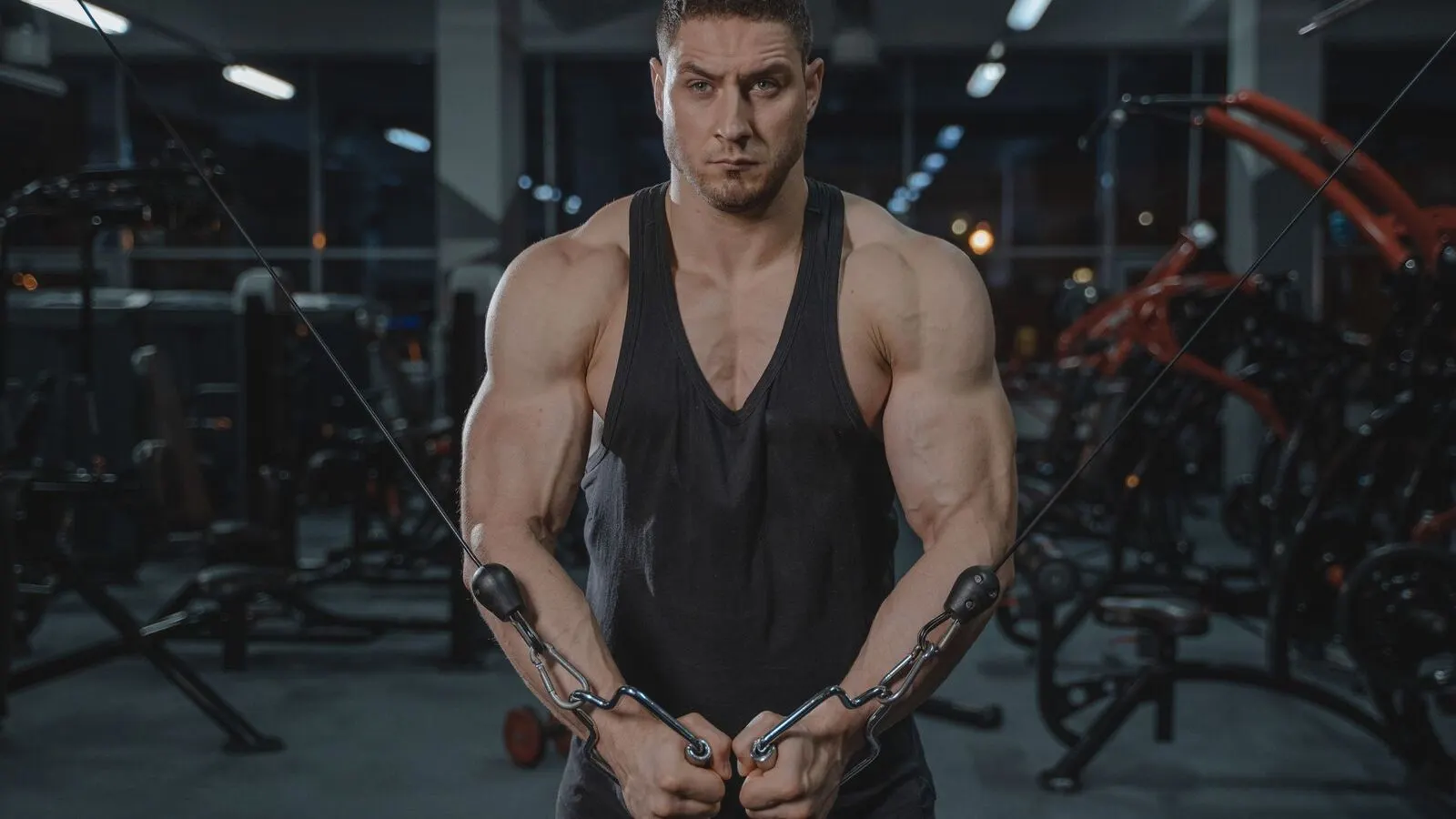
Quick answer by facility type
| Facility | Functional trainer units | Usable positions | What drives the number |
|---|---|---|---|
| Home gym | 1 single-stack or wall unit | 1 | One user, budget and ceiling height |
| Boutique PT studio, 2-3 coaches | 1 dual stack | 2 | Two clients training at once |
| PT studio, 4-6 coaches | 2 dual stack | 4 | Coach count, session overlap |
| Small-group studio, 6-9 per class | 2-3 dual stack | 4-6 | Circuit format, class size |
| Club, 500-1,000 members | 1 dual stack plus 1 crossover | 3-4 | Peak headcount, cable share |
| Club, 2,000 members | 2-3 dual stack plus 1 crossover | 6-8 | Peak headcount, dwell time |
| Strength club, 3,500+ members | 3-4 dual stack plus 2 crossovers | 8-12 | Heavy pulling demand, PT traffic |
| Hotel or apartment fitness room | 1 | 1-2 | Low concurrent use, floor space |
| School weight room | 2-4 | 4-8 | Class of 20-30 rotating through stations |
Treat the table as a sanity check, not a spec. The two calculations below are what actually produce a number you can defend to a budget committee.
Why one ratio cannot cover both kinds of buyer
A commercial club and a PT studio can buy the same machine for opposite reasons. The club buys capacity. The studio buys appointment slots, and an appointment that waits for a cable stack is a client who notices.
Three things shift the number far more than membership count:
- Dwell time. Cable work runs 12 to 18 minutes including setup and attachment changes. That is longer than a leg extension and shorter than a rack. It means each position turns over 3 to 4 times an hour, not 8.
- Position count, not frame count. A dual-stack functional trainer serves two people at once. A cable crossover serves two. A four-stack multi-jungle serves four. Counting boxes instead of positions is the most common arithmetic error in gym planning.
- Attachment traffic. Handles, ropes and ankle straps live at the machine. If a club owns one set, positions become serial even when stacks are free. Two attachment sets per unit is cheap insurance.
Formula one: PT studios count coaches
Studios do not have a peak hour in the club sense. They have a peak appointment block, usually 6am to 9am and 5pm to 8pm, when every coach is working.
- Multiply coaches by average clients per session. Most one-to-one studios run 1.0, semi-private runs 1.5 to 2.0.
- Take the share of session time spent on cable work. In rehab, golf, and general strength coaching this lands around 50 to 60 percent.
- Assume one in three of those clients is at the cable at any given moment, because the rest are on a bench, a rack, or the turf.
- Divide by positions per unit.
A four-coach studio with semi-private sessions: 4 × 1.5 = 6 clients training at once. Cable share of 55 percent gives roughly 3 clients per hour on cable, and one in three at any instant gives 2 concurrent users. One dual-stack unit covers 2 positions, so the minimum is one unit. Buy two.
The second unit is not about capacity, it is about scheduling. With one machine, one client hogging it for a 20-minute cable block forces the next coach to restructure a session in front of a paying client. Studios that run six or more coaches, or that sell small-group cable classes, land at 2 to 3 dual units and often add a crossover for the fixed high-low pulley work.
Formula two: clubs count cable-minutes
For a club, the number comes out of peak headcount and turnover.
- Peak concurrent members. Use 8 to 12 percent of total membership on a normal weeknight. January and the first two weeks of the year run 18 to 20 percent. Plan for the normal week and accept queues in January, or you will buy for eleven months of empty floor.
- Cable share of those members. In a general commercial club, 10 to 16 percent of people on the floor at peak will want a cable station during their session. Strength-leaning clubs and facilities with a large PT programme run higher, 18 to 25 percent.
- Turnover. At a 15 to 17 minute average dwell, one position serves 3.5 to 4 users per hour.
- Divide, then round up.
Worked example, 2,000 members:
- Peak concurrent: 2,000 × 10 percent = 200 members
- Cable users during the peak hour: 200 × 12 percent = 24
- Users per position per hour: 60 ÷ 16 minutes = 3.75
- Positions needed: 24 ÷ 3.75 = 6.4
Round to 7 positions. In product terms that is 2 dual-stack functional trainers plus 1 cable crossover, which gives 6 positions, or 3 dual units for 6 and a crossover on top for 8. Either configuration eliminates the queue at 6pm. Two units alone would put 4 positions against demand for 6, and that gap is exactly the queue members complain about.
The same arithmetic on a 600-member boutique club: peak of 60, cable users 7, positions needed 1.9. One dual-stack unit technically covers it, but a single dual unit is also the station most likely to be occupied by one member doing a 12-exercise circuit. Two units, or one unit plus a crossover, is the practical floor for any club with personal training revenue.
Count positions, not boxes
| Configuration | Positions | Strengths | Watch out for |
|---|---|---|---|
| Single-stack tower | 1 | Cheapest per unit, small footprint, fits low ceilings | One user at a time, limited pulley travel |
| Dual-stack standalone | 2 | Two independent users, full height range, the club standard | Needs 8 to 10 ft working circle |
| Cable crossover | 2 | Fixed high and low pulleys, best for chest and fly work | No adjustable height, poor for low rows |
| Multi-jungle, 4 stack | 4 | Highest positions per square metre | One shared middle column creates traffic jams |
| Rack-integrated pulley | 1-2 | Adds cable work to a rack you already own | Short cable travel, shares the rack’s footprint |
| Wall-mounted | 1 | Very shallow, good for home and hotel | Light stacks, limited exercise range |
A club that owns two cable crossovers and calls it four positions is technically right and practically wrong. Crossovers live at fixed pulley heights, so they serve chest work and little else. The adjustable-height functional trainer is what members use for rows, chops, Pallof presses and single-leg work. Mix the two deliberately.
The pulley ratio decides what the stack number means
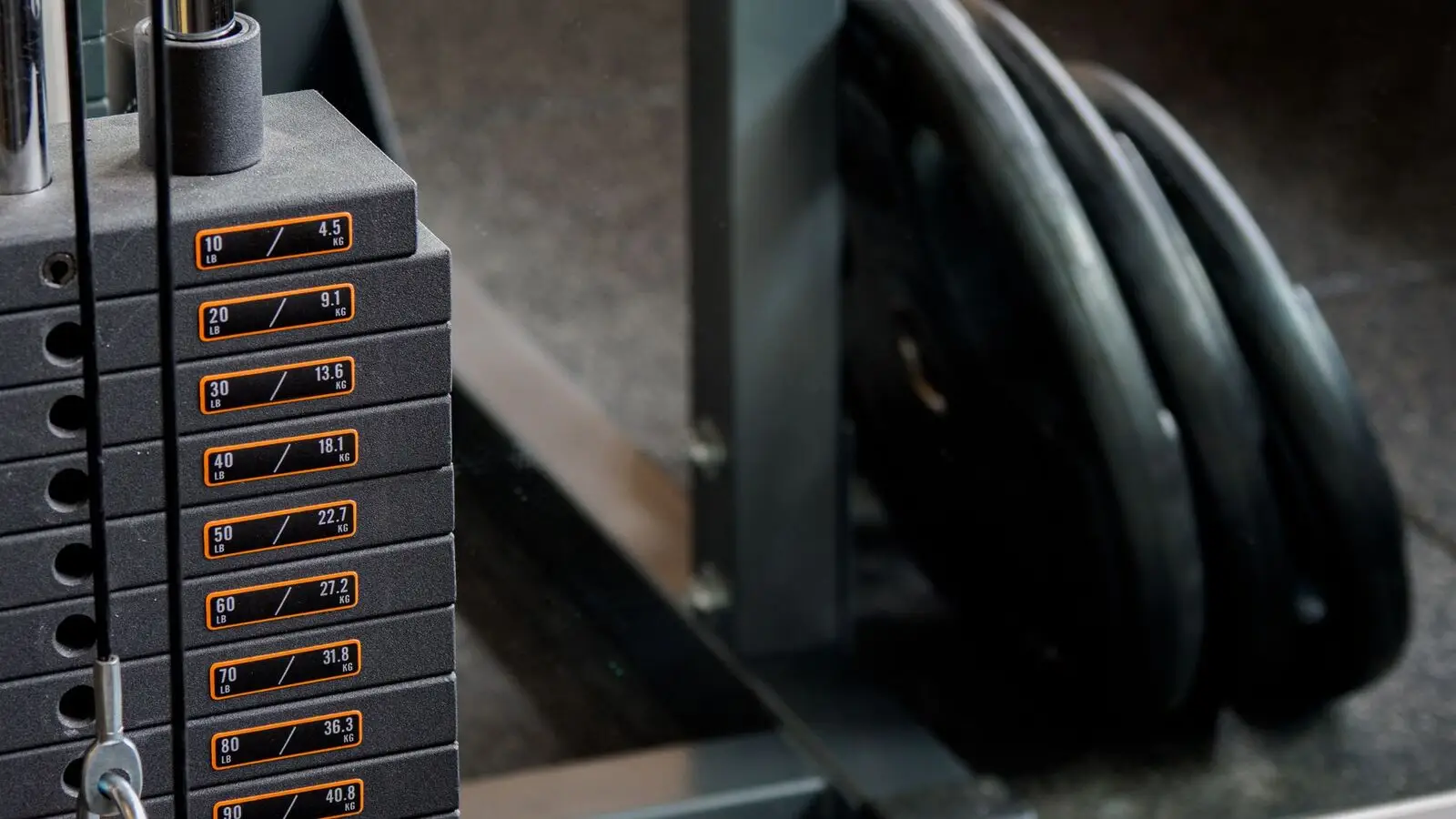
A 200 lb stack on a 2:1 system delivers roughly 100 lb at the handle. The same 200 lb on a 1:1 system delivers the full 200 lb. Buyers who compare stack sizes across machines without checking the ratio are comparing nothing.
| Ratio | Effective load from a 200 lb stack | Cable travel | Best for | Trade-off |
|---|---|---|---|---|
| 1:1 | 200 lb | Short | Heavy lat pulldowns, low rows, strong members | Bulky stack housing, less reach for functional work |
| 2:1 | 100 lb | Long | Functional training, chops, flyes, unilateral work | Heavy lifters run out of resistance |
| 4:1 | 50 lb | Very long | Rehab, junior and senior programming | Rarely enough load for a commercial floor |
A commercial club with a strength membership should own at least one 1:1 station with a 250 lb stack, usually a lat pulldown or a dual pulldown-row, so the 2:1 functional trainers are not asked to do a job they cannot do. A studio serving general population and rehab clients can run 2:1 throughout and never hear a complaint.
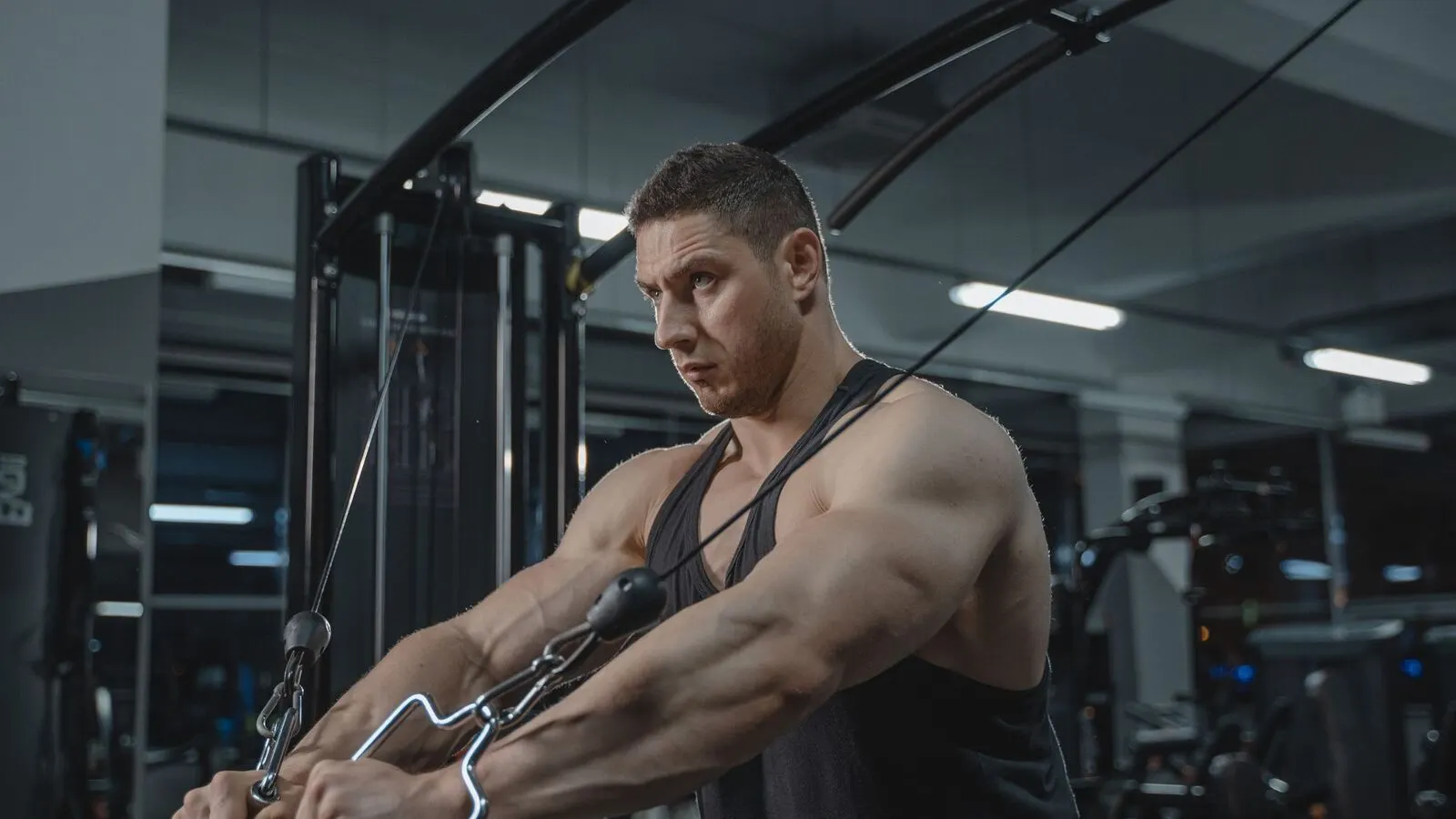
Specs that decide whether your count holds up
| Spec | Typical commercial range | Why it matters for capacity |
|---|---|---|
| Column height | 84 to 101 in | A 101 in unit needs 8 ft 6 in clear ceiling. Basements and hotel rooms often cannot take it. |
| Footprint | 49 × 51 in to 68 × 68 in | Footprint plus 36 to 48 in of working space on each open side is the real space cost |
| Weight stack | 150 to 220 lb standard, 250 to 300 lb upgrade | Stack size is meaningless without the ratio |
| Pulley height range | 11 to 80 in of travel | Low setting must reach ankle height for rows and kickbacks |
| Cable | 5 to 6 mm galvanised, swaged ends | Rated working load should exceed the stack by a wide margin |
| Pulley | Sealed bearing, 90 to 115 mm | Plain nylon wheels flat-spot and chirp within a year in a busy club |
| Frame | 11 gauge steel, welded, two-stage powder coat | The tower is a lever arm. Thin tube flexes and the cable jumps. |
| Shroud | Full or half | Full shroud hides a fraying cable. Half shroud makes weekly inspection possible. |
Ask for the cable length list and pulley part numbers before you order a fleet. If a supplier cannot provide them, every future cable replacement becomes a measuring job, and a machine sits dead for three weeks waiting on a part.
Placement is part of the count
A functional trainer placed against a wall in a corner stops being two positions. Members need room to step back, kneel, and swing a cable across the body.
- Allow a working circle of 8 to 10 ft in front of the machine, not the 3 ft that fits on the drawing.
- Keep 36 to 48 in clear on any side a user loads or adjusts.
- Place it in the strength zone, near benches and free weights, and in sight of the floor. Cable stations attract new members who are not ready for a rack.
- Do not put it beside cardio. Cable work is quiet and cardio is not, and the attachment traffic crosses the walkway.
- If the club runs small-group cable classes, place the units so a coach can see 4 positions from one spot.
Five mistakes that show up on real floors
- Buying by price per machine instead of price per position. A cheap single-stack tower at 60 percent of the price of a dual unit is poor value per usable position.
- One dual unit in a club with 800+ members. It becomes the most contested machine on the floor within a month.
- All 2:1, no heavy station. Strong members stack the pin at 200, feel 100 lb, and go elsewhere for pulling.
- Corner placement. Two positions on paper, one in practice, because nobody can kneel without hitting a wall.
- No spare cables. Cable replacement is 18 to 36 months in a busy club. A spare kit costs a fraction of a lost station.
FAQ
How many functional trainers does a 1,000-member gym need? Two dual-stack units, or one dual unit plus one cable crossover. A 1,000-member club peaks around 100 people, 12 of whom want cable work in that hour, which needs about 3 positions.
Is one functional trainer enough for a small studio? For a single coach working one-to-one, yes. From two coaches up, no. The second unit protects the schedule more than it adds capacity.
Does a cable crossover count as a functional trainer? It counts as two cable positions but not as a substitute. Crossovers have fixed pulley heights, so they cannot do low rows, chops or ankle work. Most clubs need both.
Should I buy a 200 lb or 250 lb stack? At 2:1, a 250 lb stack gives about 125 lb per handle, which covers almost every member. If the machine is 1:1, 200 lb is already heavy for most users. Match the stack to the ratio, not to the brochure.
How much floor space does a pair of functional trainers take? Roughly 250 to 350 sq ft once you include the working circles between them. Budget the same again if you want a crossover beside them.
Getting the mix right before you order
Every one of these numbers is easy to fix on a drawing and expensive to fix on a poured floor. If you send us a floor plan and a member count, we will come back with a station list, position count and a container plan that fits the order into one shipment. We build cable stations, crossovers and selectorized strength equipment at our own factory in Taishan, so the spec sheet you approve is the spec sheet that ships. Start with the cable crossover and functional trainer range, or send us your floor plan and we will do the arithmetic with you.