
Elliptical and Exercise Bike Repair: Bearings, Flywheels, and When to Stop Fixing
Most “dead” cardio machines are not dead. When an elliptical starts grinding or an exercise bike develops a clunk, the cause is usually one of six wear parts costing $8 to $70, and the fix takes one to three hours with hand tools. The repair only becomes uneconomic when the frame is cracked, the part is proprietary and unavailable, or the machine is old enough that the next failure is already queued up behind this one.
That distinction, worn part versus worn machine, is the whole decision. Getting it wrong in either direction costs money: replacing a five-year-old elliptical over a $35 crank bearing, or pouring labour into a nine-year-old bike whose replacement parts stopped being made two years ago.
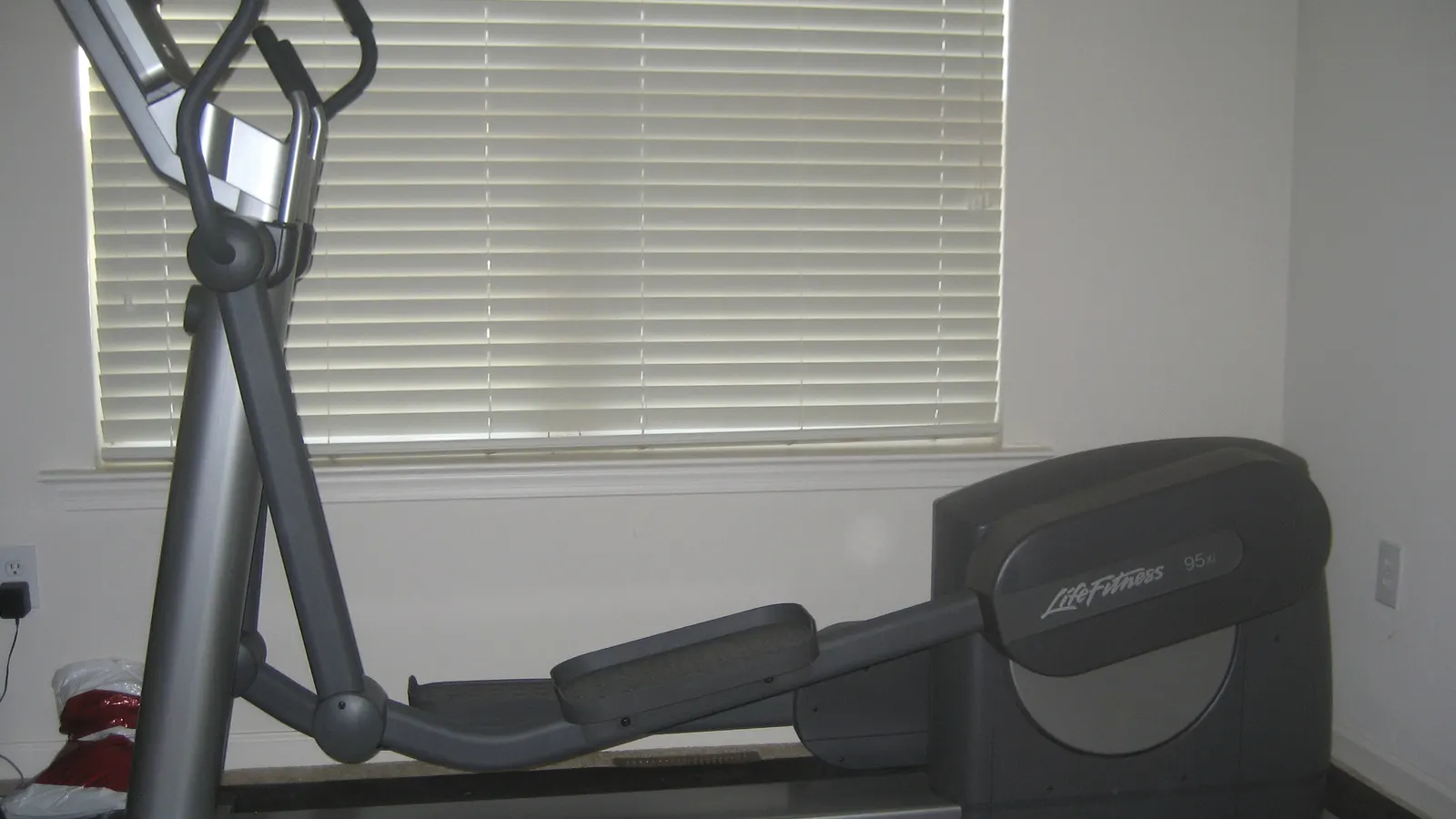
What fails first, in the order it fails
These intervals are what we see across commercial fleets, not lab figures. A 24-hour gym compresses them. A hotel fitness room with four users a day stretches them.
| Component | What the user reports | Typical life (commercial use) | Part cost | Labour |
|---|---|---|---|---|
| Pedal rollers and rails (elliptical) | Squeal, rough stride, a flat spot in the motion | 2–4 years | $6–20 per roller | 1–3 hrs |
| Pivot and linkage bearings (elliptical arms) | Clunk on the arm swing, side-to-side play | 3–6 years | $8–25 each | 1–2 hrs |
| Crank / bottom bracket bearings (bike and elliptical) | Grinding that repeats once per pedal revolution | 3–6 years | $15–45 | 1–2 hrs |
| Drive belt (poly-V) | Chirp at startup, slipping under load, tension loss | 3–5 years | $25–70 | 1–2 hrs |
| Flywheel bearings (spin bikes especially) | Deep rumble that continues while coasting | 4–8 years | $20–60 | 2–4 hrs |
| Resistance unit (magnet board, servo, friction pad) | Resistance will not change, or drifts mid-ride | 4–7 years | $60–250 | 1–2 hrs |
| Seat rail bushings and sliders (recumbent bike) | Seat rocks side to side under pedalling | 2–4 years | $10–30 | 1 hr |
| Pedal spindle or stripped thread | Single click each revolution, pedal feels loose | 3–6 years | $15–40 per pair | 30 min |
| Console or lower control board | Dead screen, no speed readout, buttons unresponsive | 3–6 years | $80–300 | 30 min |
Two things in that table stand out. The cheapest parts fail first, and the parts that fail fastest are the ones most gyms never inspect: rollers, bushings, pedal threads. A quarterly 15-minute inspection catches nearly all of them before a member does.
Diagnose before you buy anything
Half the parts sold for “elliptical repair” are sold to people who guessed. Run this sequence first; it takes about 20 minutes on the floor.
Step 1: Find the rhythm. If the noise repeats exactly once per pedal revolution, the problem is at the crank, the bottom bracket or the pedal. If it cycles with the arm swing, look at the upper pivot bearings. If it is continuous and doesn’t track any movement, it is the flywheel, the drive belt or an idler pulley.
Step 2: Load it. Have someone pedal while you listen, then spin it by hand unloaded. Noise that only appears under body weight points to a bearing race or a cracked weld. Noise that appears unloaded but disappears under load is usually a belt or a loose cover panel.
Step 3: Isolate the side. Single-leg pedalling on a bike, or pushing one pedal on an elliptical, tells you which side is failing. Bearings rarely fail in pairs on the same day.
Step 4: Check the hardware before the bearings. A surprising share of “bearing” complaints are loose pivot bolts, worn nylon bushings, or a frame bolt that has backed out 3mm. Re-torque the pivot hardware to spec and re-test. On an elliptical, grab the arm and try to rock it: any movement beyond a couple of millimetres means the bolt or bushing has gone, and that is a $10 fix.
Step 5: Confirm with heat and play. Run the machine for five minutes, then touch the suspect bearing housing. A noticeably warm hub means friction, which means a dry or damaged bearing. Then check radial play by rocking the shaft. Any perceptible movement confirms it.
Step 6: Separate resistance faults from mechanical faults. If the machine feels heavy but silent, the problem is in the resistance system, not the drivetrain. On a magnetic bike, that means the servo motor, the magnet board or the console signal. On a spin bike with a felt pad, it usually means the pad is glazed or the calliper is misaligned.
Bearings: what to buy and what not to
Bearings are the single most common failure point on cardio equipment and the easiest place for a factory to save $2 per machine in ways you will pay for later.
Sealed, not shielded. A commercial machine should use 2RS (double rubber sealed) bearings, not ZZ (metal shielded). Shielded bearings keep out large debris and nothing else. Grit, sweat and dust in a cardio zone destroy them within a couple of years. Sealed bearings cost a little more and last considerably longer.
Standard numbers, not proprietary assemblies. Most cardio bearings are standard 6000 or 6200 series. If you can read the number off the seal, you can buy that bearing anywhere in the world for a few dollars. If the bearing is pressed into a bespoke housing with no number, the factory owns your maintenance schedule.
Fitting matters as much as the part. Press on the inner race, never on the seal or the outer race. Use a driver of the correct diameter. Clean the housing, check for fretting, apply a retaining compound if the seat is worn, and torque to spec. A correctly sized bearing installed badly will fail in months.
Why cheap bearings fail early. Not load. Contamination. Cardio equipment lives in the dustiest corner of a gym, next to carpet, rubber flooring and towel bins. A $2 bearing and a $12 bearing have similar static ratings; they do not have similar seals.
Belt, chain and resistance systems
Poly-V belts are quiet and need almost no maintenance, but they do stretch and glaze. Tension should be set so the belt deflects a few millimetres under thumb pressure at mid-span; loose belts chirp and slip under load, tight belts eat bearing life. Replace when the ribs show cracking or the belt is polished and shiny.
Chains, still common on spin bikes, tolerate abuse and hate neglect. They need lubrication every few months and they stretch. A stretched chain on a fixed-gear spin bike is loud and chews the chainring.
Felt or leather friction pads on indoor cycles are the simplest resistance system ever made and the one most likely to drift. The pad wears, the resistance at a given knob position changes, and riders in a class notice. A pad is $15–30 and takes 20 minutes. Ignore it and you replace the flywheel.
Eddy current magnetic resistance has no contact to wear, which is why it lasts, but it depends on electronics: a servo motor that moves the magnets, a control board and a console signal. When resistance stops changing, test the servo first, the board second, the console third. Replacing a $250 magnet assembly because a $40 servo failed is a common and expensive misdiagnosis.
Self-powered bikes and ellipticals add a generator and a capacitor or battery. If the console dies the moment the user stops pedalling, the issue is energy storage, not the console.
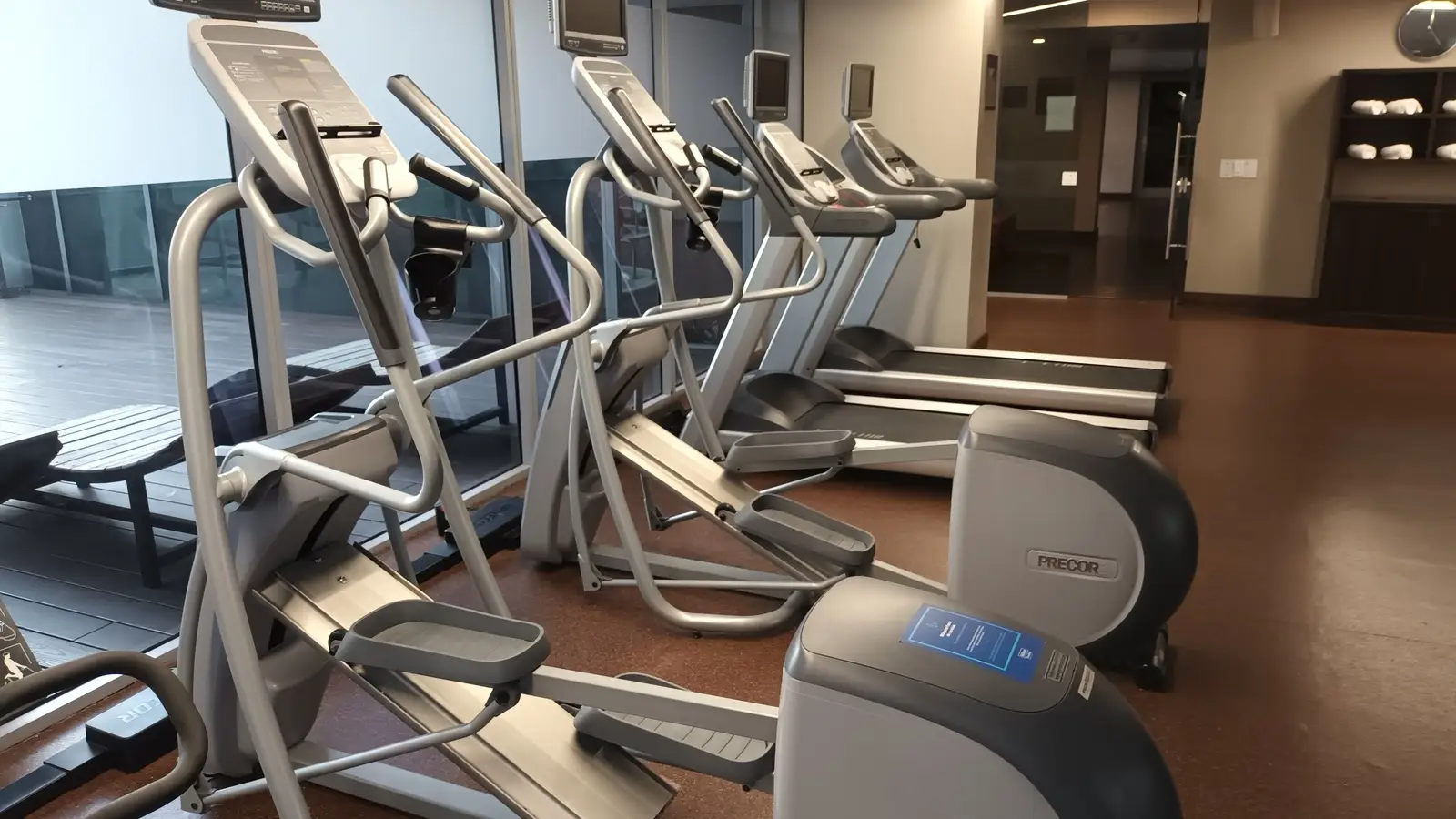
Elliptical-specific wear: the linkage
An elliptical has more moving joints than any other cardio machine, and every one of them is a wear point.
Pedal rollers on rails are the number one commercial elliptical failure. Rollers flatten, rails wear a groove, and the stride develops a rough patch at the same point every cycle. Rollers are cheap and replaceable. Worn rails usually are not. Once the rail surface has a visible groove, the fix is a rail assembly, which on most models costs more than the machine is worth.
Upper arm pivots carry less load but move constantly. Nylon bushings here are common on budget units; sealed bearings are the commercial spec. Play in the arm pivot is what makes an elliptical feel “loose” even when the stride is smooth.
Crank and linkage bearings take the highest load and produce the most alarming noise. A grinding crank bearing on an elliptical sounds terminal and usually isn’t.
Frame welds. Check them whenever you have the covers off. A hairline crack at a weld on the main frame is the one fault that genuinely ends a machine’s life, because welding a powder-coated frame properly in the field is rarely worth it.
Exercise bike specifics
Bikes fail differently from ellipticals because the load path is different: everything goes through the bottom bracket and the seat.
- Bottom bracket bearings are the classic bike failure. Grinding under load, once per revolution, worse when standing. Standard cartridge bearings on most commercial bikes.
- Pedal threads are 9/16 × 20 TPI on virtually every bike. Cross-thread one and you are replacing a crank arm.
- Seat rails and bushings wear on recumbents because the seat slides fore and aft constantly. A rocking seat is a $20 bushing, not a new bike.
- Seat post clamps and pop pins wear and slip, which users report as “the seat won’t stay up”.
- Flywheel bearings on spin bikes carry enormous load: a 100 lb flywheel spinning at 120 rpm with a 250 lb rider standing on the pedals. This is where cheap bearings show up first.
Repair or replace: the decision table
The industry rule of thumb is that a repair costing more than about 40% of a comparable new machine is not worth doing. That rule is too blunt on its own, because it ignores parts availability and the cost of the next failure.
| Machine age | Part cost vs new unit | Verdict |
|---|---|---|
| Under 3 years | Any | Repair, and claim it under warranty if the part is covered |
| 3–6 years | Under 20% | Repair. The frame has years left |
| 3–6 years | 20–40% | Repair if the machine is a current model with parts support |
| 6–9 years | Under 15% | Repair only if the part is a standard, off-the-shelf item |
| 6–9 years | Over 15% | Replace. You are now funding a declining asset |
| Over 9 years | Any | Replace, unless it is a premium frame with confirmed parts availability |
| Any age | Cracked frame or weld | Replace. Do not weld a structural frame in the field |
Add one more column that nobody puts in the spreadsheet: downtime. A machine out of service for three weeks in a 20-unit cardio row removes 5% of cardio capacity. At peak, that becomes a queue at the treadmills and a member complaint at the front desk. If your parts lead time is longer than the repair time, buy a spare machine instead of a spare part. A used unit from your own fleet rotation is usually the cheapest insurance available.
Parts worth keeping on the shelf
Stocking everything is waste. Stocking nothing is worse. A workable split for a 20–40 machine cardio fleet:
Tier 1, keep 2–3 of each on hand: pedal rollers, upper pivot bearing kits, poly-V belts in your two most common sizes, spin bike resistance pads, seat rail bushings, hardware kits, console cables.
Tier 2, keep one: crank bearing set, flywheel bearing set, magnet board, servo motor, lower control board for your most common console.
Tier 3, order as needed: rails, crank arms, frames, consoles for discontinued models.
Tier 1 should be about 3–5% of the fleet count. Standardising on two or three cardio models across the whole floor is what makes this possible; a fleet of nine different models means nine parts inventories.
What to ask the factory before the next order
Serviceability is decided at the design stage, years before the first bearing fails. These are the questions that separate a machine you can maintain from a machine you can only replace.
- Bearing part numbers on the parts list, not just “bearing”. Standard numbers you can source locally.
- Exploded diagrams with part numbers, and a commitment to supply parts for 7–10 years after the model is discontinued.
- A priced spare parts list issued with the order, not on request later.
- Serviceable crank and flywheel assemblies, not sealed-for-life units.
- Belt and roller specifications you can match from a local supplier.
- Frame material and gauge, so you know whether the frame will outlive the parts.
- Whether the console is a standard board or a proprietary one, and the replacement cost.
If a supplier cannot produce a bearing number, that tells you what the machine is: disposable. Ask before you buy 30 of them.
Frequently asked questions
Why is my elliptical making a grinding noise? Grinding that repeats once per pedal revolution usually means a crank or bottom bracket bearing. Grinding that appears at the same point in the stride is usually a worn pedal roller or a grooved rail. Grinding that continues while the machine coasts points at the flywheel bearings. A single clunk on the arm swing is almost always a loose pivot bolt or a worn bushing.
Can elliptical bearings be replaced, and what does it cost? Yes on most commercial machines. Bearings themselves run $8–25 each; the labour is the expense, typically one to three hours per pivot point. The job is worth doing when the frame and rails are sound. It is not worth doing when the rails are grooved, because the new bearings will be destroyed by the same worn surface.
How long should a commercial elliptical or exercise bike last? Roughly 7 to 10 years in a normal commercial gym, assuming rollers, belts and pads are replaced on schedule. In a 24-hour facility, plan on 5 to 7 years. The frame almost always outlives the wear parts, which is exactly why serviceability matters more than the initial spec sheet.
Is it worth repairing a 10-year-old elliptical? Usually not, unless it is a premium frame with confirmed parts availability. At that age you are typically one repair away from the next failure, and the labour hours stack up faster than the part costs.
How often should cardio machines be serviced? A visual and hardware check monthly, a full inspection quarterly — belts, rollers, pivot play, resistance calibration — and bearing replacement on condition rather than calendar. Most gyms that complain about unreliable cardio equipment are doing the monthly check and skipping the quarterly one.
Build the next fleet so it can be repaired
Every machine we ship comes with an exploded parts diagram and a priced spare parts list, because a gym that can fix its own equipment buys again. Browse the cardio series for elliptical trainers, commercial spin bikes and treadmills. Or read our guides on what spare parts to stock and treadmill motor and deck replacement. If you have a fleet with a recurring failure, send us the model and the symptom and we will tell you which part it is.