
A plate tree is the cheapest thing you will buy for the free weight area and the one that decides whether that area still works six months after opening. Get it wrong and the plates live on the floor, the 45s go missing, and someone eventually drops one on a foot.
The short answer: plan about one storage point per two barbell stations, keep it within ten feet of the bar it serves, and size it by how many plates it has to hold, not by how many pounds the catalogue claims.
The short answer
- Format. Vertical trees for general floors. Wall-mounted horns where floor space is tight and the layout will not change. Plate carts for platforms and class floors that get reset between sessions.
- Horn length. A 10 in horn holds about seven cast iron 45s or three bumper 45s. Buy longer horns (12 in) if you run bumper plates.
- Capacity. Demand per-horn ratings and a total loaded rating, not just one number. A commercial tree should be rated 500 lb at minimum; 800 lb and up is realistic for a six-horn unit.
- Placement. 36 in of clear aisle around the tree, horns between roughly 18 in and 52 in off the floor, and no more than a ten-foot walk from the bar.
That is the buying decision in four lines. Everything below is the reasoning, because the reasoning is what your quote should be based on.
Storage is a flow problem, not a tidiness problem
Most buyers think about storage as housekeeping. It is really about time and distance.
Picture a member loading a bar for a working set of squats at 185 lb: two 45s, two 25s, two 10s. Then a heavier set, then a back-off set. Over a 30-minute session that person moves plates off the bar and onto a tree maybe six to ten times, and each trip means carrying one plate in each hand — that is the practical limit for most people on a 45.
If the tree is 8 ft away, a round trip costs about five seconds. If it is 30 ft away, and the aisle is busy, it costs closer to twenty. Ten extra trips at fifteen seconds each is two and a half minutes of pure walking in one session. Members do not consciously notice this. They do notice that the zone feels chaotic, and they start leaving plates on the floor because the walk is not worth it.
That is how you end up with 45s leaning against the mirror. Not because members are lazy. Because the storage is in the wrong place.
The five formats, and where each one belongs
| Format | Typical capacity | Footprint (approx) | Best for | Weakness |
|---|---|---|---|---|
| Vertical plate tree, 4–6 horns | 500–1,300 lb total | 24 × 24 × 48 in | General commercial free weight floors | Tall and top-heavy when loaded unevenly |
| Wall-mounted horn panel | 270–600 lb per panel | 8 in deep from wall | Tight studios, garage gyms, permanent layouts | Needs solid blocking; cannot be moved later |
| Horizontal plate rack / shelf | 600–1,000 lb | 48–60 × 24 in | Storage rooms, plate-heavy powerlifting floors | Takes floor area and loads plates flat |
| Plate cart / trolley | 400–800 lb | 40 × 24 in | Platforms, group floors, shared equipment | Wheels and casters are the failure point |
| Toaster rack (vertical bumper storage) | 8–16 bumper plates | 30 × 24 in | CrossFit boxes, Olympic lifting areas | Only suits bumper plates |
A commercial floor usually needs two of these, not one. Wall horns at each rack for the working set, plus a large tree in the corner for overflow and the plates nobody wants to walk with.
Plate tree capacity: count pieces, not pounds
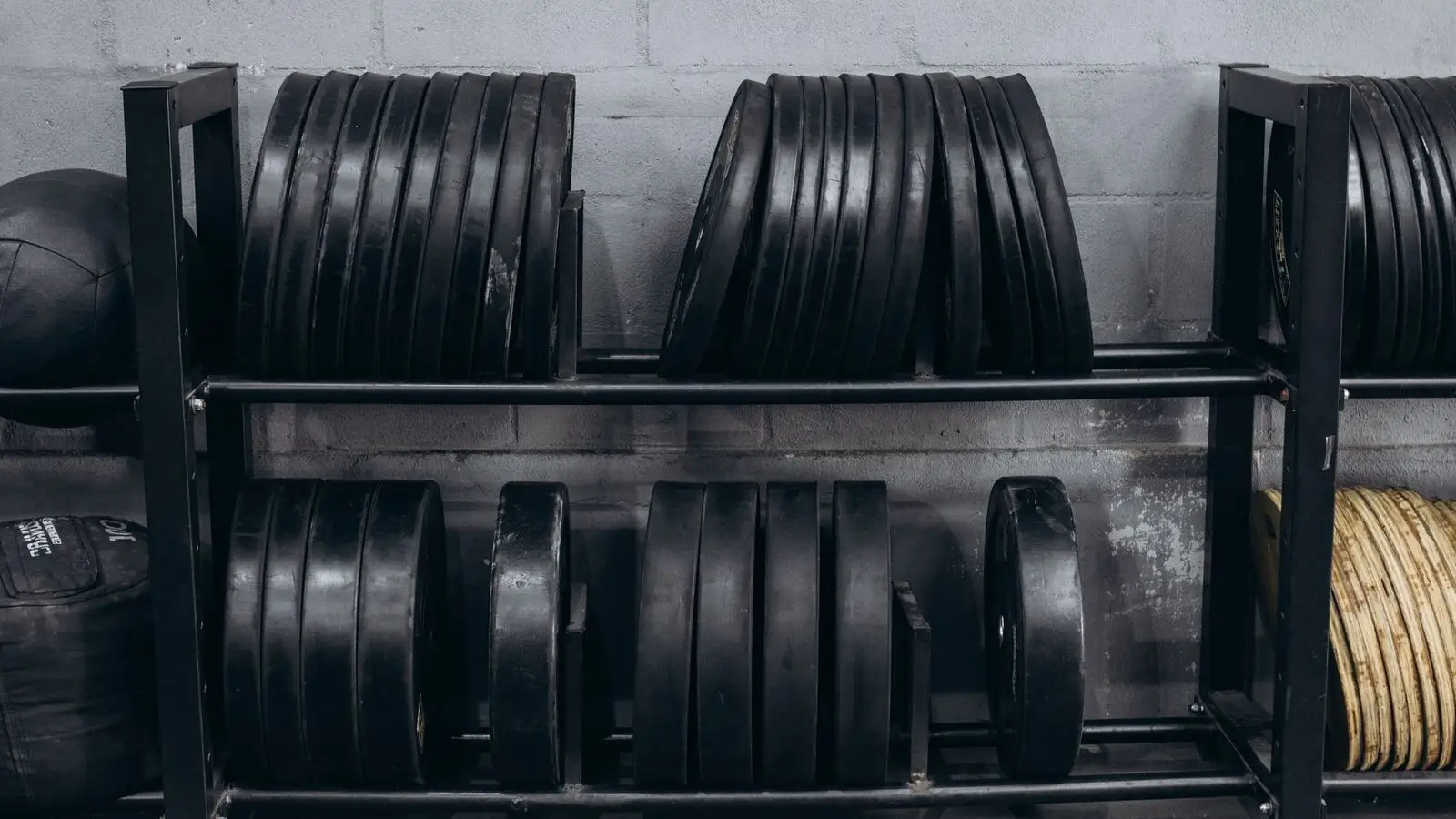
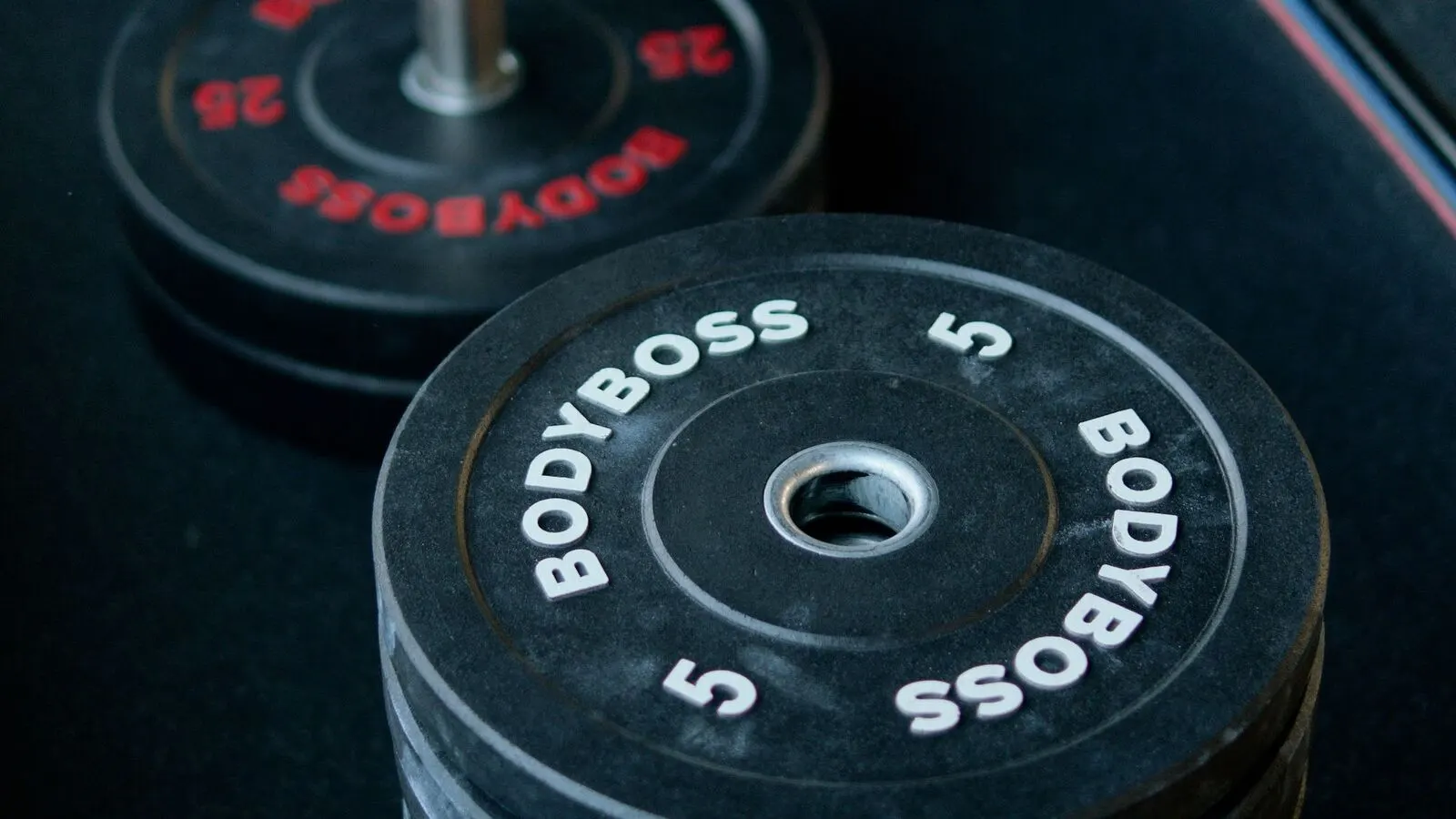
This is where most quotes go wrong. A tree rated at 1,000 lb sounds like it will hold a 1,000 lb plate collection. It will — if the plates are thin cast iron. It will not if they are bumper plates, because bumpers run out of horn length long before they run out of rated capacity.
Approximate thickness per plate, and what fits on a 10 in usable horn:
| Plate type | Thickness each (approx) | Plates per horn | Load per horn | Six-horn tree, theoretical |
|---|---|---|---|---|
| Cast iron 45 lb | 1.2–1.5 in | 6–7 | 270–315 lb | up to ~1,800 lb |
| Rubber-coated iron 45 lb | 1.6–2.0 in | 5 | 225 lb | ~1,350 lb |
| Virgin rubber bumper 45 lb | 3.0–3.3 in | 3 | 135 lb | ~810 lb |
| Crumb rubber hi-temp bumper 45 lb | 3.2–3.6 in | 2–3 | 90–135 lb | ~650 lb |
Read that table twice. Six horns of cast iron theoretically hold 1,800 lb, which the frame cannot take. Six horns of bumper plates hold maybe 800 lb, which the frame could take easily. The failure mode flips depending on what you put on it:
- Iron plates make a plate tree fail on weight. The frame flexes, the welds at the horn root crack, and the base walks.
- Bumper plates make a plate tree fail on space. Plates get stacked on the floor beside it, so you paid for storage you cannot use.
The practical fix for bumper-heavy floors is longer horns (12 in) or a toaster rack, which stores bumpers on edge and gets far more plates into the same footprint.
Specs that decide whether it survives five years
The frame on a plate tree is simple. Most of the money goes into four details.
Horn construction. Ask whether the horns are solid bar or tube. Solid 20–25 mm rod, welded through the upright with a full fillet, is what you want on a commercial floor. Tube horns are fine at home, but the weld root is where a tube horn fails after a few years of 45s being dropped onto it.
Horn tilt. A 5–10 degree upward angle keeps plates from creeping off. Straight horns are cheaper and common on home units. On a busy floor, plates slide off straight horns when members drop them on rather than set them.
Upright and base. 2 × 2 in or 3 × 3 in tube at 11–14 gauge, with a wide flat base and rubber pads rather than four thin legs. Check stability with the load on one side only, because that is how it will be used, and nobody loads a tree symmetrically.
Coating at the wear points. Powder coat everywhere, but the horn surface should be bare steel or UHMW-sleeved. Painted horns transfer paint onto plate hubs, and plate hubs are what people grab. That is a two-year complaint generator for a few dollars of material.
For wall-mounted panels, the spec question is the wall, not the steel. A panel loaded to 500 lb pulls hard on its top fixings. It needs blocking or studs at 16 in centres, four anchors minimum, and a plate thick enough not to dish. If you cannot confirm what is inside the wall, buy a floor unit.
Placement rules that stop the mess coming back
- 36 in clear aisle on the loading side. Same number as a machine, for the same reason: someone standing with a plate in each hand needs room to turn.
- Horns between about 18 in and 52 in off the floor. Below 18 in and members bend at the waist with two 45s, which is how backs go. Above 52 in and lighter members cannot reach the top horn, so it stays empty and the floor fills up instead.
- Within ten feet of the bar it serves. Measure it on the plan, not by eye.
- Not behind a door, a column, or the end of a mirror run. Storage in a blind spot reads as overflow storage, and members treat it that way.
- On rubber. Plates get set down hard. A tree on bare concrete is a chipped-plate factory and a noise complaint.
- Label the horns. A strip of tape or a small plate reading 45 / 35 / 25 / 10 costs nothing and cuts mis-storage dramatically. Members put plates back on the wrong horn mainly because nothing tells them where the right horn is.
What to put on the purchase order
Copy this into your enquiry and you will get comparable quotes instead of brochure pages:
- Format, horn count, horn length, horn diameter (50 mm for Olympic, 25 mm for standard; do not mix)
- Per-horn and total loaded ratings, in writing
- Steel gauge and tube size for upright and base
- Horn construction: solid rod or tube, weld type
- Coating spec and whether the horn surface is coated
- Fixings included, for wall-mounted units
- Knock-down or assembled, plus carton dimensions and CBM per unit
- Spare parts: feet, caps, and for carts, casters
One more line worth adding: how the units are packed. A tree is bulky and light, so it cubes out rather than weighs out. If you are already shipping plates, benches, and racks, plate storage is one of the few items that fills container volume without adding meaningful weight.
Price ranges
Approximate FOB ranges from Chinese manufacturers, 2025–2026, for reference only:
| Item | FOB range (approx) | Notes |
|---|---|---|
| Four-horn vertical tree | $30–60 | Light commercial, 2 × 2 in tube |
| Six-horn heavy tree | $55–95 | 3 × 3 in upright, solid horns |
| Wall-mounted horn panel | $18–45 | Price scales with horn count |
| Horizontal plate rack | $60–120 | Steel shelf type |
| Plate cart | $90–200 | Casters drive the price |
| Bumper toaster rack | $60–150 | Depends on plate count and finish |
Retail in the US and EU typically lands at two to four times FOB, which tells you where the margin sits in this category. Buy the heavy version. The difference between a $45 tree and a $80 tree is about 25 lb of steel and it is the difference between a ten-year item and a three-year item.
FAQ
How much weight can a plate tree hold? Commercial six-horn trees are typically rated between 500 and 1,300 lb total, or roughly 100–220 lb per horn. Home units are commonly rated 300–850 lb. Treat the total rating as a ceiling, not a target: it assumes an even load, and no one loads a tree evenly.
Is a plate tree or wall-mounted storage better? Wall-mounted if the wall is solid and the layout is permanent, because it costs you zero floor area. A tree if the layout may change, if you rent the space, or if the wall is drywall over studs you cannot verify. Carts make sense on platforms and in spaces that get reconfigured between classes.
Should bumper plates be stored vertically or horizontally? Vertically, on edge, on a tree or toaster rack. Bumper plates stored flat under load for long periods take a set and the rubber fatigues faster. Vertical storage also lets plates drain and dry, which matters in humid climates.
Can I just stack plates on the floor under the racks? For overflow, briefly, yes. As the primary solution, no. Floor stacks are a trip hazard, they hide missing pairs, and on rubber flooring they leave permanent compression marks within a season.
How many trees does a four-rack gym need? Two six-horn trees plus wall horns at each rack, as a starting point. The test is not count, it is whether a member can strip a bar and put every plate away in one trip without waiting.
Do plate trees need to be bolted down? Freestanding trees do not, as long as the base is wide and the unit is not loaded top-heavy. If your floor is a mezzanine or a suspended slab with a point-load limit, check the loaded weight with your structural engineer before you put 1,000 lb in one spot.
Order storage with the rest of the floor
Storage is one of those items where the freight is more expensive than the product if you buy it alone. Put the trees, wall horns, and carts on the same order as your racks, plates, and benches, and they ride along in space you have already paid for.
Have a look at the gym equipment accessories range and the benches and racks range to see what else fits in the same container. If you are still working out plate quantities, our guide to calibrated plates vs bumper plates covers thickness and tolerance, and the lifting platform guide explains how much plate a platform actually needs behind it.
Send us your rack count, plate tonnage, and plate type, and we will come back with a storage layout and a container plan. You can reach the team through our contact page.