
Calibrated Plates vs Bumper Plates: Which Belongs on Your Gym Floor
The short answer: if people in your building put a number on the bar and care whether it is real, you need calibrated plates. If they drop the bar from overhead, you need bumpers. Most commercial gyms need mostly neither. They need plain iron or rubber-coated iron and a small bumper set for the handful of members who deadlift.
The calibrated plates vs bumper plates decision gets argued about like a religious question online, usually by people outfitting a garage. On a commercial floor the question is narrower and more practical: what mix do you buy, how many kilos of each, and what do you write in the purchase order so the tolerance you paid for is the tolerance you receive.
What “calibrated” actually means
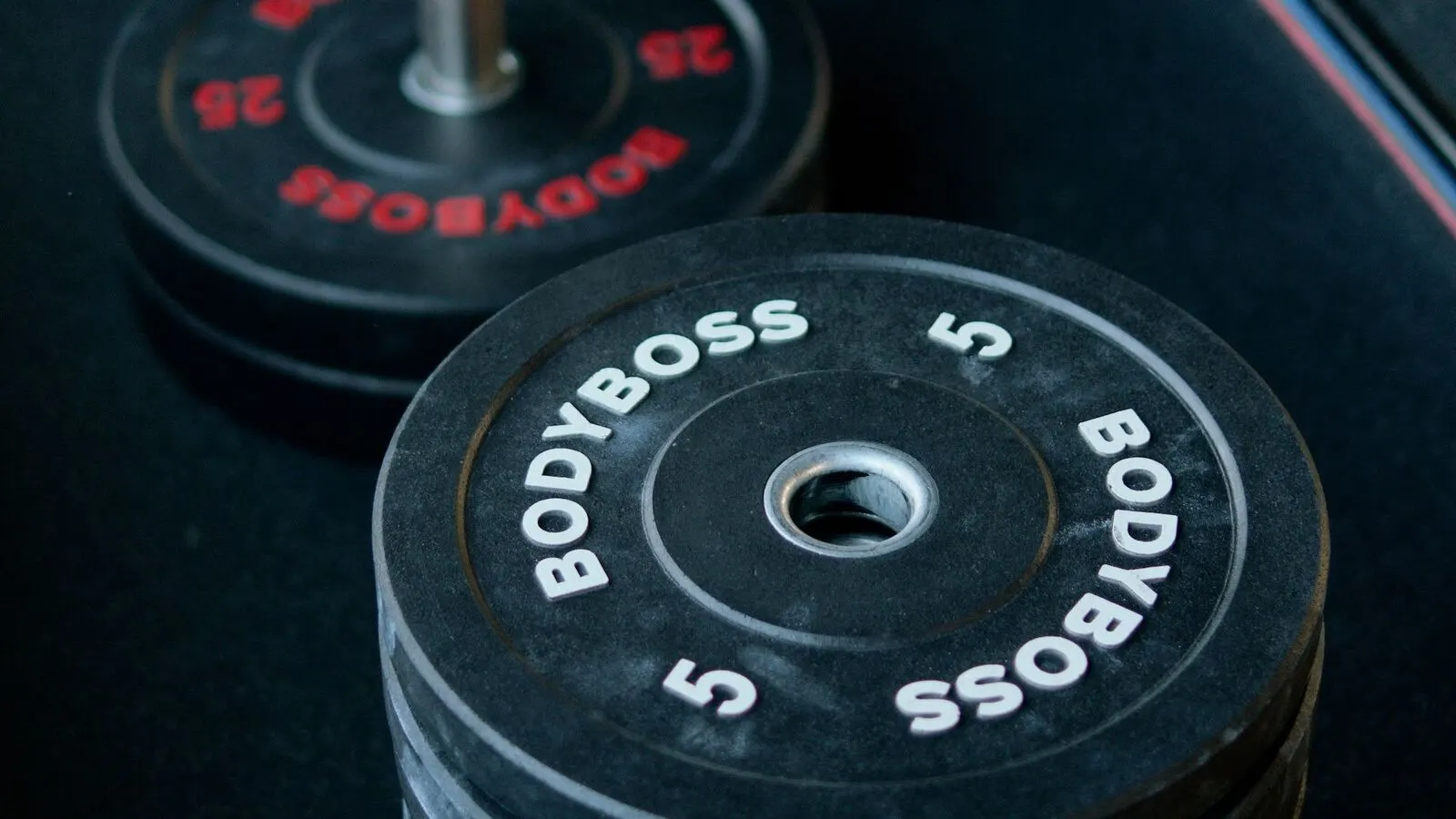
A calibrated plate is weighed after machining and corrected until it sits within a very tight band of its marked weight. The correction is physical, not a paint job: two or three holes get drilled into the back face, or a brass plug gets added or removed, until the scale agrees.
Typical tolerances in the trade:
| Plate type | Typical tolerance | What that means at 300 kg on the bar |
|---|---|---|
| Calibrated steel / cast iron (IPF-style) | ±10 g per plate | Under 0.2 kg total error across a full load |
| Competition bumper | Often ±0.1–0.25% per plate | 0.3–0.7 kg |
| Training bumper | ±1–3% | 3–9 kg |
| Standard cast iron / Olympic iron | ±1–3%, sometimes worse | 3–9 kg, and it varies plate to plate |
| Cheap no-name iron | Can exceed 5% | 15 kg plus |
At 300 kg, a 9 kg error is the difference between a good third attempt and a miss. That is the whole argument for calibrated plates, and it only applies to a facility where members compete or train to a number.
One thing buyers miss: calibration is a property of the set, not the plate. A calibrated 20 kg paired with a discount 20 kg gives you an uncalibrated 40 kg. If you go calibrated, go calibrated for the whole rack, and keep the cheap plates off that rack entirely.
Head to head
| Calibrated steel | Competition bumper | Training bumper | Rubber-coated iron | |
|---|---|---|---|---|
| Core material | Machined cast iron or steel | Steel hub, high-density rubber | Steel insert, rubber | Cast iron with thin rubber skin |
| Tolerance | ±10 g typical | ±0.1–0.25% | ±1–3% | ±1–3% |
| Thickness, 20–25 kg | 26–30 mm | 65–80 mm | 70–90 mm | 32–40 mm |
| Diameter, 25 kg | 450 mm | 450 mm | 445–450 mm | 445–450 mm |
| Bounce on drop | Almost none | Low bounce, controlled | Moderate to high | Dead, but loud |
| Drop from overhead | Not designed for it | Yes | Yes | No |
| Floor protection | Needs a platform | Good | Good | Needs a platform |
| Noise | Loud, metallic | Muted thud | Muted thud | Loud |
| Colour coding | IWF colours standard | IWF colours | Often black | Black or colour |
| Approximate FOB price | Highest per kg | Mid–high | Mid | Lowest |
| Best home | Powerlifting racks, strength rooms | Weightlifting and CrossFit | CrossFit, school, functional | General gym floor |
The constraint nobody models: sleeve length
This is where the decision actually gets made, and it rarely comes up in the brochure.
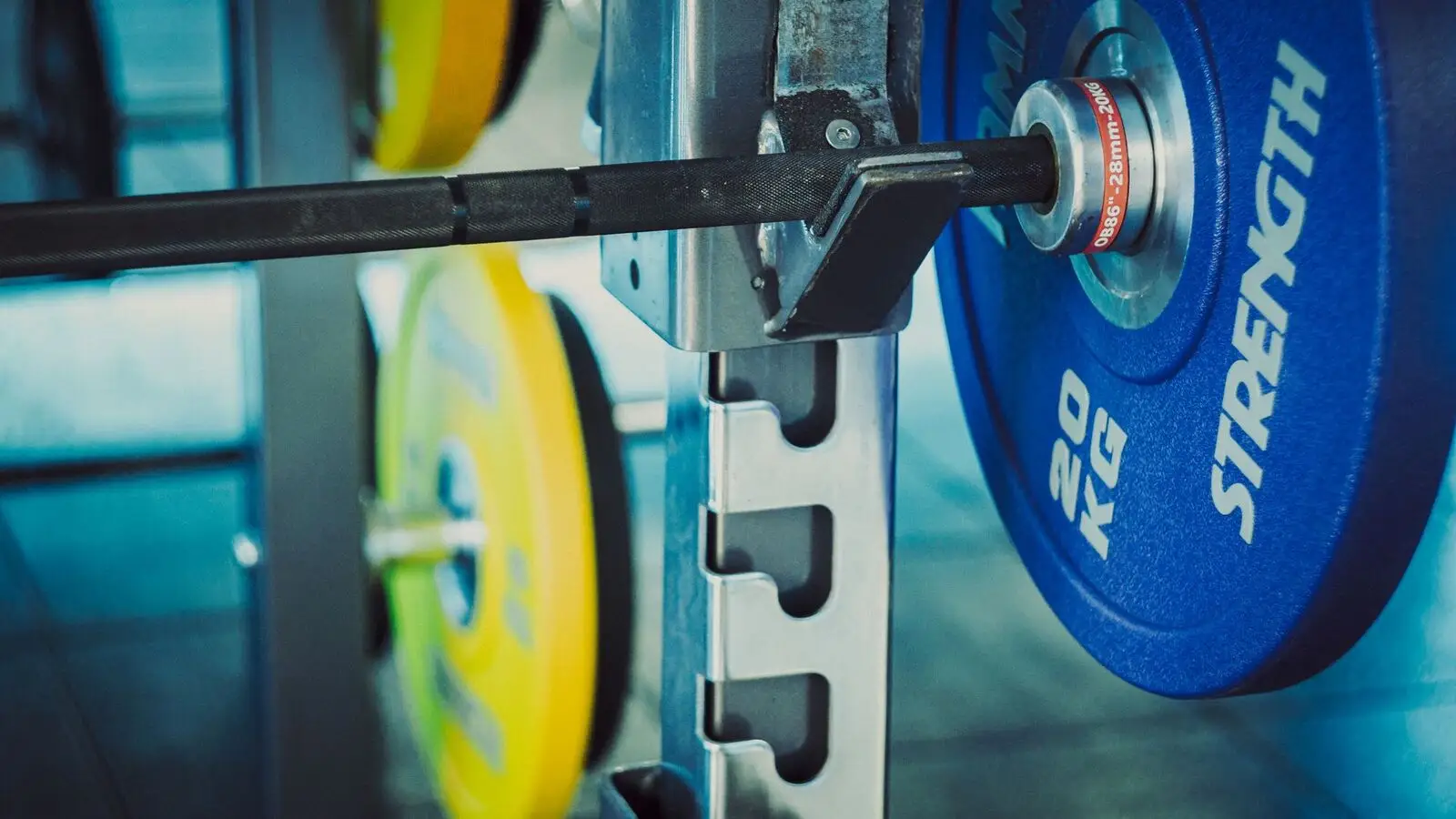
An Olympic bar gives you roughly 415 mm of usable sleeve per side. Do the arithmetic:
- A 25 kg calibrated plate at ~28 mm thick: up to 13 plates per side, so bar capacity is effectively limited by the bar, not the plates.
- A 20 kg training bumper at ~80 mm thick: five plates per side, and you are out of sleeve. With a 20 kg bar that is a ceiling around 220 kg.
- Competition bumpers are thinner than training bumpers but still nowhere near steel.
So a powerlifting gym that buys bumpers “because they protect the floor” discovers in month three that its strongest members cannot fit enough weight on the bar for a max deadlift. Meanwhile a weightlifting club that buys calibrated steel gets plates that survive a clean and then crack at the hub when someone dumps a snatch.
That single number, sleeve length divided by plate thickness, settles most of these arguments before price comes into it.
Where each type belongs
Think in zones, not in one big order.
Powerlifting and strength room. Calibrated steel as the working plate, plus a proper change-plate set (0.25, 0.5, 1, 2.5 kg), because powerlifting is won in small jumps. Add calibrated collars; a 2.5 kg pair of collars that is actually 2.3 kg undoes the whole exercise.
Weightlifting and functional area. Competition bumpers in IWF colours, 10/15/20/25 kg, with matching change plates. Buy a couple of spare 20s because that is the plate that dies first.
General gym floor. Rubber-coated iron or plain iron, sized to your dumbbell and machine loading. Keep one small bumper stack, four to six pairs, for the members who deadlift on the platform.
School, hotel, apartment, office. Rubber-coated iron only. Bumpers here tend to get dragged, stacked badly, and used as doorstops.
Platform area. Bumpers if the bar leaves the floor at speed. Calibrated steel is fine for deadlifts pulled and reset, and much kinder to your sleeve arithmetic.
How many kilos to buy
Here is the arithmetic we use when a customer sends a floor plan.
Take your heaviest realistic single, add 25 percent as headroom, and multiply by the number of stations where that weight gets loaded at the same time, not the number of stations you own. In a powerlifting gym, four platforms do not all run at max simultaneously; in practice you share plates across 60 to 70 percent of stations.
| Facility type | Calibrated steel | Bumpers | Standard or coated iron |
|---|---|---|---|
| General commercial club, 1,000–2,000 members | 0–200 kg, only if you run a powerlifting club | 300–800 kg | 2,000–3,500 kg |
| Powerlifting gym, 4–8 platforms | 1,200–2,000 kg plus change plates | 0–200 kg for accessory work | 500–800 kg |
| Weightlifting club | 0–100 kg | 1,000–1,800 kg, competition spec | 200–400 kg |
| CrossFit box | 0 | 800–1,600 kg | 300–600 kg |
| School or university weight room | 0–100 kg | 200–400 kg | 600–1,200 kg |
| Hotel, apartment, office gym | 0 | 0–100 kg | 300–600 kg |
Two practical notes on those numbers. First, plate demand is driven by the top 10 percent of lifters; the median member never touches a 25 kg plate. Second, buy change plates generously. They are cheap, they disappear, and a rack without 1.25 kg plates quietly stops people from progressing.
Freight: plates weigh out before they cube out
A thousand kilos of calibrated plates is under one cubic metre. You will never cube out a container with plates. You will hit the weight ceiling, and it will happen earlier than you expect.
A 40 ft high cube has a payload rating around 26,000–28,000 kg. But containers moving inland in the US are usually limited by road gross vehicle weight: 80,000 lb across the tractor, chassis, container and cargo. That puts the practical cargo ceiling somewhere between 16,000 and 19,000 kg. Fill a container to its rating and the trucker will not take it.
What that means for a mixed order: 1,000 kg of plates and 4,000 kg of cardio is fine; 12,000 kg of plates and a full cardio package is two containers, whether or not the volume says one. Plan the heavy items first and let the light equipment fill the gaps. We have a longer writeup on this in the landed cost guide if you are costing the whole order.
Also: plates ship on pallets, banded, one tonne maximum per pallet, never double-stacked. Loose plates in a container are how you get a claim.
What to put in the purchase order
The tolerance claim is the one thing worth being pedantic about, because it is invisible until you put a plate on a scale.
- State the tolerance and the verification method. “±10 g per plate, individually weighed, deviation chart supplied per pallet.” If a supplier cannot supply the chart, they are not calibrating.
- Center hole. 50.0 mm nominal, plus 0.1 minus 0. Check it with a plug gauge on arrival, not with your fingers. A sloppy hole rocks on the sleeve and chews the bar.
- Insert construction on bumpers. The steel hub must be bonded during vulcanisation. Glued or press-fit inserts are the number one failure on cheap bumpers, and they fail at the worst moment.
- Durometer. Virgin rubber training bumpers typically land around Shore A 75–85. Softer bounces more; harder lasts longer but feels dead and cracks in cold weather.
- Drop test. Three drops of a 20 kg plate from 2.5 m onto concrete, checking insert separation, ovality and surface cracking. Ask for video on the actual production batch, not a stock clip.
- Finish. Powder coat over e-coat for humid climates. Specify VCI bags if the container will sit in a tropical port.
- Weigh-check protocol. Ten random plates per pallet on a calibrated scale, deviations recorded. This is a fifteen-minute job that catches a whole bad batch.
FAQ
Are calibrated plates worth it for a normal commercial gym? Usually not. If fewer than 10 percent of your members compete or follow a structured strength program, the money is better spent on more racks, better bars, or a second platform. Calibrated plates earn their price in facilities where a member’s progress is measured in single kilos.
Can I mix calibrated plates with regular plates? You can, and you lose the accuracy. Mixing is fine for general training and pointless for competition prep. Keep one rack calibrated, mark it, and keep the rest of the floor on standard plates.
Do bumpers protect the floor enough to skip a platform? No. Bumpers spread impact over the plate face; they do not spread it over the slab. A dropped 200 kg bar on bumpers over bare concrete will still crack the floor. Bumpers plus a proper platform is the combination that works.
Should I buy kilograms or pounds? Kilograms if anyone competes under IPF or IWF rules, because the plates and the attempts are in kilos. Pounds if your market is entirely US general fitness and the trainers think in pounds. Mixing both on one floor creates confusion every single session.
How long do these plates last? Calibrated steel in a powerlifting room: ten to twenty years, and the paint wears off long before the plate does. Training bumpers in a busy CrossFit box: three to six years, with the 20s going first. Competition bumpers last longer because they get treated better.
Do calibrated plates break if someone drops them? They chip and crack at the rim, and a hard drop on a corner can take a piece out. They are not designed for dropping. If your members drop from lockout, buy bumpers.
Buying both is usually the right answer
The facilities that get this right almost always end up with two plate systems and a clear rule about which rack uses which. It sounds fussy until you watch a member load 300 kg of mixed plates and then wonder why the bar feels different from last week.
We build and export both: calibrated steel in kilogram sets with IWF colour coding, and rubber bumpers from training grade through competition spec, alongside the plate-loaded machines and racks that go around them. If you send us a floor plan and your members’ training profile, we will come back with a plate tonnage split and a container loading plan rather than a price list. Start at our contact page or read how we handle OEM and custom branding if you sell under your own label.