
A kettlebell storage rack looks like the easiest line on your equipment list. Four legs, two or three shelves, done, move on to the treadmills.
Then the container lands and the shelves turn out to be 42 inches of usable length, your 16 kg bells are about 4.9 inches across the base, and the 32 kg pair on the bottom tier has to be lifted out from ankle height by every member who wants it. The rack held the weight. It just did not hold the bells the way people actually use them.
This guide is about sizing a kettlebell storage rack to the fleet you actually own, not the one in the catalogue photo. If you have not settled the bell list yet, work that out first. The rack is downstream of it, and getting the order backwards is how gyms end up with two mismatched racks and a pile of bells on the floor.
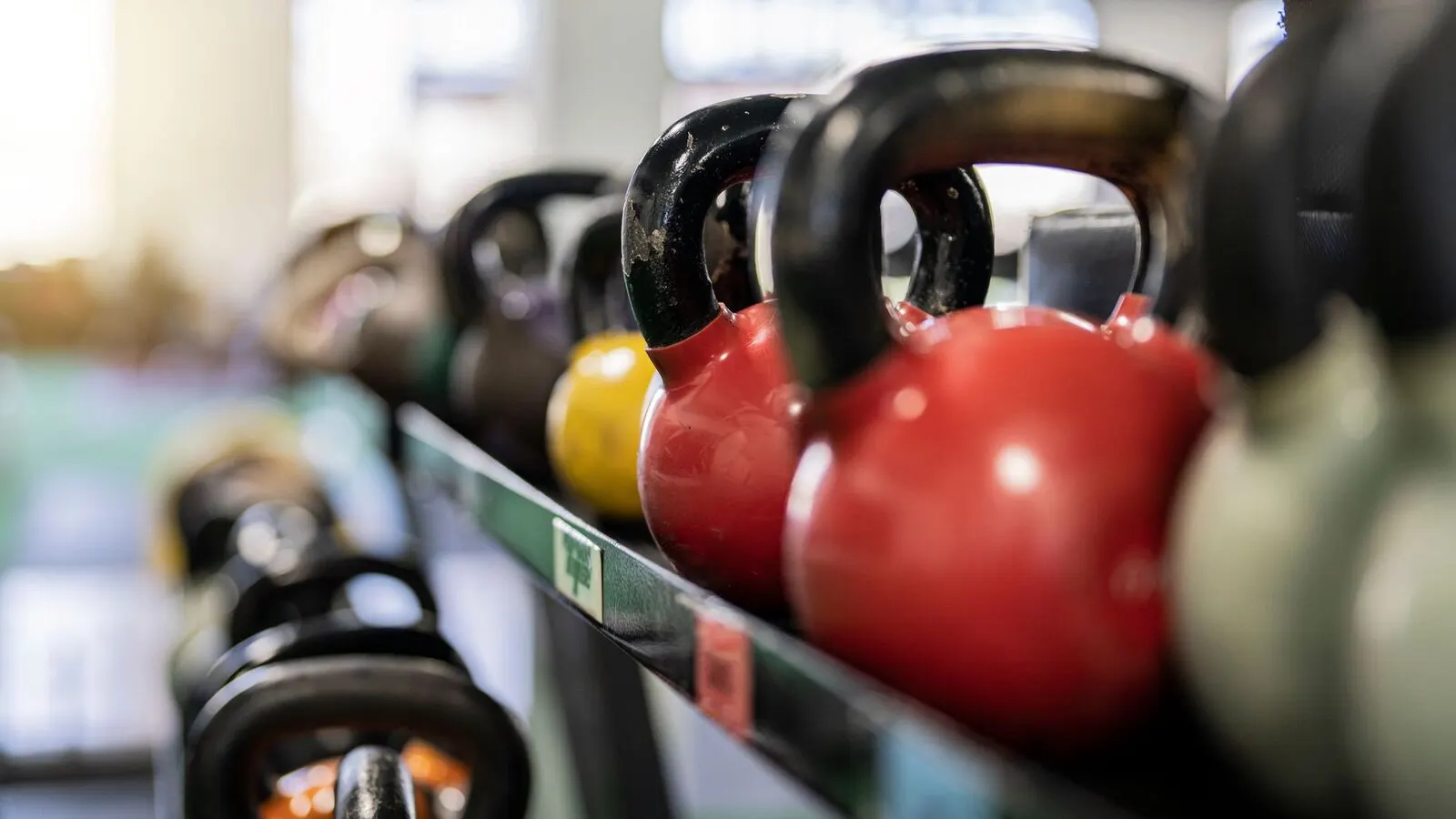
Sizing a kettlebell storage rack starts with your bells
Every rack decision comes down to linear inches of shelf. A bell occupies its base diameter plus a gap of roughly 1.5 to 2 inches so members can get fingers around the handle without scraping knuckles.
Base diameters below are approximate — cast iron moulds differ between factories, and urethane-coated bells run a little wider than bare cast iron at the same weight:
| Bell weight (kg) | Approximate base diameter | Shelf length needed with gap |
|---|---|---|
| 4 kg | 3.3 in | 5.0 in |
| 8 kg | 4.1 in | 5.8 in |
| 12 kg | 4.5 in | 6.2 in |
| 16 kg | 4.9 in | 6.6 in |
| 20 kg | 5.3 in | 7.0 in |
| 24 kg | 5.7 in | 7.4 in |
| 32 kg | 6.3 in | 8.0 in |
| 40 kg | 6.9 in | 8.6 in |
A 47-inch rack with 42 inches of usable shelf holds six 16 kg bells per tier, or five 32s. That is the whole arithmetic, and it explains why a rack sold as “12 bell capacity” can be full at nine bells once you load it with 24 kg and up. Nothing about the rack is dishonest — capacity figures are usually quoted against a mid-weight bell with no gap allowance.
Run the sum before you order: total inches = sum of (base diameter + 1.7 in) for every bell in the fleet. Add 10 to 15 percent for the duplicates you will buy in two years.
Five formats, and what each is actually for
| Format | Typical capacity | Floor space | Best for | The catch |
|---|---|---|---|---|
| 2-tier flat shelf rack | 8-12 bells | 47 × 20 in | General gyms with a modest set | Upper tier becomes a shelf for junk |
| 3-tier shelf rack | 15-24 bells | 55 × 22 in | Clubs with a full ladder to 32 kg | Top tier above 52 in is hard to reach |
| Vertical tower / pocket rack | 6-10 bells | 20 × 20 in | Studios, hotels, tight footprints | Deep pockets hide small bells at the back |
| Wall-mounted shelf or grid | 6-12 bells, or 8-12 balls | Zero floor | Functional zones, CrossFit boxes | Needs real blocking behind the panel |
| Hybrid plate + kettlebell rack | 12 bells plus ~400 lb plates | 50 × 24 in | Strength gyms that are short on wall | Compromises both jobs slightly |
| Mobile cart | 8-12 bells | 40 × 22 in | Studios that reset the floor between classes | Casters are the first thing to fail |
Indicative factory-direct pricing for a commercial build, FOB, 2026 (get an actual quote — these move with steel and freight):
| Format | Indicative FOB per unit |
|---|---|
| 2-tier shelf rack, 47 in | $90-170 |
| 3-tier shelf rack, 47-55 in | $140-260 |
| Vertical tower, 6-10 pockets | $70-140 |
| Wall-mounted shelf or grid | $50-110 |
| Hybrid plate + kettlebell rack | $200-340 |
| Ball rack, 10 pockets | $70-150 |
| Mobile cart | $120-220 |
The format that gets specified most often and performs worst is the 3-tier with a top shelf at 60 inches. Half your membership cannot see what is up there, so nobody racks the 8 kg bells and they end up on the floor in front of the rack. Practical top-tier height is 48 to 52 inches.
Load rating: the number on the page is not the number you get
Rack specs usually quote either a per-shelf rating or a total rating, and sellers are rarely clear about which. Commercial shelves typically land somewhere around 300 to 450 lb per tier with a total of 900 to 1,300 lb for a 3-tier — treat those as typical rather than guaranteed, and ask for the number per tier in writing.
Where the arithmetic bites:
- Even distribution is assumed. Twenty bells at 24 kg average is 1,058 lb. Put fourteen of them on the middle tier because that is the convenient height, and you have 740 lb on a shelf rated 450.
- Dynamic load is worse than static. Members do not place bells down, they drop them from waist height. Repeated impact at the same shelf point is what cracks powder coat and eventually fatigues the weld at the shelf bracket.
- Casters make it worse. Four casters rated 220 lb each sounds like 880 lb of headroom until you hit a floor transition strip at speed and one wheel takes most of the load.
Where the rack fails, and why
I have seen the same handful of failures across a lot of containers:
- Powder coat cracking at the shelf-to-upright weld. Not cosmetic. Once moisture gets in, the weld root rusts from the inside in humid gyms. Look for a full weld, not three tacks.
- Flat-pack bolts working loose. Knock-down racks are cheaper to ship and fine in service, but the hardware needs a torque check at installation and again at 30 days. Nobody does the 30-day check.
- Shelf sag. A loaded shelf should not visibly deflect. More than about 2 percent of span and members stop trusting it, which means they stop using the rack.
- Bare steel shelves wearing the bell coating. A plain powder-coated shelf will rub through urethane on the base of every bell within a year. UHMW or plastic-lined cradles cost very little at order time.
- Rubber feet disappearing. Then the rack walks across the floor and marks it.
- Wall anchors into drywall. A loaded wall grid at 300 lb is a lever arm, not a shelf. It needs blocking between studs, four anchors minimum, and a pull-out rating written down somewhere.
Cradle, flat shelf, or pocket?
Three shelf styles, three different jobs.
Flat shelf is the cheapest and the most flexible. It also lets bells slide, and members will stack small bells in front of big ones. Fine for a hotel or apartment gym where the set barely changes.
Cradle or saddle locates each bell in a fixed slot. Racking speed goes up, reshelving accuracy goes up, and you can label the slot. This is what you want in a 24-hour or high-traffic facility where the rack has to be self-explanatory at 2 a.m.
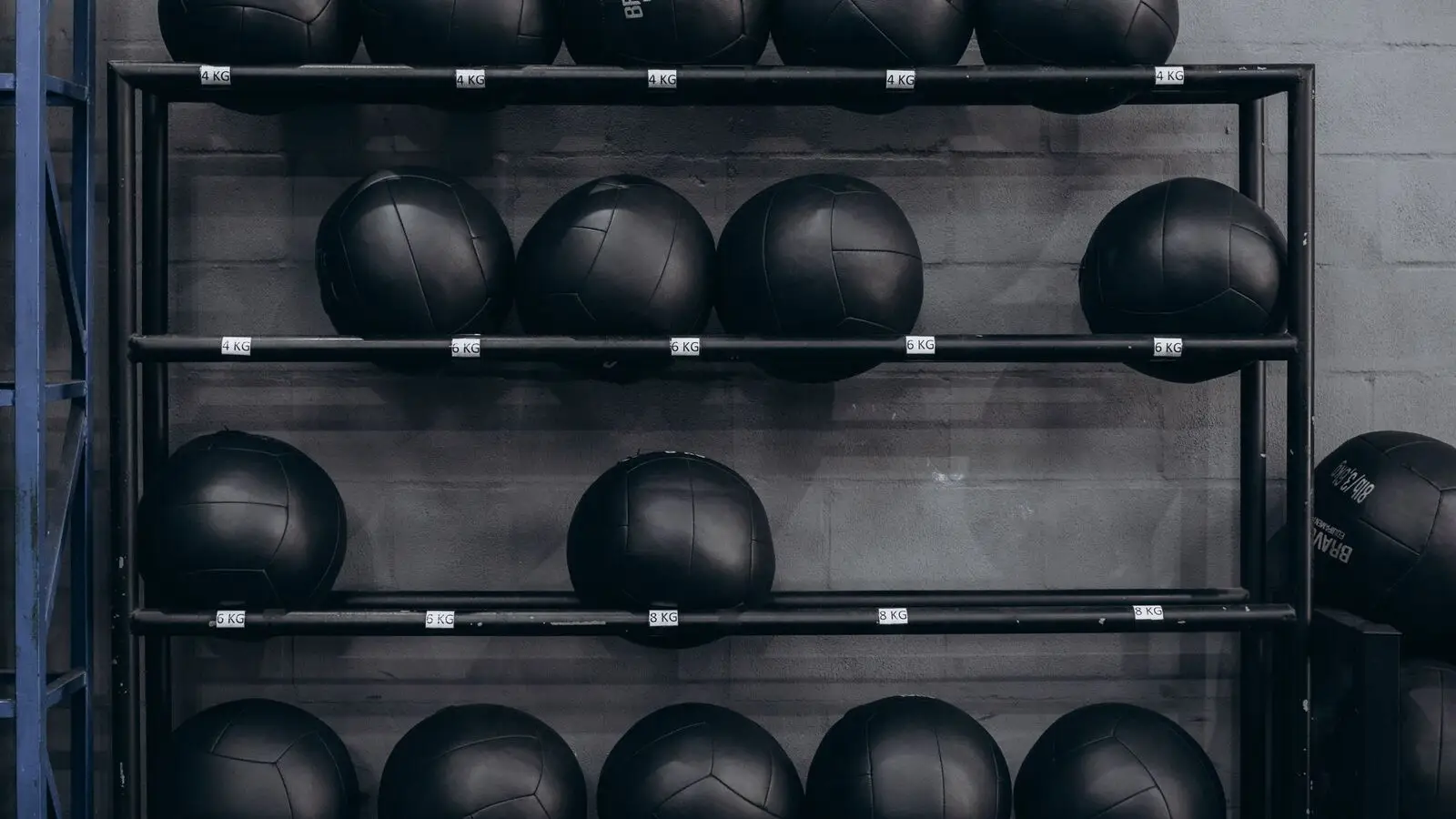
Deep pocket or vertical tower stores bells handle-up and takes the least floor. Good in studios, awkward for anything above 24 kg, and small bells vanish to the back of the pocket.
Rail spacing on cradles runs about 4 to 5 inches, and adjustable rails are worth the small premium if your ladder might go from 5 lb increments to 4 kg increments later.
Medicine balls and wall balls are a different problem
Round objects roll. A flat shelf with no lip is a floor-bound ball waiting to happen, and a ball dropped from a top shelf at head height is how you get a claim on your insurance rather than a tidy gym.
Two useful storage types:
- Wall-mounted pocket grid. Pockets run roughly 8.5 to 9 inches inner diameter and hold about 30 lb each, usually in 10-gauge or heavier steel. Good for 6 to 16 lb wall balls. Anything 20 lb and up generally needs a 12 to 14 inch opening or a proper shelf.
- Shelf rack with a retaining lip or cradle ring. Slower to load, holds heavier slam balls, and doubles for medicine balls of mixed sizes. A three-tier ball shelf is also the only format that scales past about 12 balls without eating a wall.
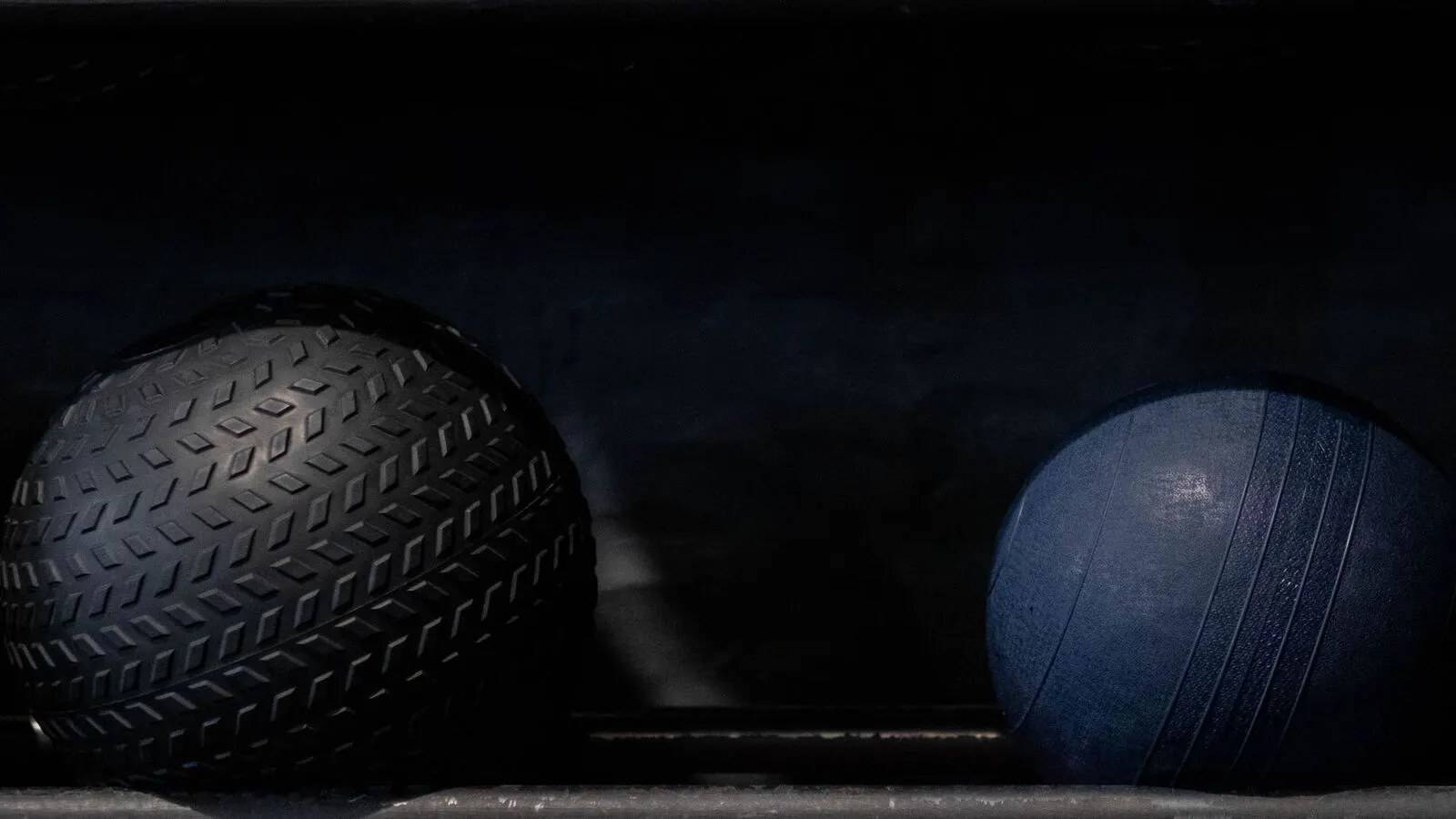
Typical ball diameters, approximate and heavily brand-dependent:
| Ball weight | Approximate diameter |
|---|---|
| 6-8 lb | 9-9.5 in |
| 10-12 lb | 10-10.5 in |
| 14-16 lb | 11-11.5 in |
| 20 lb | 12 in |
| 25-30 lb | 13-14 in |
Slam balls and wall balls should not share pockets if you can avoid it. Slam ball shells are softer and deform, so they jam in a tight pocket; wall balls are stiffer and slide out. Ten pockets at 30 lb each is 300 lb hanging off a wall panel, which brings the blocking conversation back.
Placement rules that save you a renovation
- Keep bells within 8 to 10 feet of the turf, platform, or open floor where they get used. Any further and they migrate.
- Leave 36 inches of clear aisle in front of the rack. Twelve inches is a trip hazard with a 32 kg bell in hand.
- Put the heavy tier at 20 to 32 inches, not on the floor. Structural logic says heaviest lowest, ergonomic logic says heaviest at waist height. Waist height wins as long as the shelf is rated for it — nobody should be deadlifting a 40 kg bell off the deck with a rounded back before they have warmed up.
- Do not mount anything on a mirrored wall. Vibration plus a dropped bell equals a mirror replacement.
- Floor under and around the rack should be 15 to 20 mm rubber. Bare concrete plus dropped cast iron chips the slab and the bell.
- On an upper floor, get the point load checked. A 1,300 lb rack on four feet is not the same conversation as 1,300 lb spread across 20 square feet.
Container and freight reality
Racks are the cheapest thing you will ever put in a container, and they are also the easiest to get wrong.
Knock-down racks pack at roughly 0.08 to 0.15 CBM per unit and weigh 25 to 35 kg. A 40 ft high cube holds more racks than any single gym will order, so the practical play is to load racks into the void space around cardio and selectorized machines rather than treat them as their own shipment. Order the hardware bag per unit, labelled, because a rack that arrives without bolts is a rack that sits in the corridor for six weeks.
Two things to specify in the PO:
- Racks ship unassembled with a labelled hardware bag per unit and a printed assembly sheet. Not a QR code, a sheet.
- Racks ship last, at the doors, so they come out first on site. You want storage standing before the bells come off the pallet.
If you are buying bells and racks together, load bells low and centred and racks on top. Cast iron at 40 kg a bell is dense freight; racks are volume. Put them in the same container and the two fill each other’s gaps. Our gym equipment accessories range is built to mix into these loads, and it is worth sending us your bell list and floor area before you fix quantities rather than after.
What to put in the order spec
- Shelf length and usable length per tier, stated separately
- Load rating per tier and total, in writing
- Shelf style: flat, cradle with rail spacing, or pocket
- UHMW or plastic liner on cradles, yes or no
- Steel gauge and tube size for uprights and shelves
- Weld type: full weld versus tack, and where
- Powder coat: single stage or two stage, and colour code
- Rubber or nylon feet, and whether they are replaceable
- Wall-mount version: anchor count and pull-out rating
- Hardware bag per unit, labelled, with spare bolts
- Assembly sheet printed and packed with the unit
- CBM and gross weight per carton for the loading plan
If you are ordering racks for a new floor alongside benches and free-weight storage, the benches and racks range follows the same logic: buy the storage to fit the equipment, never the other way around. And if you want to see how the rack loads into a real container plan, our factory team will draw it against your machine list before you commit.
FAQ
How much weight does a commercial kettlebell rack hold? Usually 300 to 450 lb per tier and 900 to 1,300 lb total for a 3-tier unit, depending on gauge and shelf construction. Ask for the per-tier figure, not just the total, because uneven loading is normal in service.
Should kettlebells be stored on the floor or on a rack? On a rack, for three reasons: the floor stays clear for cleaning and classes, bells stay findable by weight, and members stop lifting 32 kg off the deck with a rounded back. Floor storage is only reasonable for a handful of very heavy bells in a strength gym.
What is the best way to store medicine balls? Wall-mounted pockets for 6 to 16 lb wall balls, and a shelf with a retaining lip or cradle rings for anything heavier. Round objects on a flat shelf roll, and a 20 lb ball off a top shelf is a real injury risk, not a theoretical one.
Can I wall-mount a kettlebell rack in a leased space? Yes, but plan the fixing rather than improvising it. Blocking between studs, four anchors minimum, and a pull-out rating that accounts for the lever arm of a loaded shelf. If the wall is drywall on steel studs with nothing behind it, use a floor rack.
Do competition kettlebells need a different rack? They are easier to store, because every bell in a given weight class has identical dimensions and a flat, uniform base. A cradle rack sized for one competition bell size fits all of them. Cast iron is the opposite — base diameter grows with weight, so slots need to be sized per tier.
How many racks does a gym need? One rack per 12 to 20 bells, plus a second small tower near the functional zone if your floor is bigger than about 8,000 sq ft. Splitting storage between two locations cuts the walking and stops the main rack from becoming a dumping ground.