
How Much Does It Cost to Equip a Gym? A Factory-Direct Budget Breakdown
A 2,000 sq ft studio needs roughly $35,000–$65,000 of equipment bought factory-direct. A 4,000–5,000 sq ft independent gym lands around $70,000–$150,000. A 10,000 sq ft full-service club runs $220,000–$450,000 before flooring, freight and installation.
Those are equipment-only numbers at manufacturer pricing. Buy the same specification through branded dealer channels and you multiply by 2.5 to 4. The spec sheet barely changes. The distribution layer does.
This guide breaks the number down the way a factory quotes it: per machine category, per square foot, and per container, with the freight and duty that most budget spreadsheets forget until the invoice arrives.
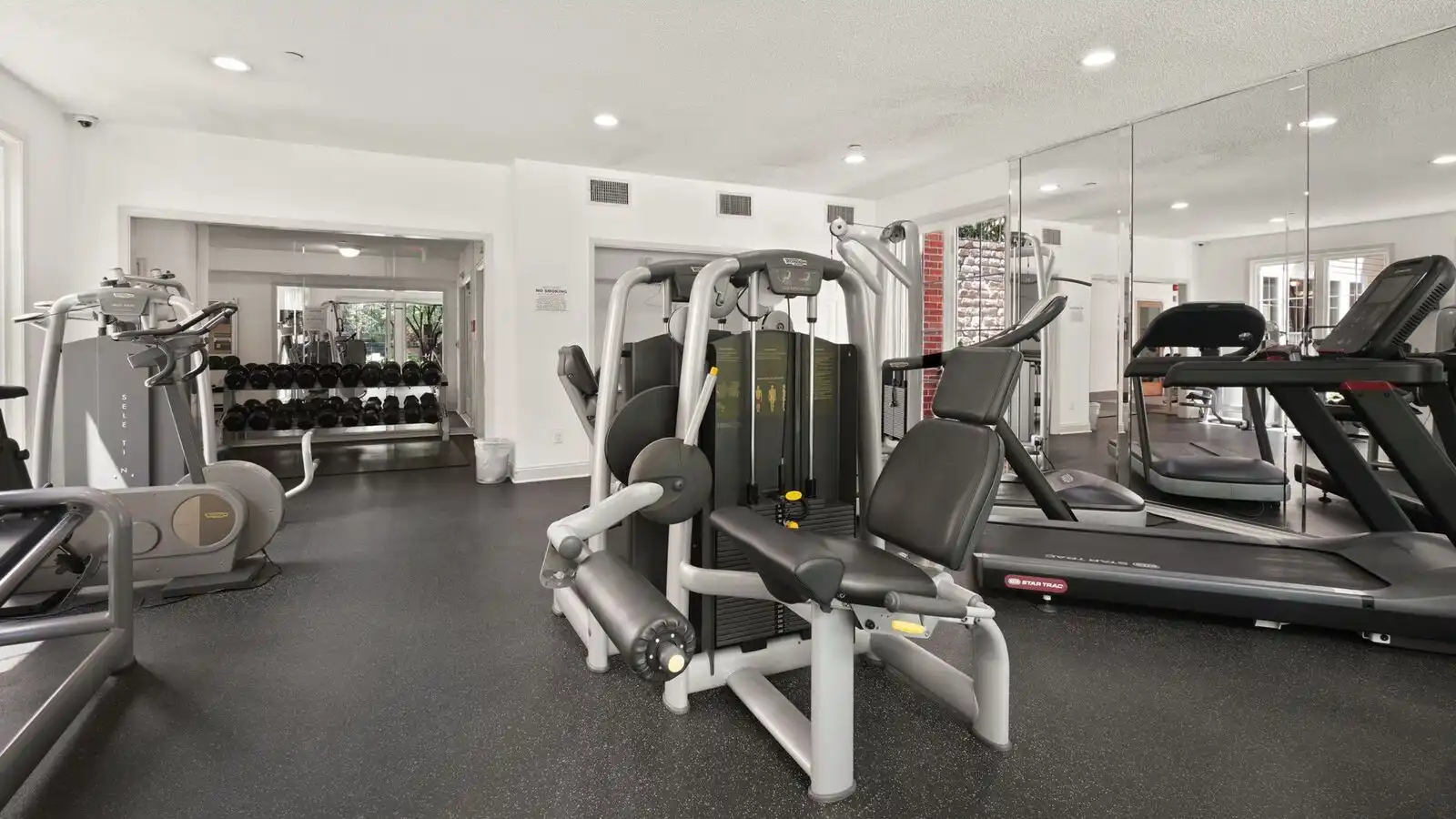
The five-minute answer: equipment budget by facility size
Most gym equipment budgets are set with a per-square-foot rule, then adjusted. Here is the range we see across factory-direct projects, all figures approximate and excluding freight, duty, flooring and installation:
| Facility type | Floor area | Equipment budget (factory-direct) | Typical $/sq ft | Core mix |
|---|---|---|---|---|
| Personal training studio | 800–1,500 sq ft | $18,000–$45,000 | $15–$30 | 2–3 racks, dumbbells to 50 lb, 2 cardio, functional trainer |
| Boutique / small group studio | 1,500–3,000 sq ft | $35,000–$80,000 | $18–$30 | 6–10 cardio, 6–10 selectorized, turf or open floor |
| Independent gym | 3,000–6,000 sq ft | $65,000–$175,000 | $16–$30 | 12–20 cardio, 14–20 selectorized, 5–8 plate loaded, full free weight zone |
| 24-hour / express club | 4,000–8,000 sq ft | $90,000–$220,000 | $18–$32 | Cardio-heavy, 4-station circuits, durable simple strength |
| Full-service club | 8,000–15,000 sq ft | $180,000–$480,000 | $20–$38 | 25–40 cardio, 30+ strength, group studio, recovery area |
| Hotel / apartment / office | 600–1,500 sq ft | $12,000–$40,000 | $15–$28 | 3–6 cardio, multi-station or 4–6 selectorized, dumbbells to 50 lb |
Two things move you up or down inside those bands: how much of your floor is cardio, and how much steel you are willing to pay for. Cardio costs more per square foot than strength. Heavy-duty 11-gauge frames with 250 lb stacks cost more than 14-gauge frames with 150 lb stacks, and across a 20-machine order that gap is easily $12,000. The $/sq ft column is a planning rule, not arithmetic — it breaks down at the extremes.
What a machine actually costs, category by category
This is the part most buying guides skip. Below are typical factory-direct unit prices for commercial-grade equipment, alongside what the same category runs through branded dealer channels. Prices are approximate, FOB China, and assume reasonable order quantities — a single unit order will sit at the top of each range.
| Category | Factory-direct unit price | Branded dealer price | What the gap buys |
|---|---|---|---|
| Commercial treadmill (3.0–4.0 HP AC, 350 lb capacity) | $900–$2,600 | $4,000–$12,000 | Console ecosystem, service network, brand on the floor |
| Commercial elliptical | $700–$1,900 | $3,500–$9,000 | Same frame and drive, different badge |
| Commercial spin bike | $260–$650 | $1,200–$2,600 | Flywheel finish, console, group-class brand recognition |
| Air bike (fan bike) | $300–$750 | $900–$2,000 | Marginal |
| Commercial rower | $350–$950 | $1,200–$2,600 | Marginal |
| Stair climber / stepmill | $1,900–$4,200 | $6,000–$13,000 | Console, parts logistics |
| Selectorized single station (chest press, lat pulldown, leg extension) | $600–$1,400 | $2,400–$5,500 | Warranty labor, dealer stock |
| Plate-loaded single station (leg press, hack squat, row) | $650–$1,500 | $2,400–$5,000 | Same |
| Multi-station / 4-stack | $1,800–$4,800 | $6,000–$16,000 | Console-free, so gap is mostly margin |
| Power rack (11-gauge, 3×3 upright) | $420–$1,200 | $1,500–$4,000 | Brand, attachment ecosystem |
| Smith machine | $700–$1,800 | $2,500–$6,500 | Counterbalance design, finish |
| Functional trainer / dual adjustable pulley | $900–$2,300 | $3,000–$7,500 | Cable spec, arm range, console |
| Adjustable FID bench | $120–$380 | $450–$1,300 | Upholstery, pad density |
| Dumbbell set 5–50 lb, rubber hex | $850–$1,900 | $2,500–$5,500 | Finish, rack included or not |
| Bumper plate set, 160 kg | $480–$950 | $1,200–$2,600 | Tolerance, insert construction |
| Olympic barbell, 20 kg | $110–$320 | $350–$1,100 | Bearing type, tensile rating |
Read that table with one caveat: the branded column is not a scam. You are buying stocked spare parts, technician dispatch, financing approval, and a logo your members recognise. On complex cardio with proprietary consoles, that is worth real money. On a leg extension machine, it buys you very little — the frame is steel tube, the cam is a machined plate, and the cable is a cable.
That asymmetry is the single biggest budget lever available to a gym owner.
Where the rest of the money goes
Equipment is usually 60–75% of the total fit-out cost. The rest:
Freight. A 40 ft high-cube holds roughly 30–45 boxed selectorized machines, or 45–60 treadmills, depending on how the factory packs. Ocean freight from China to the US West Coast has swung between roughly $1,800 and $5,500 per 40HQ in recent years — it is volatile, so quote it, do not assume it. Per unit, that works out to $50–$150 for strength equipment and $80–$200 for bulky cardio.
Duty and tariffs. Rates depend on HS code and destination country. US importers of Chinese fitness equipment have faced Section 301 tariffs layered on top of standard MFN rates, and the schedules have changed repeatedly. Get a broker to classify your actual SKUs before you sign a purchase order. Budgeting “zero duty” is how fit-out budgets break.
Inland delivery and unloading. A 40HQ cannot be unloaded by two people with a pallet jack. You need a dock or a ramp, a forklift or a liftgate, and somewhere to stage 40+ cartons. Residential and upper-floor locations add $800–$3,000 in liftgate and inside-delivery charges, sometimes more for stair carries.
Installation and assembly. Most strength machines ship partly assembled. Budget 1.5–4 hours per machine for assembly, levelling and calibration if you are paying technicians, or 3–5 days of your own labour for a 30-machine gym.
Flooring. Rubber flooring runs roughly $2–$5 per sq ft in material, more installed with transitions and ramps. A 4,000 sq ft gym is a $10,000–$20,000 line item that appears in almost no equipment budget template.
Access. Door widths, corridor turns, stairwells, and ceiling height in the cardio zone. A treadmill that cannot make the turn is a treadmill that goes back on the truck.
Landed cost, in practice, runs 1.15–1.35× the FOB equipment value for a full container to a US port city, and higher for LCL shipments, remote destinations or buildings without a loading dock.
Worked example: a 4,200 sq ft independent gym
A realistic factory-direct order for a mid-size club with a 45/55 cardio-to-strength split:
| Line item | Qty | Unit (approx.) | Subtotal |
|---|---|---|---|
| Commercial treadmills | 10 | $1,700 | $17,000 |
| Ellipticals | 4 | $1,200 | $4,800 |
| Spin bikes | 8 | $420 | $3,360 |
| Rowers | 2 | $600 | $1,200 |
| Selectorized stations (chest, shoulder, lat, row, leg ext, leg curl, leg press, hip ab/ad, ab, back ext) | 16 | $780 | $12,480 |
| Plate-loaded (45° leg press, hack squat, seated row, chest press, calf) | 8 | $980 | $7,840 |
| Power racks + platforms | 5 | $950 | $4,750 |
| Smith machine | 2 | $1,250 | $2,500 |
| Functional trainer | 2 | $1,500 | $3,000 |
| Benches (FID + flat) | 10 | $210 | $2,100 |
| Dumbbells 5–100 lb + racks | 1 set | $5,200 | $5,200 |
| Barbells + bumper/iron plates | 1 set | $4,200 | $4,200 |
| Accessories (mats, bands, KBs, collars, storage) | 1 lot | $3,400 | $3,400 |
| **Equipment subtotal (FOB)** | **$71,830** | ||
| Ocean freight, 40HQ | $3,200 | ||
| Duty and tariffs (varies by HS code) | $5,500–$11,000 | ||
| Inland delivery + unloading | $1,400 | ||
| Installation labour | $4,200 | ||
| Rubber flooring, 3,800 sq ft | $15,000 | ||
| **Landed and installed** | **$99,000–$108,000** |
The same list through branded dealers, at the same duty and freight, would land near $200,000–$260,000. That is not a rounding error. It is a second gym’s worth of equipment.
The three budget mistakes that cost the most
1. Spending the premium in the wrong place. Buy the brand where the electronics live and the service contract matters — treadmills, stair climbers, anything with a console that fails. Buy factory-direct where the machine is a welded frame with a cable and a stack. Most gyms invert this, paying brand premiums on leg extensions and then buying the cheapest treadmill on the market.
2. Under-buying durability to hit the number. A 14-gauge frame with a 150 lb stack is a home-duty machine with a commercial sticker. In a 500-member club it will be loose, noisy and out of alignment within two years. The gap between light-commercial and full-commercial construction is often only 15–25% of unit price, and it is the best money in the budget.
3. Forgetting the second order. Gyms almost always add equipment in year two — a second leg press, more dumbbells, a rig. If the first order came from three different suppliers, the second one is a quoting exercise in three currencies with three freight consolidations. Standardising on one factory from the start keeps unit prices, spare parts and even the powder-coat colour consistent.
How to get a real number instead of a range
A factory can quote a mixed container within a few days if you send five things:
- Floor plan with dimensions, ceiling height, and the door and corridor widths on the delivery path
- Target member count and peak-hour headcount, not just total members
- Position: budget, mid-market or premium — this drives steel gauge and stack weight, not just price
- Cardio-to-strength split you want, or the member profile and let the factory propose one
- Power availability per cardio zone (voltage, amperage, number of circuits) and whether the building has a dock
Send those and you get a line-item quote with FOB price, packing list, container loading plan and CBM per unit. Send only “how much for a gym”, and you get a range wide enough to be useless — which is exactly what most published cost guides give you.
If you want to see where the numbers come from, our commercial cardio series and selectorized strength range carry current specification sheets, and our factory capability page covers the steel, welding and powder-coat process that separates the price tiers.
FAQ
How much does it cost to equip a small gym? A 1,000–1,500 sq ft studio typically needs $20,000–$45,000 of equipment bought factory-direct: two or three racks, a dumbbell set to 50 lb, two cardio machines, a functional trainer and flooring. Add 15–35% for freight, duty and installation.
Is it cheaper to buy gym equipment directly from a Chinese factory? On comparable specifications, yes — typically 40–60% below branded dealer pricing on strength equipment and 30–50% on cardio, before freight and duty. The trade-offs are longer lead times (30–60 days production plus 25–40 days ocean freight), no local service technician, and you carry the spare-parts decision yourself.
How much gym equipment fits in a 40 ft container? Roughly 30–45 boxed selectorized or plate-loaded machines, 45–60 treadmills, or a mixed load of 20–25 strength machines plus 15–20 cardio units. Volume, not weight, is usually the constraint. A factory that quotes you a loading plan in CBM is a factory that has actually shipped this before.
What is the minimum order for factory-direct pricing? Most manufacturers quote best pricing at a 20 ft or 40 ft container, because the freight cost per unit collapses. Below that, mixed LCL shipments are possible but the per-unit freight and handling usually erase the saving. If you only need five machines, a domestic dealer is often the cheaper route.
Should I budget for spare parts in the first order? Yes — 2–4% of equipment value. Cables, pulley wheels, selector pins, guide-rod bushings, pads and treadmill belts. Shipping a $12 cable from China on its own later costs more than the cable. See our guide to gym equipment spare parts for what to stock by machine type.
The bottom line
Two gyms with identical floor plans can differ by $150,000 on equipment alone. The machines’ capability is almost never the reason. The channel is, the steel gauge is, and whether the budget was built from a factory quote or from a list price.
LMCC Fitness manufactures commercial cardio and strength equipment in Taishan, China, and ships factory-direct to gym owners, distributors and importers worldwide. If you send a floor plan and a member count, we will return a line-item quote with a container loading plan — contact us here or browse the full product range first.