
Most gym maintenance schedules die in month three.
Every facility I walk into has one. Laminated, taped inside a cupboard door, printed from a dealer PDF, organised into five rows: daily, weekly, monthly, quarterly, annual. Somebody initialled it for three weeks. Then the initials stopped and the sheet became decoration.
The checklist was never the problem. A schedule with no hours, no owner and no budget is a wish, not a plan. A gym equipment maintenance schedule only works when it is built like a capacity plan: hours per year, who does the work, what it costs, and what gets skipped when the floor is full.
This is the version we hand to buyers who ask how to look after a container of equipment after it lands. I write it from the manufacturer’s side of the table, so it includes what suppliers usually leave out, like which failures are your fault and which are ours.
Start with an asset register, not a checklist
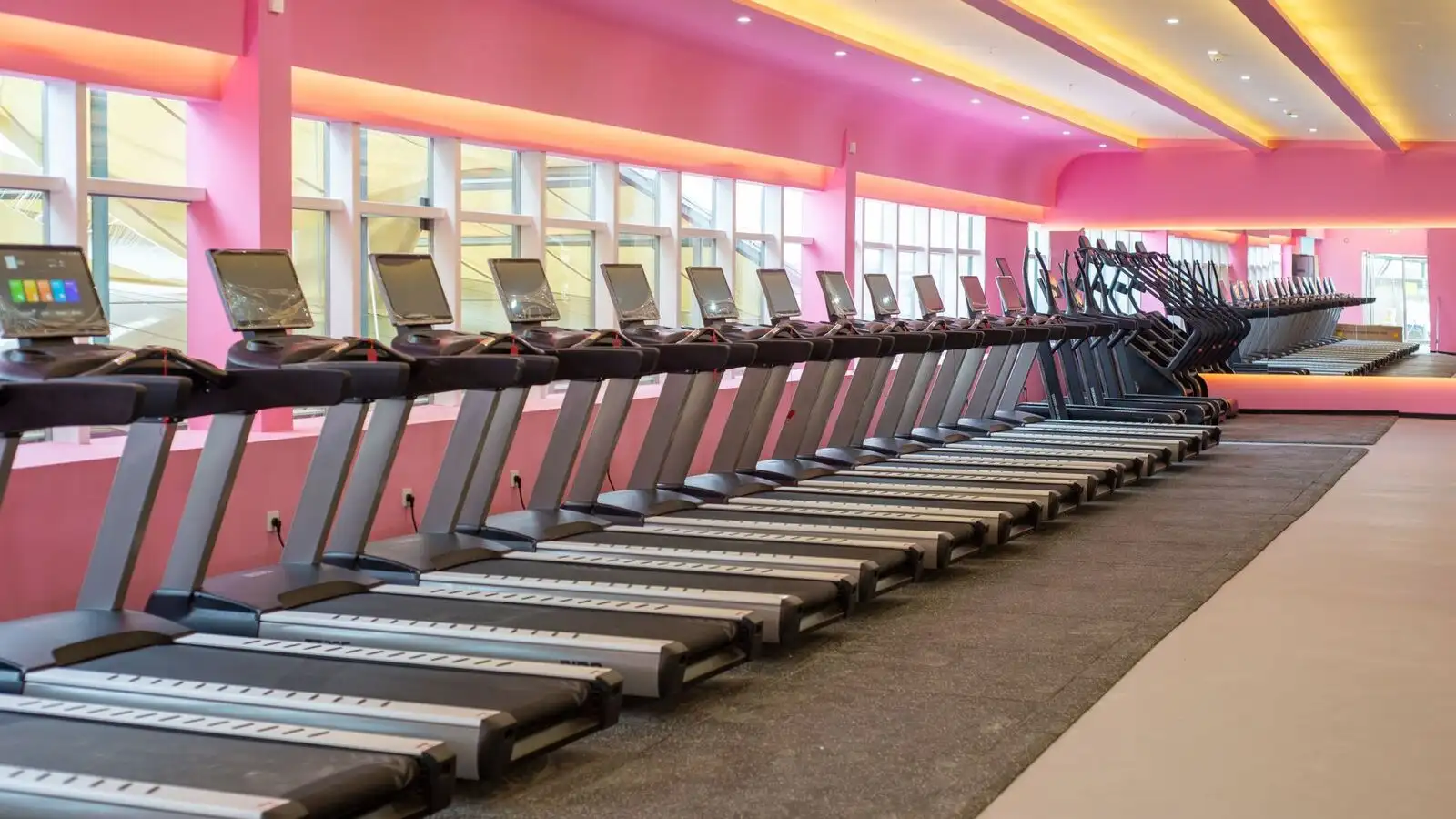
You cannot schedule work on machines you have not listed. Before assigning intervals, build a register with one row per machine. It takes an afternoon and it pays for itself the first time a cable snaps.
Minimum fields per row:
- Asset ID written on the frame in paint pen or a metal tag
- Model and serial number (photograph the plate, do not trust the invoice)
- Install date and warranty expiry, split by frame, parts and labour
- Duty rating: home, light commercial, or full commercial
- Wear items on that model: cable length, pulley size, belt and deck, pad part number
- Source of truth for parts: exploded diagram file name and page
Group the rows into six classes, because these behave differently and should never share one interval:
- Motorised cardio (treadmills, and any self-powered unit with a console)
- Non-motorised cardio (bikes, ellipticals, rowers, steppers)
- Selectorised strength (weight stack, cable, guide rods)
- Plate-loaded strength (sleds, pivots, linear bearings)
- Free weights and storage (racks, benches, bars, plates, trees)
- Soft goods (pads, mats, grips, flooring seams)
Grouping matters more than most owners expect. A 120-machine floor is 24 motorised units that eat 60 percent of your maintenance hours, plus 50 selectorised stations that eat most of the rest in cables and pads. The other 46 pieces are a visual check once a month.
Three clocks, not one calendar
The laminated sheet assumes everything runs on a calendar. Real equipment wears on three clocks, and mixing them up is how you get a belt replaced at 40 percent of its life while a cable runs to failure.
Calendar clock. Right for low-variance items: pad condition, bolt torque, frame inspection, signage, flooring seams. None of it depends on how hard the machine is used.
Running-hours clock. Right for anything with a motor, belt or bearing. A treadmill in a 24-hour gym and a treadmill in a hotel fitness room are the same machine on paper and different assets in practice. If your console logs hours, use them. If it does not, estimate: treadmills in a busy commercial club typically run 6 to 10 hours a day, so a weekly belt check plus lubrication at the manufacturer interval (commonly every 150 to 250 running hours, but follow your own manual, not mine).
Condition clock. Right for anything that fails visibly before it fails functionally. Cables fray at the swage. Guide rods pit and turn chrome into sandpaper. Belt edges feather. Pads crack at the seam. None of that needs a date on a calendar. It needs somebody looking, which is a different management problem.
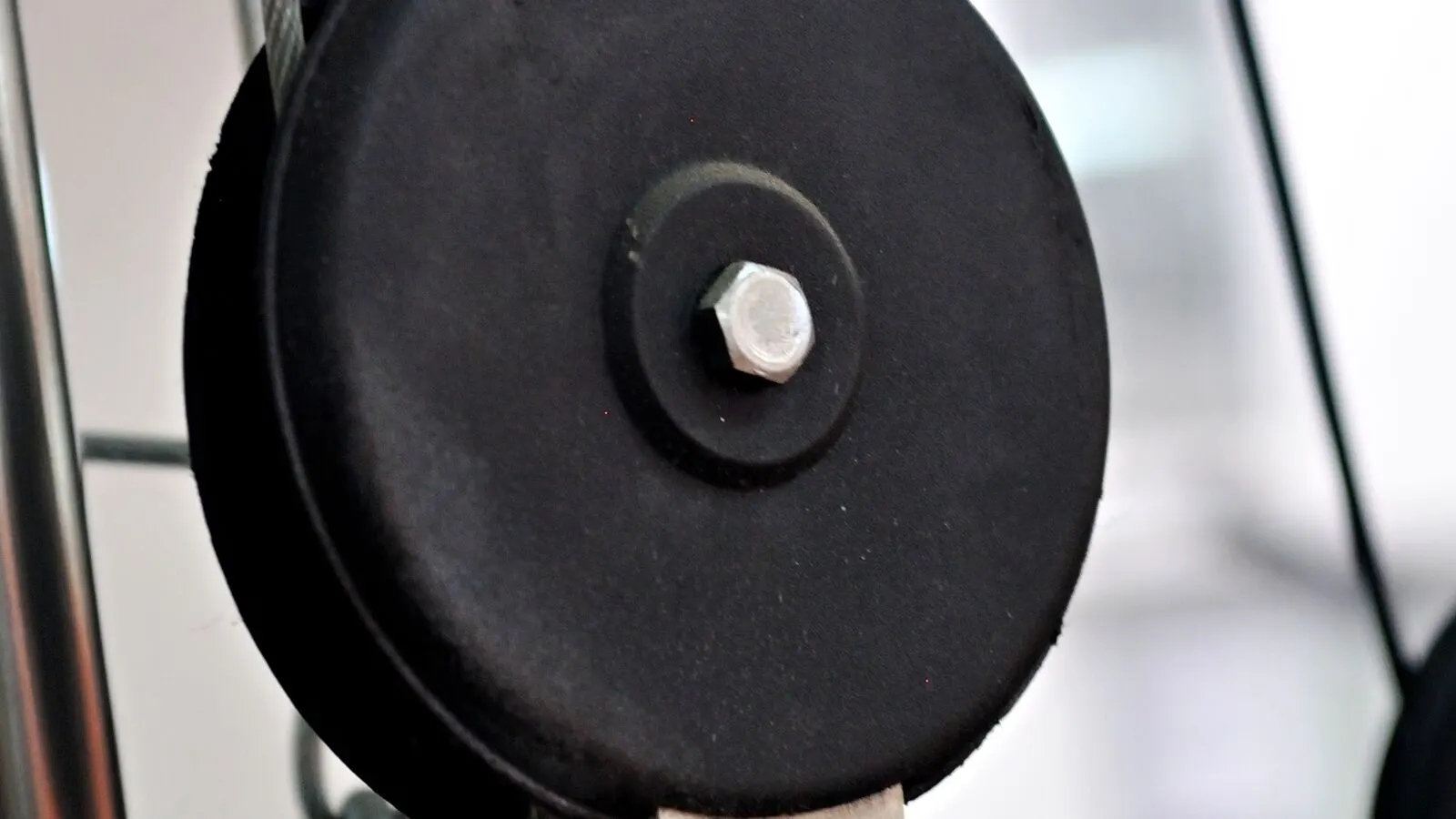
The practical consequence: your daily walk is not maintenance, it is condition monitoring. Give it to whoever is already on the floor, give them a rule for what to report, and keep the calendar for work that needs tools.
Building a gym equipment maintenance schedule you can actually run
Intervals below are typical commercial ranges, not a substitute for your OEM manual or local regulation.
| Machine class | First 30 days | Routine interval | Deep interval | Typical minutes per service | Owner |
|---|---|---|---|---|---|
| Motorised cardio | Belt tracking, deck screws, console firmware, emergency stop test | Weekly visual + belt check; lubricate at 150 to 250 running hours | Quarterly: open motor cover, vacuum, inspect drive belt, check rollers and bearings | 8 to 15 routine, 30 to 45 deep | Trained in-house, motor and board work to technician |
| Non-motorised cardio | Crank and pedal bolts, resistance calibration, seat rail play | Monthly: resistance feel, pedal threads, seat latch | Semi-annual: open covers, inspect belt or chain, grease pivot bearings | 8 to 12 | In-house |
| Selectorised strength | Full cable and pulley inspection, all frame bolts re-torqued, stack alignment | Monthly: cable at both ends, pulley wobble, pin tether, guide rod wipe | Quarterly: cable off and flexed along its length, bushings checked, pads assessed | 6 to 10 routine, 20 to 30 deep | In-house if trained, otherwise contract |
| Plate-loaded strength | Pivot play, sled bearing feel, safety stop function | Monthly: pivot grease, horn tightness, bolt check | Semi-annual: bearing and bushing inspection, weld check at high-stress joints | 5 to 8 | In-house |
| Free weights and storage | Weld check on racks, J-cup condition, bar spin, plate tree stability | Monthly: bar rotation, knurl and sleeve wear, bench pad and frame | Annual: strip racks, inspect floor anchors, replace worn J-cup liners | 4 to 8 | In-house |
| Soft goods | Pad seams, stitching, mat edges, flooring transitions | Monthly visual, quarterly hands-on compression test | Replace on condition, not on schedule | 1 to 3 | In-house, replacement to local upholsterer or factory |
Two things in that table matter more than the numbers. The 30-day check is not box-ticking: that is when bolts loosened in transit show up, and it is the cheapest hour you will ever spend on the equipment. And notice that nothing in the deep column shares a rhythm with the routine column. Facilities that run everything monthly end up doing shallow work forever.
The arithmetic nobody puts in the brochure
Here is a worked example for a 120-machine commercial floor: 24 motorised cardio, 12 non-motorised cardio, 50 selectorised stations, 20 plate-loaded pieces, and 14 racks, benches and storage units.
| Work tier | What it covers | Annual hours | Who |
|---|---|---|---|
| Tier A: floor walk | Visual and condition check, 3 minutes per machine, once a week | About 310 | Front desk or floor staff, absorbed into shift |
| Tier B: routine | Monthly functional and lubrication work, roughly 10 minutes per machine on the classes that need it | About 170 | One trained staff member |
| Tier C: deep | Quarterly deep service on cardio and selectorised, 25 to 40 minutes per unit | About 230 | Trained in-house or contract technician |
| Tier D: specialist | Motor, controller board, console, welding, structural | About 80 | Contract technician |
Call it 800 hours a year, roughly 0.4 of a full-time role. What matters is that it is four different jobs wearing one number. Tier A is floor work a supervisor can absorb. Tier B needs one person trained on your specific models. Tier C and D belong to a technician, in-house or contracted, and mixing the two badly is how facilities end up paying emergency rates for work they could have planned.
Convert it to money and the picture gets clearer. Typical figures in the market run $300 to $800 per commercial treadmill per year on a maintenance contract, with strength equipment usually quoted lower per unit. Across a mixed floor, most operators land somewhere between 2 and 5 percent of the equipment’s replacement value per year in total maintenance spend, parts included. On a $250,000 fit-out that is $5,000 to $12,500. If a quote you receive is far below that band, ask what is excluded. If it is far above, ask what is being replaced rather than maintained.
In-house versus contract: the split that survives
Asking whether to outsource maintenance misses the useful question, which is which tasks deserve a trained pair of hands.
| Task | Do it in-house | Send it out | Why |
|---|---|---|---|
| Cleaning, visual checks, pad inspection | Yes, always | Never | Too frequent to schedule, too cheap to bill |
| Cable and pulley replacement | Yes, if someone is trained and you stock parts | If no trained person | Two-hour job on most selectorised stations; a service call minimum fee can exceed the part cost |
| Treadmill belt and deck | Yes on most commercial units | On consoles or unusual decks | Mechanical and learnable, with a manual |
| Motor, controller board, console electronics | No | Yes | Diagnostics need meters, firmware access and spare boards |
| Guide rod and bushing replacement | Yes | No | Straightforward once the stack is supported properly |
| Frame weld repair | No | Yes, with a written procedure | Structural and insurance-relevant, not a floor-staff task |
| Upholstery and pad rewrap | Local upholsterer for labour | Factory for exact-match pads | Fit and bolt centres matter more than price |
The economics are simple. A service call carries a minimum charge plus travel, so a $60 cable becomes a $250 invoice. If your fully loaded staff hour costs a fraction of that, four or five simple jobs a year pay back the training. The opposite is also true: a staff member who “has a go” at a controller board usually converts a $200 part into a $600 one. Standardise the fleet while you are at it. Two treadmill models and one cable specification across the floor means one spare belt, one cable length, one person who gets good at the job.
Put the schedule on your traffic calendar, not the vendor’s
A maintenance schedule that ignores member traffic gets abandoned the first busy week. Three adjustments make it survivable.
Never schedule deep service during your peak month. For most Northern Hemisphere clubs that means January, when new members are deciding whether to stay. Book the deep quarterlies into the quiet weeks: late February, May, August, November.
Stagger by zone, never by fleet. Taking eight treadmills offline for a morning looks efficient on a spreadsheet and reads as “the gym is broken” to members. Do four, put them back, do four more.
Give 24-hour facilities a midday window. Between roughly 10am and 2pm, most unmanned floors are near empty. Publish the window so nobody is surprised.
One more habit: review the log quarterly and look for repeat offenders. The same leg press cable failing twice in 18 months is a specification or usage problem, and it should change what you buy next time rather than how often you service.
The log is the deliverable
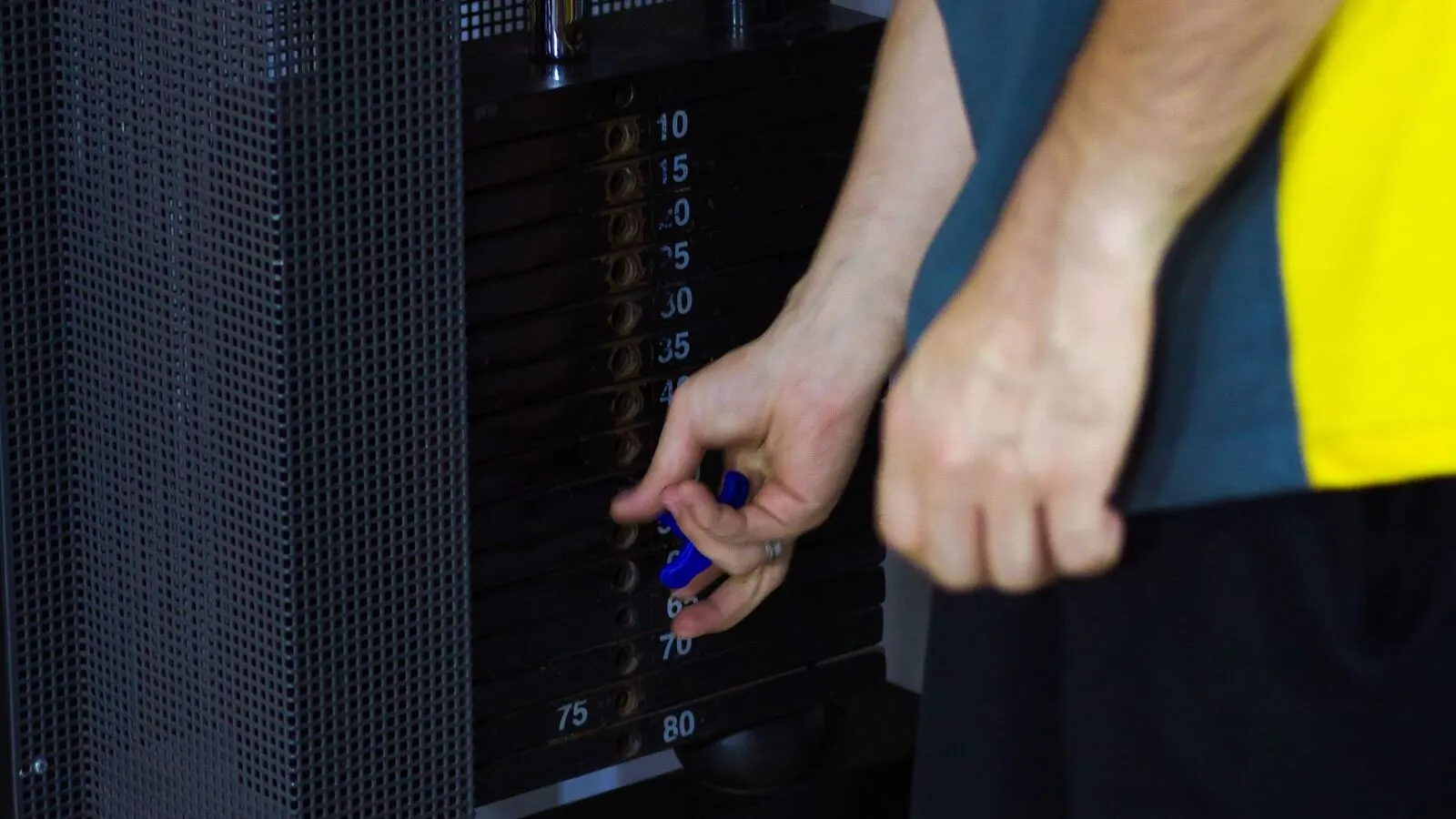
The work is half the value. The record is the other half, and most facilities do not keep one that survives scrutiny.
Every entry needs: date, asset ID, task code, parts used with part numbers, who did it, next due date, and a photo of anything flagged. Paper is fine. A shared spreadsheet is better. Nothing needs to be software.
The log earns its keep in four places: warranty claims (was the machine maintained to the manual?), insurance (“reasonable care” is a condition of cover), resale, and your own purchasing, where failure patterns tell you which model to stop buying.
If your broker has asked for documentation and you had nothing to send, that is why. It is also the cheapest fix on this page.
What to demand from the factory before the container ships
Because we build the equipment, we know which documents decide whether maintenance is cheap or miserable five years later. Ask before you pay the balance:
- An exploded parts diagram per model, with part numbers rather than a photo
- Cable lengths and pulley sizes in writing, so you can order locally instead of air-freighting
- Standard bearing numbers (many are common metric sizes) and frame bolt torque specs
- The OEM maintenance interval for each wear item
- A spare parts list with prices, so you can choose what rides in the container
- A written parts availability commitment, seven to ten years is a fair ask for commercial gear
A supplier who cannot produce them is telling you something about the next five years. We publish our own parts approach openly, because gym equipment spare parts should be a catalogue item, not a favour.
FAQ
How often should commercial gym equipment be serviced? By tier: weekly visual and condition checks, monthly routine work on the classes that need it, quarterly deep service on cardio and selectorised strength, annual attention on electronics and structure. Motor-driven units also need tracking by running hours, not just by date.
Is daily cleaning part of the maintenance schedule? No, and conflating the two is why schedules get abandoned. Cleaning belongs in the opening and closing routine. Maintenance is inspection, adjustment and replacement, and it needs tools and a trained person. Separate documents, separate owners.
What does gym equipment maintenance cost per year? As a planning figure, 2 to 5 percent of equipment replacement value, all in. Contracts commonly quote $300 to $800 per commercial treadmill annually, with strength equipment lower. Parts are separate, and after year one you should budget from your own failure history.
Can we do maintenance ourselves instead of buying a contract? For visual checks, lubrication, cable and pulley swaps, belt and deck work and pads, yes, if one person is trained on your models and you stock parts. Keep electronics and structural welding with a qualified technician. Trained in-house plus on-call contract is usually the cheapest structure.
Does skipping maintenance actually affect the warranty? It can. Most commercial warranties require maintenance in line with the manual and exclude damage caused by neglect, and the burden of showing otherwise usually falls on the owner. A dated log with part numbers turns that argument into a two-minute email.
Building the floor is the easy part
The equipment is the visible spend. The schedule is what decides whether that spend is still performing in year six or quietly rotting behind a laminated sheet nobody initials.
If you are planning a fit-out or replacing a tired fleet, we build commercial cardio and strength equipment for factory-direct export, including OEM and ODM programmes, and we ship the documentation with the machines rather than after the fact. Start with the commercial treadmill range or the selectorised strength line, or send us your floor plan and machine count through our contact page and we will tell you what the maintenance load looks like before you commit. Our factory profile is here: factory strength.