
Gym Equipment Lead Times: How Long It Really Takes From Order to Installed Gym
A standard container of gym equipment takes about 8 to 12 weeks from the day you pay the deposit to the day your installers finish bolting machines to the floor. Split roughly: 25 to 45 days in production, 3 to 7 days for inspection and booking, 15 to 40 days on the water depending on destination, and 1 to 2 weeks for customs clearance, drayage, delivery and installation.
That is the honest number. It is also the number almost nobody quotes you, because a factory quotes production days and a forwarder quotes transit days, and neither of them owns the gap in between. Gym equipment lead times are not one number, they are six segments stacked end to end, and the gap between segments is where opening dates die.
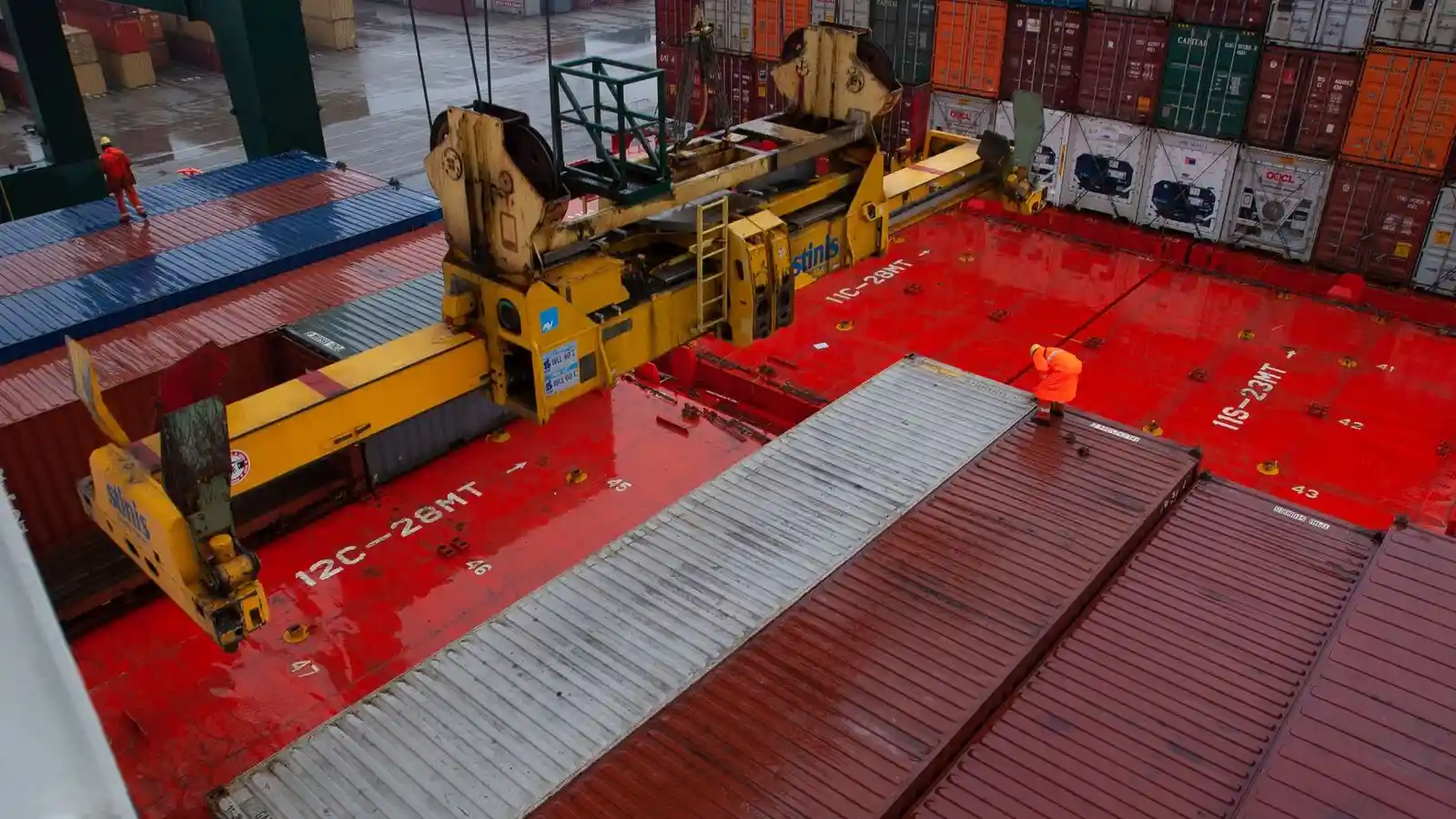
What the factory means by “lead time”
When a Chinese fitness equipment factory says 30 days, they usually mean 30 working days of production after the deposit clears and the artwork is approved — not 30 days to your door. Those three qualifiers matter more than the number.
- After the deposit clears. T/T takes 1 to 3 working days to land. A bank in a country with currency controls can stretch that to a week.
- After artwork approval. Logo placement, powder coat colour and upholstery colour have to be signed off before the frame goes to the paint line. If your logo file arrives on day 12, production starts on day 12.
- Working days. Chinese factories run Monday to Saturday in peak season, and close for the Spring Festival and the National Day week in early October.
So a quote of “30 days” for a mixed order placed in September can be 30 production days, plus a 7-day holiday shutdown, plus a week of queueing for paint, plus 2 weeks for a vessel booking. Nobody lied. The quote just covered one segment of a longer chain.
Typical lead times by product type
These are ranges we see on our own line for container-scale orders, not single units. Treat them as planning numbers, not promises.
| Product category | Production time (after deposit + artwork) | What usually drives the number |
|---|---|---|
| Selectorized strength (chest press, lat pulldown, leg extension) | 25–35 days | Weight stack machining, upholstery batch scheduling |
| Plate-loaded and fabricated strength (leg press, hack squat, smith machine) | 30–40 days | Steel cutting and welding volume, powder coat batches |
| Power racks, half racks, benches | 20–30 days | Simple structures, but tube stock availability varies |
| Treadmills | 30–45 days | Motor and console supply, deck and belt lead times |
| Exercise bikes, spin bikes, ellipticals | 25–35 days | Frame welding plus drive components |
| Rowers, air bikes, stair climbers | 30–40 days | Smaller lines, longer batching intervals |
| Custom powder coat or upholstery colour | Add 7–15 days | Separate paint batch, minimum quantity per colour |
| OEM with new tooling or a new mould | Add 45–70 days | Tooling fabrication happens before production starts |
| Sample or single unit from stock models | 7–15 days | Assembly and crating only |
Two things push you to the top of these ranges: colour customisation and console specification. If you want a non-standard frame colour on 18 machines, that is a paint batch of its own, and paint lines run by colour, not by machine. If you want a specific console with your logo on the start screen, add firmware and artwork approval time.
Transit times are not the problem people think they are
Ocean transit is the most predictable link in the chain. It is also the one buyers worry about most, usually because it is the only segment their forwarder explains clearly.
| Route | Port-to-port transit | Notes |
|---|---|---|
| China → US West Coast (LA/Long Beach, Seattle) | 14–20 days | Fastest major lane, but the busiest for rollovers |
| China → US East Coast via Panama | 30–38 days | Add canal booking delays in drought years |
| China → North Europe (Rotterdam, Hamburg, Antwerp) | 30–38 days | Red Sea diversions have added 10–14 days on some services |
| China → UK (Felixstowe, Southampton) | 32–40 days | Same diversion effect, plus port congestion at peak |
| China → Australia (Sydney, Melbourne, Fremantle) | 16–24 days | Quarantine inspection on wood packaging adds time |
| China → Middle East (Jebel Ali, Dammam) | 18–26 days | Good frequency, fewer rollovers |
| China → West Africa, Latin America | 35–50 days | Fewer direct services, more transhipment |
Add 2 to 5 working days for customs clearance with clean documents, 3 to 7 days for drayage and delivery, and 3 to 10 days if customs selects your container for an exam. Add 7 to 14 days if you ship LCL, because consolidation warehouses restack your crates twice.
Where gym equipment lead times actually slip
In our experience the schedule slips in the same five places, and only one of them is the factory’s fault.
Spec changes after the deposit. Swapping a chest press for a shoulder press on day 20 resets the production slot. Steel is already cut. This single mistake costs more opening dates than any shipping problem.
Artwork and approvals. Logo files in the wrong format, Pantone references that do not translate to powder coat, upholstery swatches requested three times. Every email round trip is a day.
Chinese New Year. Factories wind down for two to four weeks around late January to mid-February, and the six weeks before it are the heaviest booking period of the year. An order confirmed four weeks before the holiday either gets rushed or gets pushed to March.
Balance payment timing. If your terms are 30/70 against the bill of lading copy, and the balance lands three days after the vessel sails, you have just bought yourself a month of storage fees or a rolled booking.
Inspection findings. Paint runs, upholstery wrinkles, a weight stack that reads 2% light, missing hardware bags. All fixable in a week. None of it fixable if the container is already at the terminal.
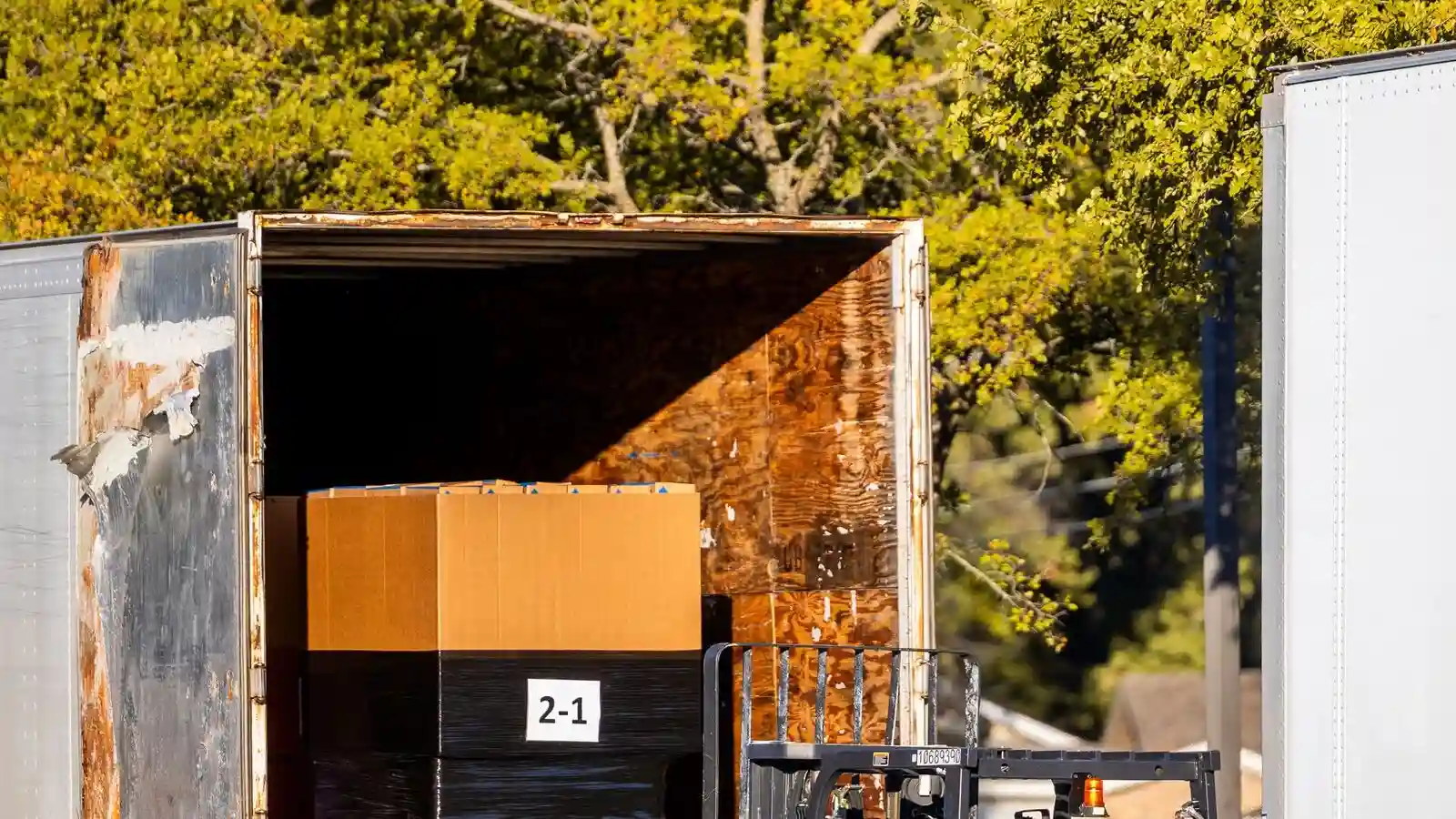
A realistic calendar for a mixed 40HQ
Here is what a 26-machine mixed order to the US West Coast looked like on paper, and what it looked like in practice. Names and exact dates changed, the structure did not.
| Stage | Planned | Actual | Why |
|---|---|---|---|
| Order confirmed, deposit sent | 3 Nov | 3 Nov | — |
| Artwork approved | 7 Nov | 14 Nov | Logo file arrived as a low-res JPEG, then a vector with the wrong stroke weight |
| Production | 7 Nov – 7 Dec | 14 Nov – 16 Dec | Late start, six-day paint queue |
| Pre-shipment inspection | 10 Dec | 19 Dec | Moved with production |
| Booking cut-off, container to port | 14 Dec | 22 Dec | Space tight before the holiday |
| Vessel departure | 18 Dec | 27 Dec | Rolled once |
| Arrival USWC | 4 Jan | 12 Jan | — |
| Customs release | 6 Jan | 16 Jan | Missing HS code detail on one line item |
| Delivery to site | 9 Jan | 20 Jan | — |
| Installation complete | 12 Jan | 24 Jan | Two machines short of hardware, resolved locally |
Planned duration: 70 days. Actual: 82 days. The factory lost six days to a logo file and three to a paint queue. The rest was shipping and paperwork.
That is a good outcome, not a bad one. Plan for 90 days and the 82 is a pleasant surprise. Plan for 70 and you are opening with half a gym and a story about the port.
Work backwards from the opening date
This is the calculation worth doing before you sign anything. Start at the date you want members walking in, and subtract.
| Your target date | Container must be at site by | Vessel must depart by | Production must start by | Deposit must clear by |
|---|---|---|---|---|
| 1 March | 10 Feb | 15 Jan | 10 Dec | 3 Dec |
| 1 April | 10 Mar | 12 Feb | 8 Jan | 1 Jan |
| 1 May | 10 Apr | 13 Mar | 6 Feb | 30 Jan |
| 1 June | 10 May | 12 Apr | 8 Mar | 1 Mar |
Two footnotes. First, avoid scheduling installation in the two weeks before a holiday weekend if your labour is contract-based, because nobody wants the job. Second, if your opening date is fixed and the timeline does not fit, the answer is not a faster factory. It is either a phased opening with the strength floor only, or air freight on the accessories and small items while the container sails.
How to actually compress the timeline
- Lock the spec sheet before you ask for a price. Machine list, model numbers, colours, logo files, console spec, voltage, plug type, manual language. Every item not locked is a future email.
- Send print-ready artwork with the deposit. Vector logo, one-colour and full-colour versions, and a note on placement limits per machine. If you have no artwork, say so on day one and let the factory quote plain frames.
- Ask for the production schedule in writing, with a start and end date, not a duration. A duration cannot be late. A date can.
- Book vessel space before production ends. Your forwarder can book against an ETD. Waiting for the goods to be ready is how containers get rolled.
- Pre-clear the paperwork. Commercial invoice, packing list with CBM and gross weight, HS code, certificate of origin, test reports. Send them to your broker while the container is still on the water.
- Ship the spare parts kit in the same container. A second LCL shipment of cables, belts and pads costs more than the parts and arrives when you no longer need them.
- Order installation labour and equipment in parallel. Riggers, a forklift, floor protection, and someone with authority to sign for the delivery all need to exist on the day, not two days after.
What to put in the purchase order
A lead time clause that says “30 days” protects nobody. These do:
- Deposit amount, currency, and the date it was sent.
- Ex-works date, expressed as a calendar date.
- Inspection window, and who attends. Third-party inspection at your cost is normal and factories expect it.
- Documents required before shipment: packing list with per-carton CBM and gross weight, container loading photographs, load test or test report per machine category, hardware kit list per machine.
- Spare parts list and quantity, shipped inside the same container.
- What happens if the ex-works date slips: penalty, discount, or air freight at the factory’s cost for the small items.
- Incoterm and named place. A price without an Incoterm is not a price.
FAQ
How long does it take to get gym equipment from China? Typically 8 to 12 weeks door to door for a standard container order: 25 to 45 days production, 2 to 3 weeks for inspection and vessel booking, 15 to 40 days transit, then 1 to 2 weeks for clearance, delivery and installation. Custom colours or OEM tooling add 2 to 6 weeks.
Can I get equipment faster than that? Yes, in three ways. Buy models the factory stocks and ships in standard colours (saves 2 to 3 weeks). Pay for a premium booking or an expedited service on the ocean leg (saves 5 to 10 days on some lanes). Or air-freight the small, high-value items — accessories, consoles, spare cables — while the heavy equipment sails.
Does OEM branding change the lead time? Logo and colour on existing frames adds 7 to 15 days. New tooling, a custom mould or a redesigned console adds 45 to 70 days before production even starts. If you have a fixed opening date and want custom equipment, order the tooling first and the machines second.
How long does installation take once the container arrives? A 40HQ mixed order of 25 to 30 machines takes 2 to 4 days with a crew of three or four. Selectorized machines run 60 to 90 minutes each, treadmills 45 to 90 minutes if shipped knocked down, plate-loaded machines 60 to 120 minutes, racks 30 to 60 minutes, benches 15 to 30 minutes.
What is the single biggest cause of late gym openings? Spec changes after the deposit. Steel gets cut, paint batches get rescheduled, and the production slot moves to the back of the queue. Lock the list, then send the money.

The short version
Ask every supplier for a calendar date, not a duration. Add the segments yourself: production, inspection, booking, transit, clearance, delivery, installation. Then compare that total to your opening date and decide whether you have a schedule or a hope.
If you are planning a container for a new facility, send us your machine list and target opening date. We will come back with an ex-works date, a loading plan and a packing list you can hand to a forwarder. Start at our cardio series and selectorized strength machines, or read more about how our factory works.