
How Many Squat Racks and Benches Does a Gym Need? A Planning Guide
Short answer: most commercial gyms need two to eight squat racks and six to twelve benches, and the ratio that matters more than either number is roughly one rack for every 150–250 members in a general club, with one bench press station per 400–600 members plus a pool of adjustable and flat benches for dumbbell work.
So when someone asks how many squat racks does a gym need, the honest answer is that it depends on peak-hour headcount and rack throughput, not on floor area. Those numbers above are starting points, not rules. They come out of a calculation you can run in ten minutes with your own membership data, and the rest of this guide walks through it. I’ll also cover the part most buying guides skip: bench count is almost never the problem. Bench mix is.
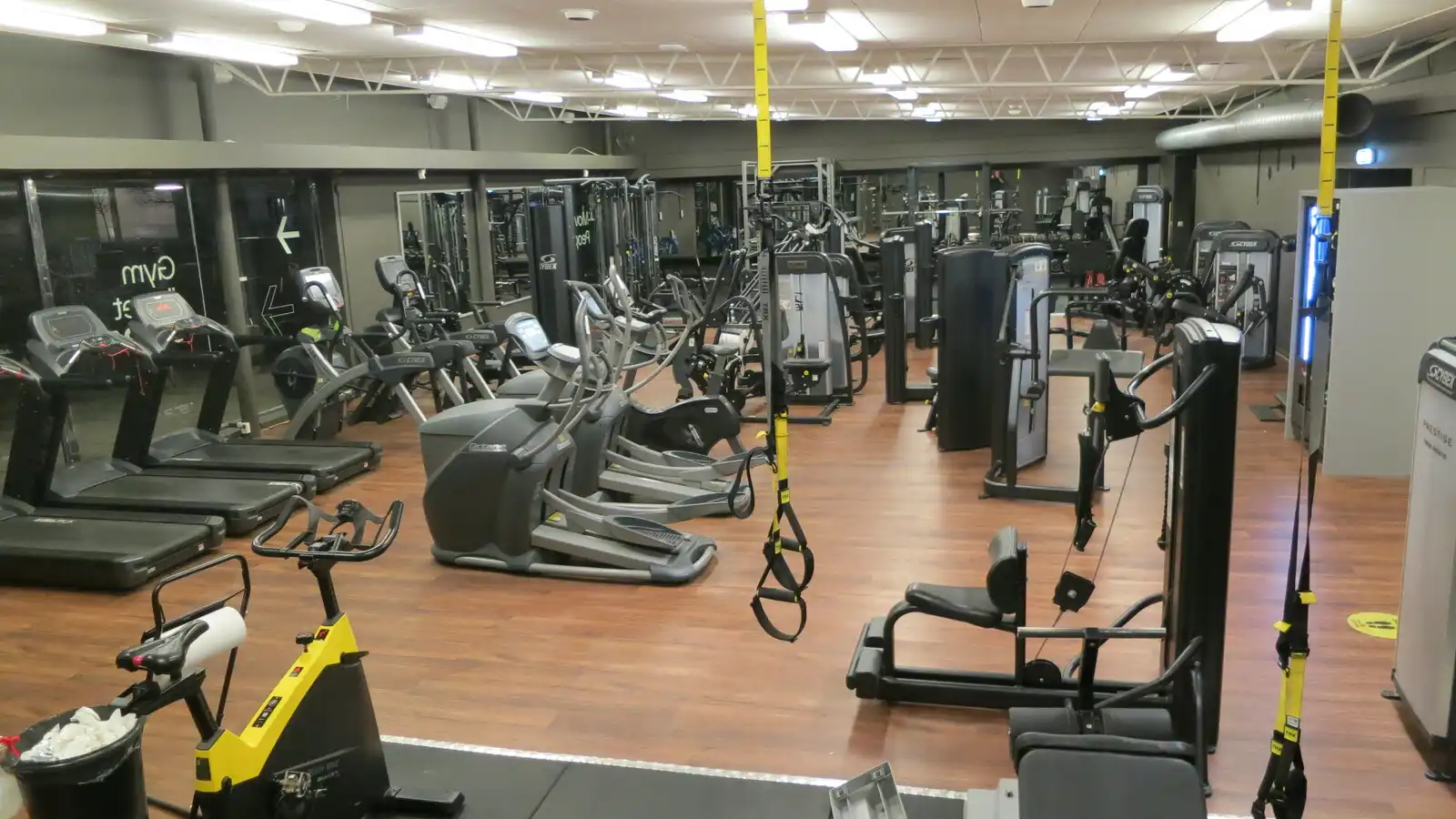
Why rack count is a queue problem, not a floor space problem
Gym owners usually size their rack area by looking at the floor. “I have 900 square feet here, a rack takes about 50, so I can fit fifteen.”
You can fit fifteen. You cannot staff fifteen.
A rack is not a machine that serves someone every four minutes like a leg extension. A working squat session runs 20–35 minutes once you count warm-up sets, loading, rest between heavy sets, and unloading. At peak that means a rack serves roughly two to three people per hour, and less if your members train powerlifting-style with long rests.
The question that decides your rack count is how many people are waiting at 6:40pm on a Monday. If your peak-hour free weight crowd is 30 people and 12 of them want a rack, you need four racks minimum, plus somewhere for the other eight to work while they wait.
That waiting behavior matters commercially. Members who consistently queue for racks at peak don’t complain. They cancel in month four and cite “too crowded” on the exit survey. Rack shortage is one of the cheapest churn causes to fix and one of the most commonly ignored.
A three-step method to size your rack count
Step 1: Find your real peak.
Don’t use total membership. Use the highest concurrent headcount in a normal week. Most clubs run 8–15% of members on the floor at peak, and January pushes to 18–20%. If you have door data or turnstile counts, use the 95th percentile of the last eight weeks.
Step 2: Estimate how many of them lift free weights.
This share varies enormously by facility type:
- General commercial club, mostly machines and cardio: 20–30% of peak users in the free weight zone
- Strength-leaning club with a serious free weight crowd: 35–50%
- Powerlifting or strength-sport gym: 60–75%
- Hotel, apartment, office gym: usually under 15%, since most residents never touch a barbell
Step 3: Divide by rack throughput.
At peak, assume 2.5 users per rack per hour for general clubs and 2 for strength gyms. Then add a buffer rack if the result lands between whole numbers, because rack use is bursty. Everyone squats on Monday.
A worked example. A 2,000-member club peaks at 220 people on the floor, and 30% of them are in the free weight zone: 66 lifters. Around 40% of that group wants a rack, so 26 rack visits to serve. In a 90-minute peak window each rack turns over about 3.75 users (2.5 per hour), so 26 ÷ 3.75 ≈ 7 racks. That lines up with the six-to-eight range for a club that size.
Run the same math on a 300-member boutique studio: peak 45 people, 35% free weights = 16 lifters, 6 of them want a rack, over a 90-minute window that’s 3 racks. Most studios settle on two to four.
How many squat racks does a gym need by facility type
| Facility | Members / residents | Squat racks | Bench press stations | FID benches | Flat utility benches |
|---|---|---|---|---|---|
| Boutique / PT studio | 150–400 | 2–4 | 1 | 2–3 | 1–2 |
| Mid-size commercial club | 1,000–2,500 | 4–8 | 2–3 | 4–6 | 3–4 |
| Large 24-hour / big box | 3,000–6,000 | 8–14 | 3–5 | 6–10 | 5–8 |
| Strength / powerlifting gym | 200–600 | 6–12 | 3–4 | 2–4 | 2–3 |
| Hotel or apartment gym | 80–300 units | 0–1 (often a smith machine instead) | 0–1 | 1 | 1 |
| School weight room | 300–1,200 students | 4–8 | 3–4 | 2–4 | 2–3 |
Figures are typical ranges from facility planning practice, not manufacturer specifications. Your member profile will move them by one or two units in either direction.
Rack type mix: buy fewer, buy the right ones
Four racks of the same type is usually a wasted opportunity. Most well-planned free weight zones run a mix, because different members need different things.
| Type | Footprint (approx.) | Needs a spotter? | Throughput at peak | Factory-direct price range (approx.) | Best for |
|---|---|---|---|---|---|
| 4-post power rack | 48–52 in square, 90–96 in tall | No; pin or strap safeties catch the bar | High; one person at a time, safe solo | $450–1,200 | Core of the rack area; squats, bench, pulls, chin-ups |
| Half rack | 48 in wide, 60–70 in deep | No, with safeties | High | $350–900 | Tight floors where full cages block sightlines |
| Squat stand | 24–36 in footprint | Yes, at heavy loads | Medium | $200–500 | Overflow capacity, group classes, budget builds |
| Smith machine | 55–70 in wide, 80–90 in deep | No; fixed bar path and hooks | Medium-high | $900–2,500 | Beginners, rehab, members training without a spotter |
| Combo rack / rig section | Varies, 8–12 ft sections | Depends on attachments | High, multi-user | $1,500–4,000 | Strength gyms, CrossFit-style training, group coaching |
Two practical rules from the factory side. First, power racks and half racks should dominate — they’re the only category that gives a solo member a safe heavy squat. Second, do not let a smith machine substitute for a rack. The bar path is fixed and often counterbalanced, which makes it a different exercise, not a safer version of the same one. It complements the rack area; it doesn’t replace it. If you’re weighing the two, we compared them in detail in the smith machine vs power rack breakdown and in the power rack buying guide.
Browse commercial power racks with upright spacing, J-cup and safety specifications listed per model.
Benches: count by type, not by total
Here’s the mistake I see in maybe half of the purchase orders that come through our factory: a gym orders “ten benches” and ends up with ten adjustable benches, no flat bench press station, and a dumbbell area with nothing to sit on.
Benches split into four jobs, and each has its own count logic.
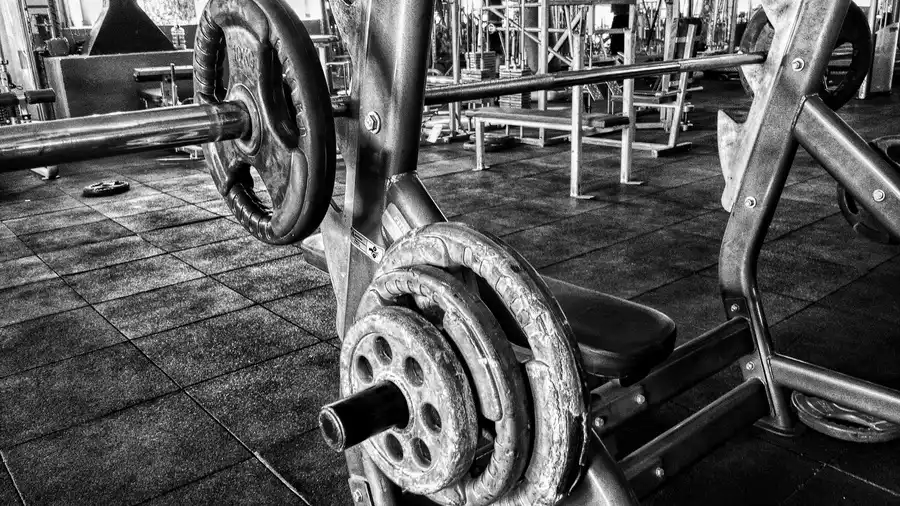
| Bench type | What it does | Count guidance | Notes |
|---|---|---|---|
| Bench press station (bench + uprights) | Barbell flat press | 1 per 400–600 members; minimum 1, never fewer than the rack count ÷ 2 | Buy with the rack; mismatched heights are a common annoyance |
| Flat utility bench | Dumbbell press, rows, hip thrusts, step-ups | 1 per 150–200 members | Cheapest station in the gym and the most used |
| FID adjustable bench (flat/incline/decline) | Incline press, shoulder press, seated curls | 1 per 200–300 members, or roughly 1.5× rack count | The pad gap and back-pad length matter more than the number of angles |
| Incline-only or specialty bench | Dedicated incline press, decline sit-ups, preacher work | 1–2 per strength zone | Only worth it at 1,500+ members |
The rule of thumb that holds up across facility types: roughly 1.5 to 2 benches for every rack. Racks without benches create a queue at the rack; benches without racks create a dumbbell area with nowhere to press.
Bench specs worth checking on the PO, in rough order of how often they fail in service:
- Weight rating: 600–1,000 lb static is typical commercial; the number that actually matters is the pad and frame joint under repeated loading, not the headline figure
- Pad density: high-density foam in the 2–3 lb/ft³ range holds shape for years; cheap foam bottoms out in 12 months at commercial volume
- Upholstery: commercial vinyl, stitched and replaceable, not stapled and glued
- Frame steel: 11 gauge on the main tube for commercial duty
- Pad gap: a zero-gap or near-zero-gap design on adjustable benches avoids the pinch and pressure point members complain about
We stock commercial benches and racks in matched frame finishes so a zone looks like one purchase instead of five.
The space check that kills bad layouts
Once you have your counts, verify they fit. These are the clearances that matter, and the ones inspectors, insurers, and your members’ knees all care about:
| Measurement | Typical requirement |
|---|---|
| Behind a rack (plate loading and bail-out) | 36 in minimum, 48 in comfortable |
| Each side of a rack (plate access) | 18–24 in |
| Rack to rack, side by side | 24–36 in between frames |
| In front of a bench press station | 36–48 in for a spotter |
| Power rack or lifting platform ceiling height | 96 in clear for the rack, 108–120 in for overhead work |
| Free weight zone floor area per exerciser | 100 sq ft (NSCA baseline) |
| Circulation aisle | 36 in minimum, 44–48 in main paths |
| Mirror to nearest rack or bench | 24–36 in |
Then sanity-check the total. A 2,000-member club usually needs 1,500–2,500 sq ft of free weight floor to carry six to eight racks, three bench stations, a dumbbell run, and platforms without the aisles closing up at peak. If your counts don’t fit in the space, cut racks before you cut clearance. Crowded heavy lifting is where injuries and insurance claims come from. The gym floor layout guide has zone-by-zone dimensions if you’re planning from a blank slab.
Mistakes that show up in real purchase orders
- Buying racks before plates and bars. A rack with two barbells and 300 lb of plates serves one member. The same money spent as three racks with six bars and 1,200 lb of plates serves six.
- One rack in a small gym. A single rack is a single point of failure. One member doing a 40-minute squat session blocks every other lifter in the building. Two is the floor, whatever your member count.
- All adjustable benches. FID benches are worse than flat benches for dumbbell pressing and worse than a bench press station for barbell work. Mix them.
- No platform. If members deadlift, they will deadlift on your rubber floor whether you planned for it or not. An 8×8 ft platform costs less than replacing a floor section.
- Forgetting storage inside the zone. Plate trees, barbell racks, and dumbbell racks belong within arm’s reach of the racks, not on the other side of the room. Storage that’s far away means plates on the floor.
- Skipping the dumbbell rack capacity check. A 5–100 lb dumbbell set in 5 lb increments is 20 pairs. Most two-tier racks hold 10–12 pairs. Plan two racks or a three-tier unit.
What to put in the purchase order
Whether you buy from us or anyone else, these are the line items that separate a rack that lasts ten years from one that needs welding in year three.
Racks
- 11 gauge steel main tube, 3×3 in on commercial models; 12 gauge is home-grade
- Welded frame with gusseted corners, not bolted flat-pack, for anything above light commercial use
- UHMW plastic on J-cups and safeties so knurling doesn’t get chewed
- Westside hole spacing (1 in through the bench zone) if powerlifters train with you
- Pin-and-pipe or strap safeties, with strap safeties for Olympic lifting and pins for general use
- Bolt-down plates or a wide base if the rack sits on rubber rather than concrete
- Load rating stated as a tested figure, with an EN 957 or ISO 20957 report on request
Benches
- Replaceable pads and a published pad part number
- 11 gauge frame, welded, with a stated static load rating
- Adjustment pins in steel, not plastic, with a spare pin in the box
- Rubber feet that actually grip a rubber floor
Ask for the spare parts list at quoting stage. A rack is a steel frame you’ll keep for a decade; the parts that wear are the J-cup plastic, the safety pins, and the pad vinyl, and all three should be orderable five years from now. If a supplier can’t send an exploded diagram, that’s your answer about long-term support. Our factory capability page covers how we handle mixed container loads of racks, benches, and plates on one PO.
FAQ
Is one squat rack enough for a small gym? No. One rack is a single point of failure. A single 40-minute session blocks every other lifter. Two is the practical minimum for any facility with more than about 150 members, even a small studio. If floor space is the constraint, add a half rack or a squat stand rather than a second full cage.
How many benches should I buy per rack? Plan on 1.5 to 2 benches per rack, split across types: at least one bench press station, one or two flat utility benches, and one to two FID adjustable benches. For six racks that’s roughly three bench stations, four flat benches, and five adjustable benches.
Do I need a lifting platform if I have rubber flooring? Yes, if members deadlift or do Olympic lifts. Rubber flooring protects the slab from dropped dumbbells; a platform protects the floor, the bar, and the plates from repeated heavy drops, and gives lifters a defined area. An 8×8 ft platform is the usual minimum, with 3–4 ft of clear space around it.
Can a smith machine replace a squat rack to save space? No. The smith machine’s bar travels on fixed guide rails and is often counterbalanced, so the movement pattern differs from a free barbell squat and doesn’t train stabilization the same way. It’s a good addition for beginners and solo training, not a substitute for a rack.
How much floor space does a rack area need in total? Budget about 100 sq ft per exerciser working in the free weight zone as a planning baseline, and 120–150 sq ft per rack including loading space and access aisles. A four-rack zone with benches typically lands between 800 and 1,200 sq ft.
Should I buy racks or benches first if the budget is tight? Racks. Two racks with two flat benches and enough plates beats four racks with no benches and no plates. Then add a bench press station, then adjustable benches, then a platform.
Next step
If you send us your floor plan, member count, and peak-hour headcount, we’ll come back with a rack and bench schedule sized to those numbers, with the container loading worked out so racks, benches, plates, and bars ship together instead of in three separate freight payments. Start with the power racks and benches and racks ranges, or contact us for a quote against your actual layout.
For the wider picture on station counts, the strength machine planning guide and the leg machine ratio guide use the same method applied to selectorized and lower-body equipment.