
The short answer, and why per-member ratios fail
Most commercial gyms need one bench for every 120 to 180 members. That puts a 500-member studio at 3 to 5 benches, a 2,000-member club at 8 to 12, and a 5,000-member facility at 15 to 20. If you want the number for your floor without reading the rest, use 1 per 150 members and then adjust for how much of your membership trains with free weights.
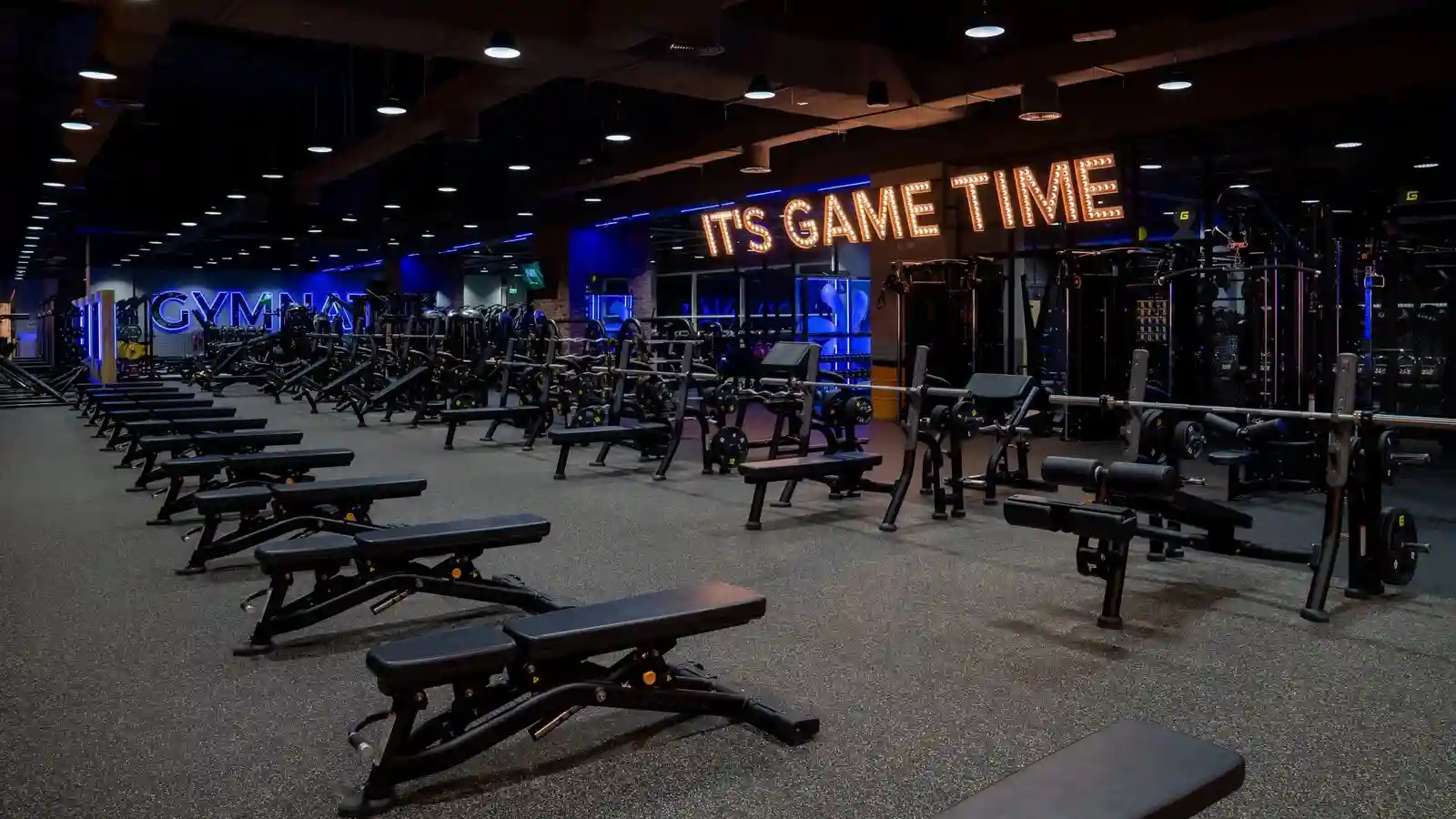
The trouble with that ratio is that it hides the only thing that matters at 6pm on a Monday. Benches are not stations. One bench serves a dumbbell press, a set of one-arm rows, a hip thrust, a Bulgarian split squat, and a curl session in the space of an hour. Nobody books it. It gets dragged across the floor, used for 40 seconds, abandoned, and picked up by someone else. Sizing it like a selectorized machine (one per 400 members, dwell time 6 minutes) gives you a number that looks sensible in a spreadsheet and produces a queue in the free weight area.
So do the bench count in bench-minutes instead. It takes ten minutes and it survives contact with a real peak hour.
Step 1: Count bench demand in minutes, not members
Four inputs. You probably know three of them already.
| Input | Typical range | Where to get it |
|---|---|---|
| Peak-hour headcount | 8-12% of membership on a normal weekday, 15-18% in January | Turnstile count over 3-4 weeks, or door counter |
| Free-weight zone share of peak users | 20-30% general club, 35-50% strength-focused club, 55-70% powerlifting gym | Count bodies in the zone at peak, three separate days |
| Share of those users who touch a bench | 55-70% | Same headcount, tally who sits or lies on a bench at any point |
| Bench-minutes per use | 10-14 minutes, including setup and the gap between sets | Time ten people with a stopwatch. It is faster than arguing about it |
Then:
(peak headcount × free-weight share × bench-touch share × bench-minutes) ÷ 60 ÷ 0.75
The 0.75 at the end is your target utilisation. At peak you want a bench occupied about three quarters of the time. Anything above 0.85 and people start walking away from the zone, which is how a gym gets a reputation for being crowded even when the cardio floor is half empty.
A worked example: 2,000 members
Peak headcount 200. Free-weight share 25%, so 50 people. Bench-touch share 60%, so 30 people. At 12 bench-minutes each, that is 360 bench-minutes, or 6 bench-hours. Divide by 0.75 and you need 8 benches.
Now run the same club with a 35% free-weight share, which is what you get when the strength floor is the reason people joined. 200 × 0.35 × 0.6 × 12 ÷ 60 ÷ 0.75 comes to 11 benches. Same building, same membership, three extra benches. That gap is why copying a competitor’s equipment list is a bad idea. Their member profile is not yours.
Two sanity checks before you order:
- Area check. The free weight zone needs roughly 100 sq ft per person training in it (NSCA’s number, and it holds up in practice). 50 people at peak means 5,000 sq ft of free weight floor. If you only have 3,200 sq ft, your bench count is not the constraint, your floor is, and adding benches will just create a different queue at the dumbbell rack.
- January check. Recalculate at 18% peak. If the number jumps by more than 30%, buy the January number for flat benches only. They are the cheapest capacity on the floor and they store against a wall the rest of the year.
Step 2: Decide the type mix before the count
The count is the easy half. The mix is where gyms get it wrong, usually by buying nine identical adjustable benches because adjustable sounds more useful.
| Bench type | Boutique studio | General club | Strength / powerlifting | What it actually absorbs |
|---|---|---|---|---|
| Bench press station (bench plus fixed uprights or a combo rack) | 20% | 25% | 35% | Barbell pressing, the one lift people will queue for |
| Flat utility bench, fixed | 30% | 30% | 35% | Dumbbell press, rows, hip thrust, step-ups, curls |
| FID adjustable bench (flat to incline to decline) | 40% | 35% | 20% | Incline work, shoulder press, upright rows, core |
| Decline or ab bench | 10% | 5% | 5% | Decline pressing, sit-ups, leg raises |
| Preacher or utility bench with attachments | 0-1 unit | 5% | 5% | Curls, extension work, supported rows |
Two rules that come out of that table.
Flat benches do more work per dollar than any other item on a gym floor. They take every dumbbell exercise, they move, they never break, and a decent commercial one costs a fraction of a selectorized machine. If your peak-hour complaint is “there’s nowhere to sit”, buy flat benches before you buy another machine.
An adjustable bench that lives at 30 degrees is a flat bench with extra failure points. Walk your floor and count how many FIDs are actually set to something other than flat. If the answer is two out of nine, you paid for adjustment hardware nobody uses. In a general club, a 1:1 split between flat and FID is closer to reality than the 2:1 in favour of adjustable that most equipment lists show.
Where bench counts go wrong on real floors
The arithmetic gives you a number. The floor takes it away again. These are the four leaks I see most often, and what to do about each.
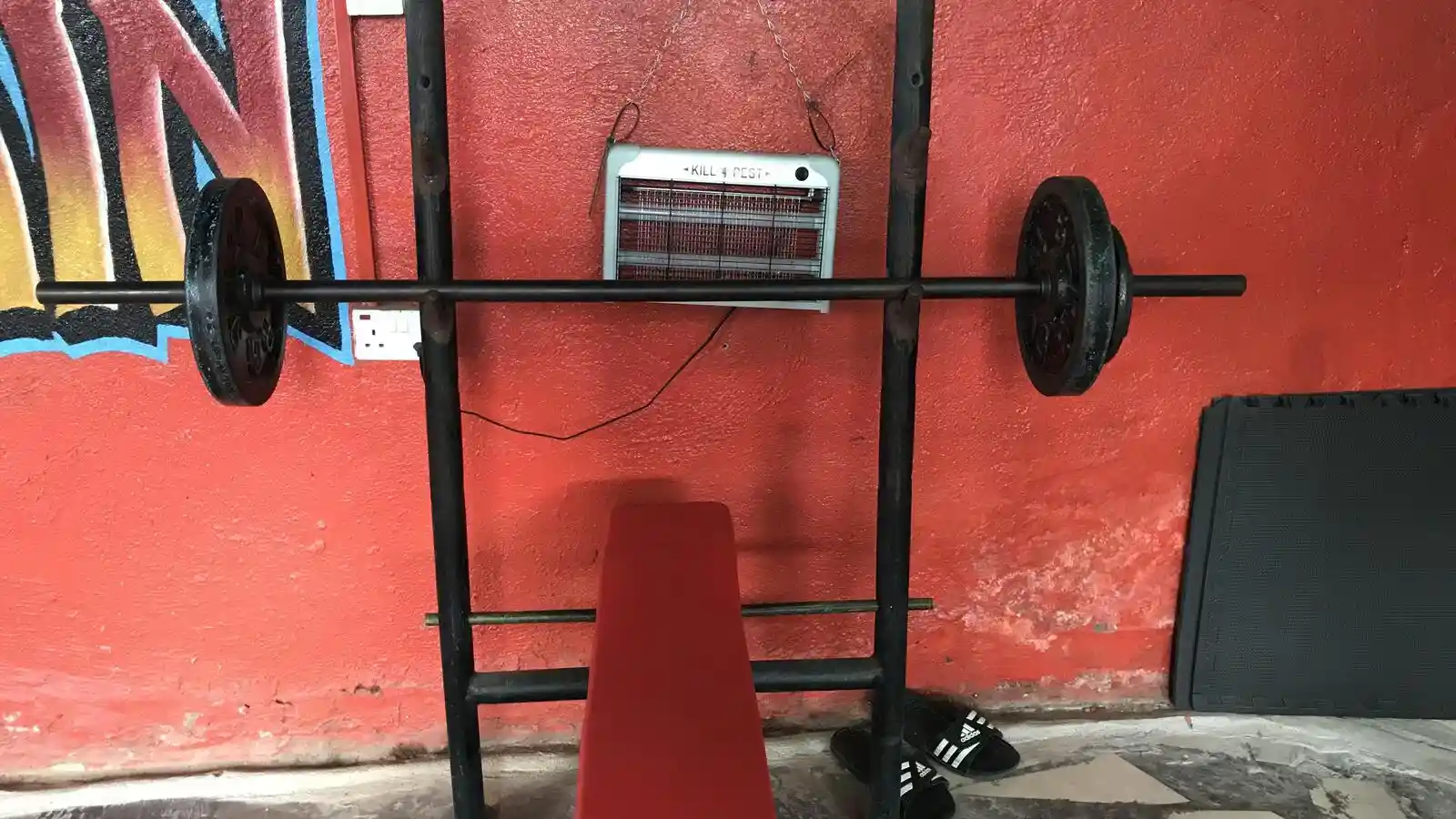
- Bench drift. Portable benches migrate to the cable stations, the turf, the mirror wall, and the corner where the personal trainers work. By month three, a gym that bought ten benches has seven in the free weight zone and three somewhere else. Either buy 15% more than the math says, or fix the ones you care about: a bench press station cannot walk, and a flat bench with a floor anchor plate stays put.
- Bench as furniture. Bags, bottles, towels, a phone, someone’s hoodie. This is a management problem, not a purchasing one, but it costs you a bench per twenty at peak. Signage and a staff walk-round do more than an extra unit.
- Rack substitution that doesn’t work. Yes, a bench inside a power rack does the job of a bench press station. Only if the rack interior is 42 to 47 inches wide and the J-hooks drop low enough to unrack from a flat back. Plenty of inexpensive racks are 40 inches inside, which is fine for squats and useless for pressing. Check the interior width before you plan to double up.
- The decline bench nobody uses, taking the space of the flat bench everybody wants. Decline pressing is a niche lift. One decline bench per floor is generous, and in a small studio, none plus a set of dumbbells is a legitimate answer.
What to specify when you order
The gap between a bench that lasts eight years in a commercial gym and one that lasts eighteen months is almost entirely in the frame and the pad, not the logo.
| Spec | Home-grade bench | Commercial bench | Why it matters |
|---|---|---|---|
| Frame tube | 2×2 in, 14-16 gauge | 2×3 in or 2×2 in at 11 gauge | 11 gauge is the line between “flexes under a 250 lb lifter” and “doesn’t” |
| Rated capacity | 300-600 lb | 1,000-1,500 lb, body weight included | Read whether body weight is in the number. Often it isn’t |
| Pad height, flat | 17-19 in, varies | 17 in for a bench press bench | 17 in is the IPF height. Taller benches wreck the arch and the leg drive |
| Pad width | 9-10 in | 10-12 in | Narrow pads bruise shoulders on heavy pressing |
| Foam | 1.2-1.8 lb/ft³ | 1.8-2.5 lb/ft³, 45-65 ILD | Low-density foam bottoms out in a year and the vinyl cracks at the fold |
| Vinyl | 18-20 oz | 30-36 oz contract grade | Contract vinyl is the difference between a scuff and a split |
| Back pad positions | 3-5 | 6-9, including 0, 15, 30, 45, 60, 85 | Angles people actually use, laser-etched rather than stickered |
| Upholstery fixing | Staples into plywood | T-nuts and bolts through a 12-15 mm backer | Staples pull out. Then the pad moves under load |
| Feet | Rubber caps, glued | Replaceable rubber feet, bolted | Feet are the first thing to fail and the cheapest to fix |
Two buying notes from the factory side. Ask for the pad bolt-hole centres on the drawing, because a replacement pad that doesn’t match the frame pattern turns a five-dollar wear item into a new bench. And if you are ordering benches with racks or machines in the same container, put the benches in last, near the doors. They are light and awkward, and you do not want to unload eight of them to reach a leg press.
Layout numbers that decide whether your count works
Eight benches on a floor plan that only fits six is six benches with two in the aisle.
| Dimension | Number | Note |
|---|---|---|
| Bench press station to wall or mirror | 24-36 in | Enough to load plates without hitting glass |
| Spotter space behind the head end | 36 in minimum | Below that, nobody spots, and members press alone |
| Working footprint, flat bench in a dumbbell area | 6 x 4 ft | Includes the dumbbells on the floor and the space to pick them up |
| Rack interior width to accept a bench | 42-47 in | Measure it. 40 in racks exist and they do not work |
| Main aisle through the free weight zone | 36-48 in | 36 in is a walkway, 48 in is a walkway two people can pass in |
| Distance from bench cluster to dumbbell rack | 6-10 ft | Further than that and people carry dumbbells across the room |
Benches or another machine: the capacity argument
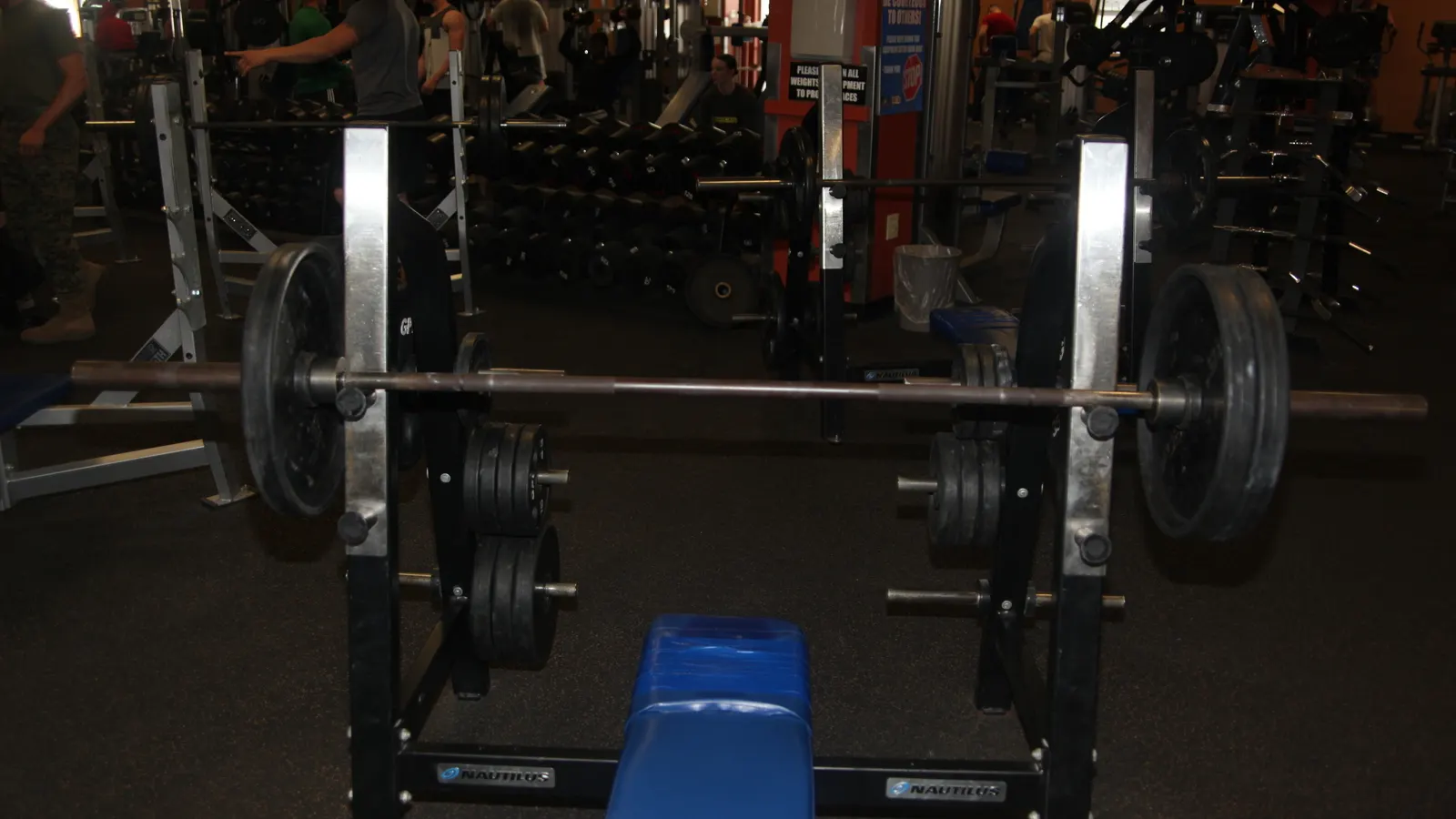
If you have budget left and a queue at peak, a flat bench is usually the better buy. A commercial flat bench runs a small fraction of what a selectorized station costs at factory-direct pricing, it needs no power, no maintenance contract, no cable replacement, and it adds a full training position. One machine adds one station. Four benches add four positions that each serve a dozen exercises.
The exception is when the queue is at the machines, not the benches. If members are waiting for a leg press at 6pm and the benches are half empty, you have a different problem, and there is a separate planning guide for that (how many strength machines a gym needs). The same logic applies to racks: benches and racks compete for the same floor, and the split between them depends on whether your members squat or press (racks and benches planning).
FAQ
How many benches does a 500-member gym need? Three to four. Two flat, one adjustable, plus a bench press station if you have room for uprights. At 500 members your peak is around 50 people, and maybe 15 of them are in the free weight zone at once.
Should I buy flat benches or adjustable benches first? Flat, in a 1:1 ratio with adjustable if the budget allows. Flat benches are cheaper, more stable, and used by more people. Adjustables earn their price in clubs with a lot of incline pressing and shoulder work.
Can one bench serve as both a bench press bench and a dumbbell bench? Yes, and most clubs run that way. The catch is throughput: someone pressing in a rack with a bench inside blocks the rack for 20 minutes. A dedicated bench press station costs less than the member dissatisfaction of waiting for a rack.
Do benches need to be bolted down? Only the ones you are tired of chasing. A bench press station or combo rack is fixed by design. Portable flat benches should stay portable, because members move them to the dumbbells, the cables, and the turf. Plan for that movement in the layout rather than fighting it.
How long should a commercial bench last? Eight to twelve years for a flat bench with an 11 gauge frame and 30 oz vinyl, assuming pads are replaced at year five or six. Adjustable benches go sooner because the adjustment mechanism wears before the frame does. Spare pads cost little; order a set with the container.
Ordering benches for a new floor
We build benches and racks at our own factory in Taishan and ship them factory-direct, mixed with cardio and strength equipment in the same container. If you send a floor plan and a member count, you get a bench list with type mix, pad heights and a loading plan rather than a catalogue page. Start with the benches and racks range, check the power racks if you plan to press inside a rack, or send us your floor plan and we will do the count with you.