
Commercial Gym Wall Padding and Mirrors Buying Guide
Wall padding and mirrors are the two items gym owners order last and regret first. Padding shows up in the budget as a safety line item, gets value-engineered down to 1-inch foam, and then the free weight wall is dented within a year. Mirrors get ordered as “whatever the glazier quotes”, and someone puts a 6 mm sheet behind a squat rack.
Here is the short version of what actually holds up:
Wall padding: 2 inch, 100 ILD polyurethane foam on a 7/16 inch structural wood backer, wrapped in 35–37 oz vinyl, Class A fire rated. Material runs roughly $8–$15 per sq ft. Thinner or softer pads are scuff protection, not impact protection.
Mirrors: 6 mm (1/4 inch) minimum, safety film on the back, mounted with mastic or J-channel into studs — never adhesive alone on drywall. Installed cost runs roughly $15–$30 per sq ft.
The rest of this guide is about where those two products belong, what to write on the purchase order, and the installation order that saves you a week.
Where padding earns its money
Padding is not a wall covering. It is a bumper for the specific places where a body or a piece of steel arrives at speed. In a fitness facility, that is a short list:
- The wall behind and beside lifting platforms, where failed lifts and rolling plates end up
- Columns and structural corners inside the free weight zone — the ones nobody sees until a member’s shoulder finds them
- Walls at the end of a turf or sled lane
- The boxing and functional area perimeter, especially anywhere a bag can swing
- Low walls behind benches in a dumbbell area, where members rack weights by feel
Everything else is decoration. A cardio zone with padded walls looks like a psychiatric ward and costs $6,000 you could have spent on a second leg press.
Floors get the same question in reverse, and our commercial gym mats guide covers the horizontal version of this decision.
The mistake I see most often is padding the wall from 0 to 8 feet in a room where the actual impact zone is 2 to 6 feet. Impact height follows the equipment, not the ceiling. Behind a squat rack, pads from about 6 inches to 72 inches cover the realistic range. Behind a bench press station, the bar path rarely goes above 60 inches. While you are specifying colour anyway, ask your equipment supplier for the RAL reference on their frame finish and pass it to the pad supplier. Matching the pad to the racks makes a small free weight zone read as designed.
Wall padding specifications that matter
| Specification | Budget option | Commercial standard | What changes |
|---|---|---|---|
| Foam thickness | 1 inch | 1.5–2 inch | 1 inch absorbs a bumped elbow. 2 inch absorbs a dropped 45 lb plate |
| Foam density | 45–65 ILD polyethylene | 90–100 ILD polyurethane | Low-density foam compresses permanently after a season of plate strikes |
| Backer | None (glue-on) | 7/16 inch OSB or plywood | Backer spreads the load across studs; glue-on pads peel at the corners |
| Vinyl weight | 18–20 oz | 35–37 oz ripstop | Lighter vinyl tears at the staple line and stains permanently |
| Fire rating | Unrated | Class A per ASTM E84, tested per NFPA 286 as an assembly | Many insurers and most inspectors require Class A in a public facility |
| Panel size | Custom only | 2 x 6 ft standard, custom heights available | Standard panels cut cost and lead time; custom is for odd walls and columns |
| Base height | Whatever looks right | Within 4 inches of the floor (ASTM F2440) | A gap at the bottom is exactly where a foot or a plate goes |
| Cutouts | Cut on site | Factory cut for outlets, switches, extinguishers, signage | On-site cutting leaves exposed foam edges and looks like it |
Two notes on the fire rating, because this is where projects get held up. An ASTM E84 rating on the vinyl alone does not qualify the pad assembly. Foam plus vinyl plus backer has to be tested together, and the report needs to say so. Ask for the test report by panel, not a certificate for the raw material. If a supplier cannot produce it in 24 hours, they do not have it.
The second note: outlets, emergency fixtures, fire alarm pulls and exit signage cannot be covered. Give the supplier a wall elevation with those marked before they cut foam. Retrofitting a cutout through a finished pad looks terrible and voids nothing except your patience.
Mirror specifications that matter
| Specification | Budget option | Commercial standard | What changes |
|---|---|---|---|
| Thickness | 4 mm | 6 mm (1/4 inch), 8 mm above 8 ft | Thin mirror distorts and cracks at the mounting points |
| Backing | Standard silver | Copper-free silver with protective back coat | Standard silver blackens at the edges in humid gym air |
| Safety | None | Safety film or laminated backing | Required anywhere a member could strike it; cheap insurance either way |
| Edge | Raw cut | Polished or seamed edges | Raw edges chip during handling and cut installers |
| Mounting | Adhesive only | Mirror mastic on a flat substrate, or J-channel plus clips | Adhesive alone on painted drywall fails; the mirror comes down in one piece |
| Substrate | Drywall | Drywall with blocking at top and bottom, or plywood | Need blocking behind the perimeter, not just at studs |
Mirror placement decisions that gym owners get wrong:
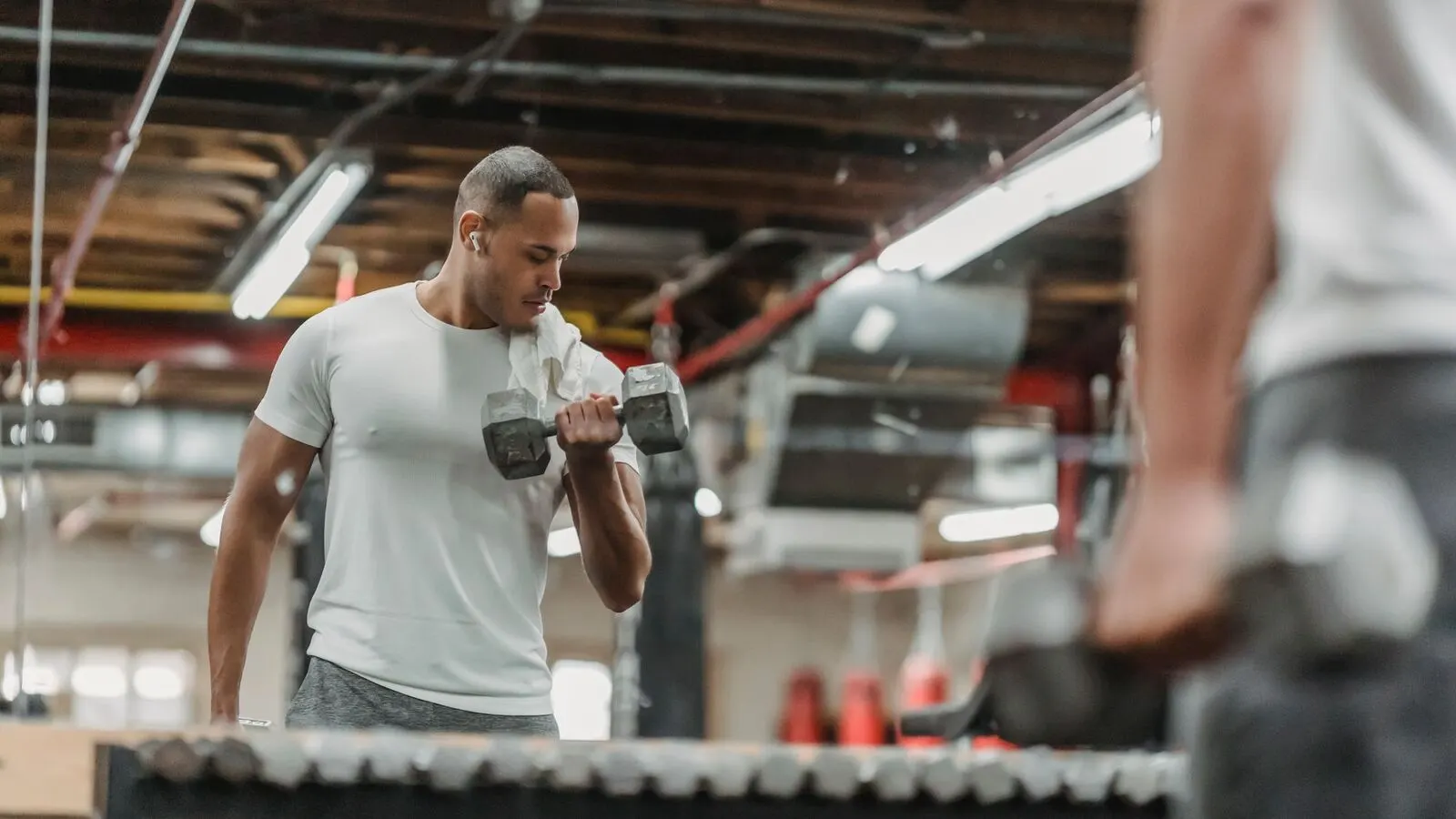
Full-height mirrors behind squat racks. Look at any commercial gym floor. The racks are in front of mirrors so members can check form. That is also where a bar gets racked hard, where a plate gets leaned, and where someone eventually swings a kettlebell. If you want mirrors there, specify 6 mm laminated or filmed glass and keep the mirror a minimum of 12 inches off the floor with a bumper rail at the bottom. Or put the mirror on the opposite wall and skip the problem.
Mirrors in the stretching and functional area. Genuinely useful, and the impact risk is low. This is where your mirror budget belongs.
Mirror height. Bottom edge 12–18 inches above finished floor, top edge 78–84 inches. Higher than that and shorter members see ceiling. Lower and the bottom 12 inches becomes a kick zone.
What it costs
| Item | Material only | Installed | Notes |
|---|---|---|---|
| Wall padding, 2 inch, 37 oz vinyl, wood backer | $8–$15/sq ft | $12–$22/sq ft | Panel pricing is usually quoted per 2×6 panel, roughly $95–$180 |
| Wall padding, 1 inch, budget vinyl | $4–$8/sq ft | $7–$12/sq ft | Fine for scuff protection in low-impact areas only |
| Custom printed padding | $14–$25/sq ft | $20–$35/sq ft | Logo or graphics, higher minimums, longer lead time |
| Column wrap pads | $120–$400 per column | — | Custom, priced per piece rather than per sq ft |
| Mirror, 6 mm, safety filmed | $8–$14/sq ft | $15–$30/sq ft | Installed price depends heavily on substrate condition |
| Mirror, 4 mm, budget | $5–$9/sq ft | $10–$18/sq ft | Accept the distortion and the shorter life |
| Demolition and disposal of old mirror | — | $2–$5/sq ft | Tempered or filmed mirror does not break cleanly; budget for it |
For a 4,000 sq ft gym with 60 linear feet of padding at 6 ft high and 200 sq ft of mirror, expect roughly $7,000–$12,000 all in. It is a real line item, and it is roughly 5–8% of what you will spend on equipment.
How much to order
Padding is sold by panel, so the math is linear feet divided by panel width, rounded up, plus waste.
A 60 ft wall with 2 ft panels needs 30 panels per course. At 6 ft high with 6 ft panels, that is one course: 30 panels, 360 sq ft. Add 5–10% for cutouts around outlets, corner trims and miscuts. Order the extra panels. A single replacement panel in a discontinued colour is a repaint of the whole wall.
Mirrors are ordered by area, but the cut matters more than the total. Most suppliers will not cut mirror below a certain width, and odd sizes increase waste from a standard sheet. Stick to a small number of panel sizes and let the layout absorb the remainder at the ends.
The installation order
Pads and mirrors go in after paint and electrical, before equipment. If you install after the equipment arrives, you will be moving 40 machines twice.
- Mark the wall elevations: pad extents, mirror extents, outlets, extinguishers, signage
- Block or add backing where the mirror perimeter lands
- Install padding first where pads and mirrors meet, so the mirror butts to the pad edge cleanly
- Install mirrors, cure the mastic fully, then remove the temporary braces
- Install a bumper rail or base trim at the bottom of any mirror in a traffic area
- Inspect with a raking light. Pad seams should be straight, mirror joints should not telegraph
- Photograph everything before the equipment goes in; it is your evidence if a panel gets damaged during install
One sequencing trap: padding installed on a wall that later needs an electrical drop for a cardio console. Finish the electrical rough-in first, every time.
A factory’s honest view on sourcing
We manufacture steel, not foam. So here is the advice we give customers who ask us to add wall padding to a container quote: don’t.
Two-inch foam panels are roughly 96% air by volume. A 40 ft high-cube that holds 35 strength machines will hold a few hundred square feet of padding, and you will have paid ocean freight on air. Mirrors are worse: heavy, fragile, and typically broken somewhere between the factory and the gym floor, with a claim process that costs more than the glass.
Wall padding and mirror have local supply chains in most markets that are already price-competitive, and local suppliers handle measurement, delivery and replacement. Put your container space into steel: power racks, benches and racks, selectorized machines. Source the soft goods and the glass within a day’s drive of the building.
What we do supply that pairs with this work: gym equipment accessories — matting, storage, collars, bands — and the layout planning that tells you where the pads and mirrors should actually go. If you want that layout reviewed before you order anything, send us the floor plan.
FAQ
How thick should gym wall padding be? 2 inches of 90–100 ILD foam for anywhere a plate, a bar or a body can hit the wall. 1 inch is enough for scuff protection behind benches or in corridors where impact energy is low. Anything under 1 inch is decoration.
Is wall padding required by code in a gym? Rarely by building code for a fitness facility. It is usually driven by insurer requirements and by organised sport regulations in school and competition venues. ASTM F2440 is the reference standard for indoor wall padding and covers impact attenuation (Gmax and HIC) plus installation height. Your insurer may reference it; ask them before you order.
Where should mirrors go in a commercial gym? Free weight zone, stretching area and functional training area. Keep full-height mirror at least 12 inches off the floor with a bumper rail where equipment is nearby, and think hard before putting mirror directly behind squat racks.
Do I need safety film on gym mirrors? Yes, anywhere a member could strike the glass. Filmed or laminated mirror holds together on impact instead of dropping shards. The cost difference is small relative to the risk and to your liability exposure.
Can I install wall padding myself? Yes, if the wall is flat, the panels are factory cut, and you have two people and a laser level. It becomes a contractor job when there are columns, curves, cutouts around electrical, or more than about 40 panels. Budget 1.5–2 hours per panel including layout for a first-time crew.