
Gym Equipment Spare Parts: What to Stock, What to Skip, and What to Ask the Factory
A gym equipment spare parts kit worth 2 to 4 percent of your equipment spend prevents most of the downtime a commercial gym actually experiences. For a $120,000 fit-out, that is $2,400 to $4,800 of cables, pulleys, pins, bushings, pads and hardware sitting on a shelf in the back room. Not glamorous. Cheaper than a week of dead stations.
The failure mode is rarely dramatic. A machine does not break. A $4 selector pin walks off, a cable frays at the swaged end, a pop pin strips its threads, or an end cap disappears and the frame starts to rattle. The station gets roped off, the part is ordered, and then it ships by sea because nobody thought to put spares in the original container. Three weeks later the machine is back and a chunk of your peak-hour capacity has been gone the whole time.
This guide covers what to stock by equipment type, how to size the kit, which parts you can buy locally, and the questions that separate a factory that supports you in year five from one that only answers emails before the deposit clears.
The real cost of a missing part
Do the math on one station, not on the whole gym. A mid-range selectorized machine costs roughly $1,200 to $2,500 factory direct. It serves 6 to 10 users per hour at peak. If it sits out of service for 15 days at an average of 4 peak hours a day, that is 360 to 600 member visits displaced onto equipment that was already busy.
You will not lose those members over one machine. You will lose them if the same thing happens to three machines in the same month, which is exactly what happens when a gym stocks nothing and orders each part individually.
Now consider freight. A cable costs maybe $12 to $35 depending on length and fittings. Overnight air freight on that cable can cost more than the cable. Sea freight on a $200 parts box is cheap but slow. The only way to avoid this tax is to have the part before you need it, ordered with the machines when the container is already going your way.
That is the entire argument for a spare parts kit. It is not about maintenance culture. It is about paying factory freight prices instead of emergency freight prices.
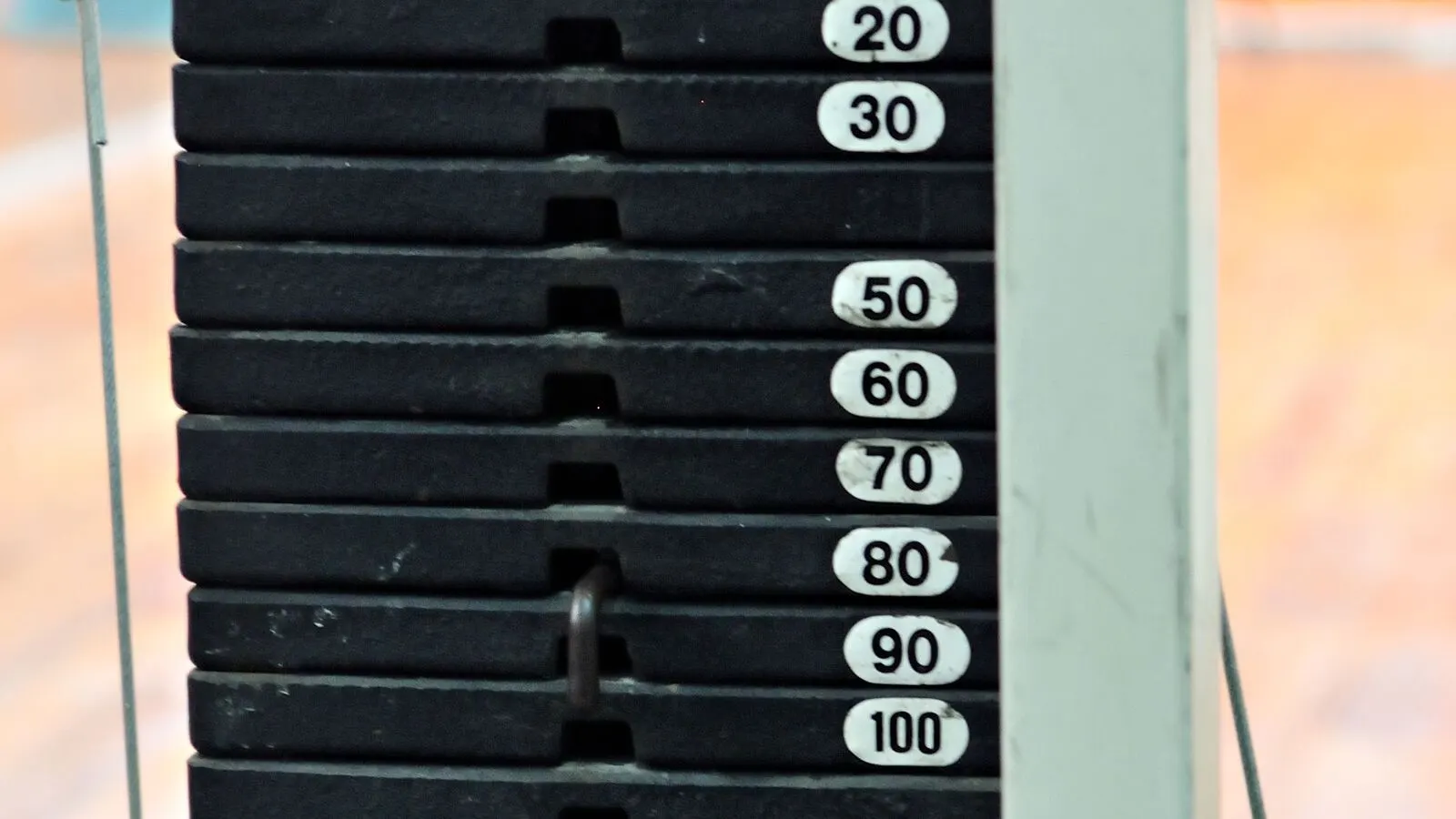
What gym equipment spare parts actually wear out, by machine type
The wear list is shorter than most buyers expect, and it is remarkably consistent across brands.
Selectorized strength machines
| Part | Typical replacement interval | Quantity per 10 machines |
|---|---|---|
| Cable with swaged ends | 18 to 36 months | 4 to 6 |
| Pulley wheel and bearing | 24 to 48 months | 4 to 6 |
| Selector pin | 12 to 24 months (loss, not wear) | 6 to 10 |
| Pop pin / adjustment pin | 12 to 24 months | 4 to 6 |
| Guide rod bushing | 24 to 48 months | 6 to 8 |
| Weight stack bumper and top plate washer | 24 to 36 months | 4 |
| Seat and back pad | 3 to 6 years | 2 to 4 |
| Handle grips | 12 to 24 months | 6 to 10 |
Plate-loaded machines
Fewer cables, different wear points. Plate horns take abuse, guide rods on sleds wear if they run dry, and pivot bushings develop play that members hear before staff notice.
| Part | Typical replacement interval | Quantity per 10 machines |
|---|---|---|
| Sled guide rod bushing or linear bearing | 24 to 48 months | 4 to 6 |
| Pivot bushing and bolt | 24 to 48 months | 4 |
| Rubber stop bumper | 12 to 24 months | 6 to 10 |
| Rubber foot and end cap | 12 to 36 months | 8 to 12 |
| Upholstery pad set | 3 to 6 years | 2 to 3 |
| Grip tape or handle sleeve | 12 months | 6 |
Cardio
Cardio has the highest part consumption of any category because the machines run continuously and the moving parts are under load all day.
| Part | Typical replacement interval | Quantity per 10 machines |
|---|---|---|
| Treadmill running belt | 2 to 4 years | 2 to 3 |
| Treadmill deck (often reversible) | 3 to 5 years | 1 to 2 |
| Drive belt | 2 to 4 years | 2 to 3 |
| Front and rear roller bearings | 3 to 5 years | 2 to 4 |
| Console board or overlay | 3 to 6 years | 1 to 2 |
| Pedal and crank bearing (bikes) | 2 to 4 years | 4 |
| Resistance pad (friction bikes) | 12 to 24 months | 6 to 10 |
| Emergency stop magnet and key | 12 months | 6 |
Benches, racks and free weights
| Part | Typical replacement interval | Quantity |
|---|---|---|
| J-hook or UHMW liner | 2 to 4 years | 2 to 4 per rack |
| Pop pin or ladder adjustment | 2 to 4 years | 2 per bench |
| Rubber foot | 12 to 24 months | 10 to 20 |
| Pad set | 3 to 6 years | 2 to 4 |
| Bar collar and spring clip | 12 months | 6 to 10 |
| Dumbbell handle end cap | 2 to 4 years | 10 |
Treat these intervals as planning ranges. A 24-hour gym with 3,000 members will burn through cables faster than a 400-member studio that runs 12 hours a day. Humidity matters too. A coastal gym in Florida or the Gulf will corrode guide rods and hardware at roughly twice the rate of a dry inland facility.
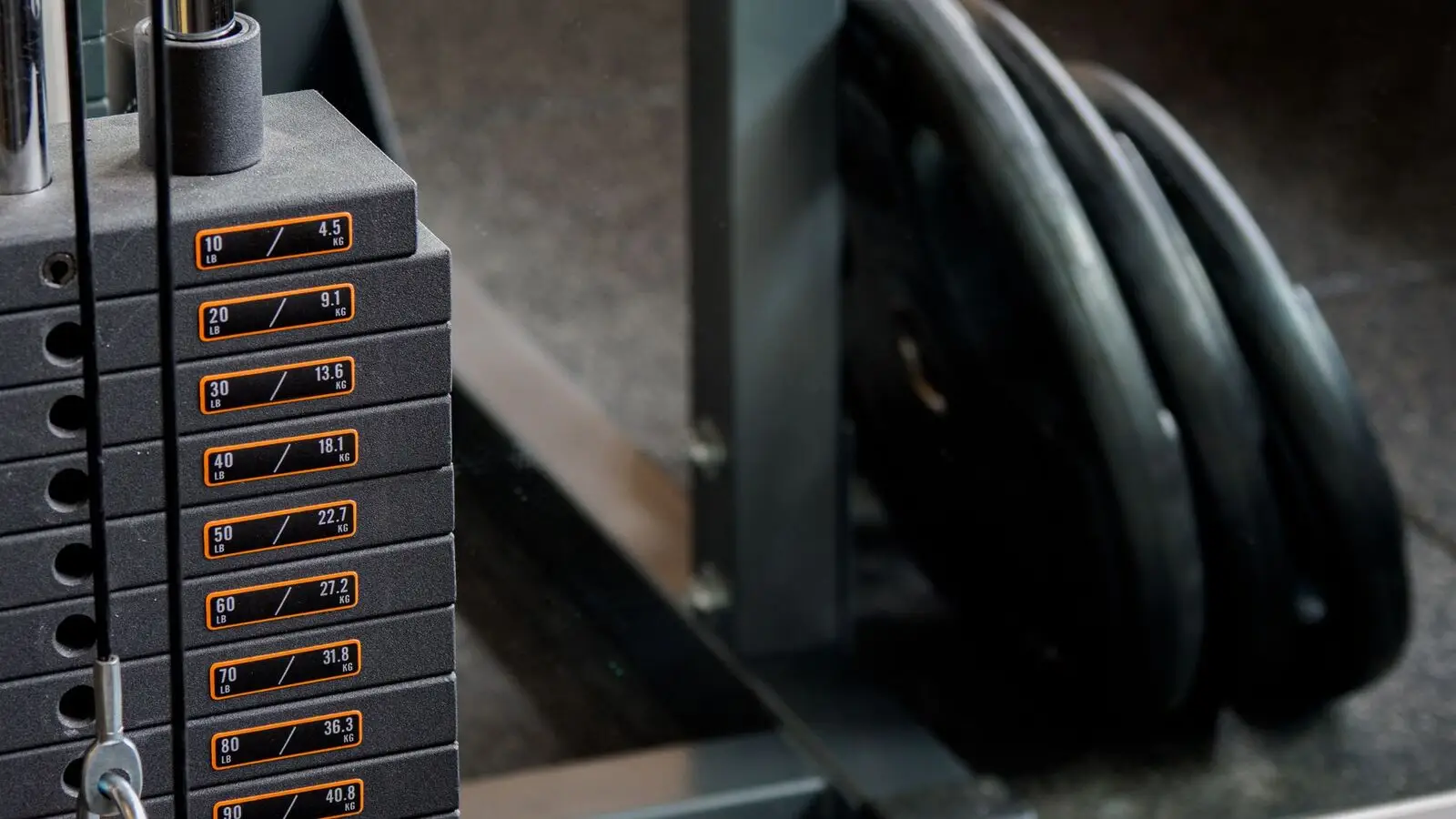
Sizing the kit
Three tiers work well. The logic is how fast you can get the part, not how much it costs.
Tier 1: on the shelf, always. Anything that stops a workout and costs under $50. Selector pins, pop pins, cable end hardware, grips, rubber feet, end caps, spring clips, common bolts and washers. Two to three of each per machine type. These are the parts that generate emergency calls.
Tier 2: one per machine cluster. Cables, pulleys, bushings, stop bumpers, treadmill belts. One spare cable per 8 to 10 cable machines of the same model, one spare belt per 8 to 10 treadmills. Enough to cover the first failure while the replacement order ships.
Tier 3: order on failure, but know the lead time. Consoles, motors, decks, upholstery sets, guide rods. Too expensive and too model-specific to stock deeply. What you need here is not inventory, it is a documented lead time and a price, so you can decide between repair and replacement without a two-week email chain.
A realistic Tier 1 and Tier 2 kit for a 40-machine strength floor and 15 cardio units lands around $2,000 to $4,500 factory direct, which is roughly the cost of one and a half commercial treadmills. It is the highest-return purchase in the whole fit-out and almost nobody includes it in the first quote.
Standard parts versus proprietary parts
This distinction decides whether you can fix something on a Saturday.
Standard and locally sourceable: hex bolts and nuts in common grades, washers, snap rings, rubber feet in standard sizes, UHMW plastic, vinyl upholstery, grip sleeves, bearings with a readable industry number, and often the cable itself if you have a local rigging shop that can swage ends.
Proprietary and factory-only: weight stack top plates, selector pins with a specific diameter and notch pattern, console boards, motor control boards, molded plastic shrouds, cam profiles, and any welded component.
The practical rule: if the manufacturer uses a standard bearing number and standard fasteners, you can keep a machine alive for a decade with local purchases plus a few factory parts. If every fitting is custom, you are married to that factory for the life of the machine. Ask before you order, not after.
Our own gym equipment accessories line uses standard metric fasteners and published bearing sizes for exactly this reason. It costs us a small amount of design freedom and saves buyers a large amount of grief.
What to ask the factory before you sign
Put these on the RFQ. A manufacturer who can answer them quickly is a manufacturer who has supported export customers before.
- Can you send the exploded parts diagram and a priced spare parts list with the quotation?
- How long will spare parts for this model be available after the model is discontinued? Look for 7 to 10 years in writing.
- Are cables and pulleys standard or proprietary? What is the cable diameter and working load rating?
- What bearing numbers are used on guide rods and pulleys, and can I buy equivalents locally?
- Are fasteners metric or imperial, and what grades?
- What is the lead time and shipping method for a spare parts order under 50 kg?
- Will you include a starter spares kit in the container at order time, and at what price?
- What does the parts warranty cover, and does it cover freight?
- Can you standardize my order on fewer models so one cable fits eight machines?
That last question is the one buyers forget. Five different cable lengths across twelve machines means five SKUs on your shelf. Standardizing on two models means one. Fleet consistency is a spare parts strategy, not just a purchasing convenience.
Storage and tracking that staff will actually use
A shelf of parts nobody can find is the same as no parts. Keep it simple:
- Label by machine, then part. “Chest press CP-201, cable, 2 pcs.” Not “cables, various.”
- Bin the small stuff. One divided organizer for pins, bolts, clips and caps beats a cardboard box every time.
- Set a minimum. When the count hits the minimum, reorder. Do not wait for zero.
- Log every removal. Date, machine, part, who took it. A clipboard works. A shared spreadsheet works better.
- Photograph the shelf quarterly during the maintenance walk-through. Missing stock shows up fast in a photo comparison.
- Lock the Tier 1 bin. Selector pins and grips disappear for reasons that have nothing to do with maintenance.
If you sell equipment, spares are a margin line
For distributors and importers, spare parts are one of the few recurring revenue streams in this business. A gym that buys 30 machines from you once will buy cables, pins and pads from you for a decade, if you make it easy.
That means quoting a spares kit with every container, publishing a parts list with prices, and holding a small stock of the top 20 wear items for your region. Dealers who do this report fewer warranty arguments, because a $15 cable shipped same week closes a complaint that a three-week factory claim would have turned into a public review.
FAQ
How much should a gym budget for spare parts? Plan on 2 to 4 percent of equipment spend at opening, then roughly 1 to 2 percent of equipment value per year afterward. A 40-machine strength floor plus 15 cardio units typically needs $2,000 to $4,500 at start and $1,500 to $3,000 a year in replacements.
Should I buy spare parts with the equipment order or later? With the order. Parts ship inside the same container for almost no added freight, and you avoid the situation where the first cable fails in month 14 and the replacement arrives in month 16 by sea.
How many spare cables do I need? One spare cable per 8 to 10 cable-driven machines of the same model. If your order mixes several cable lengths, buy one of each length rather than several of the most common one.
Can I use locally sourced cables? Sometimes. The cable itself is usually a standard galvanized or nylon-coated steel rope, but the swaged ends and length have to match exactly, and a bad swage is a safety issue. If you have a rigging shop that will certify the assembly, local is fine. Otherwise buy factory cables and keep two on the shelf.
Do spare parts count as a warranty item? Wear items normally do not. Cables, pads, belts, grips and pins are usually excluded from warranty after 90 days because their life depends on usage. Frame cracks and weld failures are the opposite: those should be covered for 10 years on a commercial machine.
What is the single most useful spare part? Selector pins and pop pins. They are cheap, they vanish, and a machine without one is unusable even though nothing is broken. Buy ten.
LMCC Fitness builds commercial cardio and strength equipment in Taishan, China, and ships spare parts kits inside the same container as the equipment. If you are putting together an order, ask for the priced parts list with the quote. Start at the contact page, or look at the selectorized strength range and commercial cardio range to see what the kits are built around.